
Pasta · Recipe · Rome · Reference page
Spaghetti alla carbonara
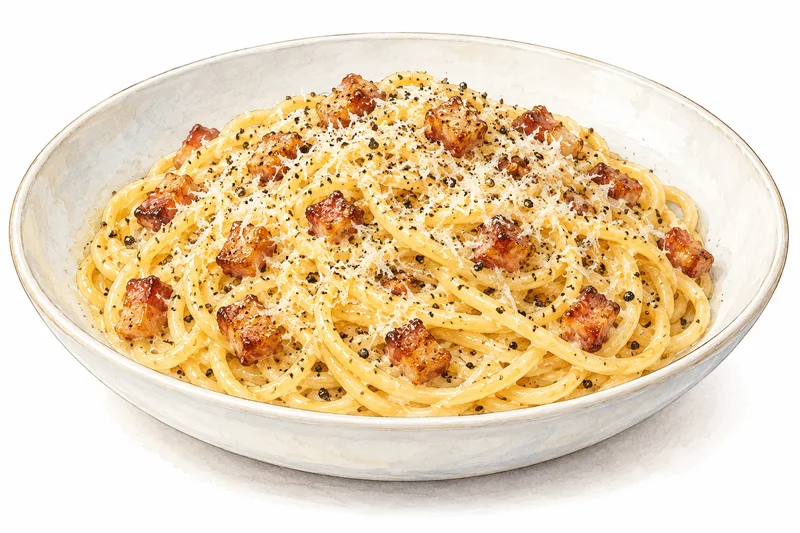
Spaghetti tossed off the heat with eggs, pecorino romano, Parmesan, black pepper and pancetta fried in garlic-scented oil. This version for two is Felicity Cloake's, from her book Perfect Too.
- Servings
- 2
- Preparation
- 10 min
- Cooking
- 15 min
- Total
- 25 min
- Difficulty
- Easy
Equipment
- Large pan for the pasta
- Large frying pan
- Bowl and fork for the eggs; two serving bowls
Ingredients
Method
Warm two serving bowls in a low oven or with hot water from the kettle.
Why The sauce sets on contact with heat; warm bowls keep it creamy without further cooking.
Heat the oil in a large frying pan over medium heat. Fry the garlic until well coloured but not burnt, then take it out and discard it. Cook the pancetta in the garlic oil until translucent and golden, without browning.
Boil the spaghetti in plenty of salted water until al dente.
Beat the eggs and extra yolk, then stir in the pecorino and most of the Parmesan, keeping a little for the top. Add plenty of black pepper.
Keep a small cupful of pasta water, then drain the pasta. Toss it in the pancetta pan so every strand is coated in fat.
Take the pan off the heat, pour in the egg mixture and toss quickly. As soon as it starts to thicken, add a splash of pasta water to loosen it.
Why Off the heat, the residual warmth of the pasta thickens the eggs into a sauce without scrambling them.
Divide between the warm bowls, add nutmeg if using, more pepper and the reserved Parmesan, and serve at once.
Substitutions
- Pancetta → Guanciale (cured pork cheek), which many Roman cooks prefer.
- Half Parmesan → All pecorino romano, for a sharper, saltier sauce.
Common mistakes
- Adding the eggs over the heat: they scramble.
- Letting the pasta cool before the eggs go in: the sauce stays raw and runny.
- Browning the pancetta hard: it turns dry and bitter.
Storage & reheating
Eat at once; carbonara does not reheat.
Safety
The eggs are only lightly cooked by the heat of the pasta. People at higher risk (pregnant women, young children, older people, anyone with weak immunity) should follow their national advice on lightly cooked eggs.
Allergens
Gluten · Egg · Milk
Check labels: stock, bacon and sauces can contain further allergens.
A modern Roman classic
The atlas has not yet opened a documented source on the origin of carbonara and makes no claim about who invented it or when. Felicity Cloake's version, from her book Perfect Too, uses pancetta, two eggs plus a yolk, and equal parts pecorino romano and Parmesan; like cacio e pepe, it relies on pasta water and grated cheese to make the sauce.
Eggs without scrambling
Cloake names the problem: adding raw eggs to hot pasta without scrambling them, so the sauce thickens creamily. Her answer is a very short exposure to heat. The drained pasta is tossed in the pancetta fat, the pan comes off the heat, the egg and cheese mixture goes in and is tossed fast, and a splash of pasta water loosens it as soon as it begins to thicken. Warm bowls finish the job.
How it connects
Place
- origin Rome In preparation
Pasta shape
- made with Spaghetti
Recipe
- related Cacio e pepe
- related Spaghetti all'amatriciana
Continue exploring
- CountryItaly107 entries in the atlas so far
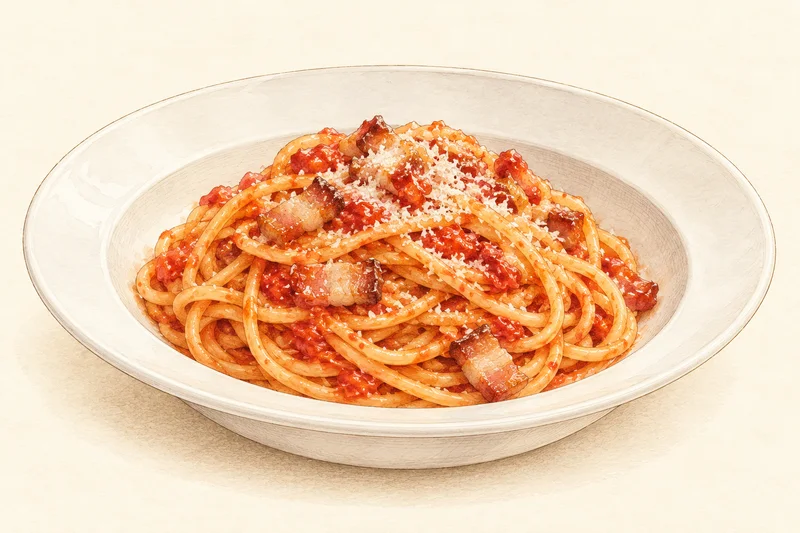 RecipeSpaghetti all'amatricianaAmatrice, Italy
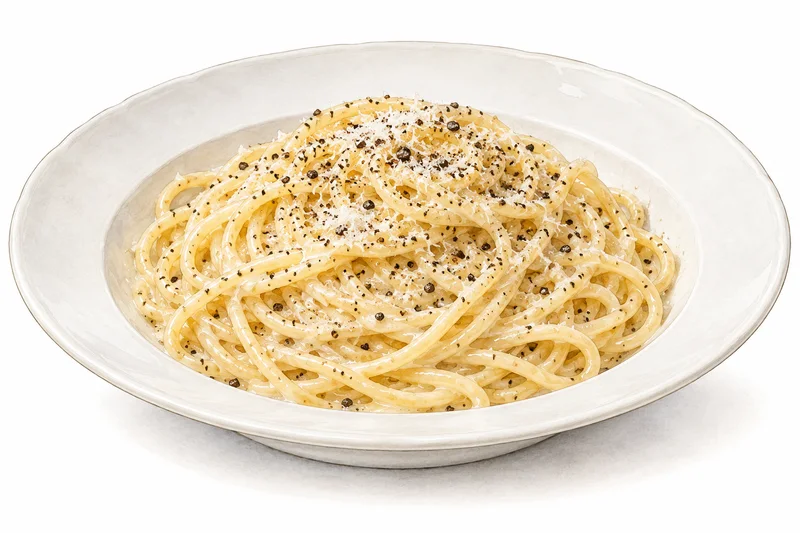 RecipeCacio e pepeRome, Italy
 Pasta shapeSpaghettiGragnano, Italy
 RecipeSaltimbocca alla romanaRome, Italy
- RecipeLinguine alle vongoleItaly
 StoryDid Marco Polo bring pasta to Italy?Trabia, Italy
- Wine regionFrascati SuperioreFrascati, Italy
 Pasta shapeBigoliPadua, Italy
 Pasta shapeBucatini