Meat · Recipe · Rome · Reference page
Saltimbocca alla romana
saltimbocca alla romana
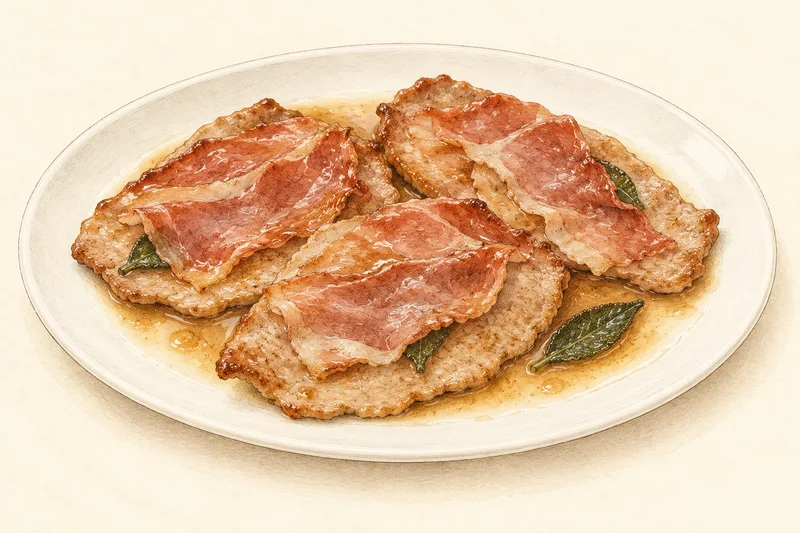
Small, thin escalopes of veal, each topped with a sage leaf and half a slice of prosciutto, pinned with a toothpick, browned in butter and oil on one side only and finished with white wine. The recipe is Gambero Rosso's, as published by Rome's tourist office; Artusi described the dish in 1891.
- Servings
- 4
- Preparation
- 20 min
- Cooking
- 10 min
- Total
- 30 min
- Difficulty
- Easy
Equipment
- Meat mallet, wetted
- Wooden toothpicks
- Wide frying pan
Ingredients
Method
Trim the escalopes of sinew and skin. They should be very small and thin, about the size of a palm: beat them with a wetted mallet and lay them out on the board.
Why Thin meat cooks in the two or three minutes the prosciutto can stand.
Season with pepper and very little salt (the prosciutto is already salty). Put a sage leaf in the middle of each and cover with half a slice of prosciutto. Pin the three layers together with a toothpick, like a pin through cloth.
Flour the saltimbocca very lightly on the underside only.
Heat the oil and butter in a wide pan, fry a few sage leaves briefly, then lay in the saltimbocca close together but not overlapping.
Cook for 2 to 3 minutes over a high heat on the floured side only, without turning, until coloured underneath.
Why Strong heat hardens the prosciutto and kills its scent; Artusi also warned to leave it only briefly on the ham side.
Timer · 3 min3:00Pour in the wine and let it evaporate. As soon as it has, the saltimbocca are ready: move them to a warm dish, loosen the pan juices with a few spoons of hot water if needed, spoon the sauce over and serve very hot.
To drink & serve with
The source serves them with mashed potato or green beans in butter.
- Frascati Superiore
Editorial suggestion: a dry white from the hills south of Rome.
Substitutions
- Veal → Thin pork or turkey escalopes are common at home, though Rome's tradition is veal.
- Flour (gluten-free) → Leave it out or use rice flour; the sauce will be thinner.
Common mistakes
- Turning the saltimbocca to fry the ham side hard: the prosciutto toughens.
- Salting normally: the ham makes the dish salty enough.
- Cutting the escalopes too large or too thick: they need longer than the prosciutto can stand.
Storage & reheating
Best eaten at once. Refrigerate leftovers within 2 hours and eat within 2 days.
Safety
Contains gluten (flour), milk (butter) and sulphites (wine). Remove the toothpicks before serving, or warn your guests.
Allergens
Gluten · Milk · Sulphites
Check labels: stock, bacon and sauces can contain further allergens.
Artusi in a Roman trattoria
Pellegrino Artusi described saltimbocca as recipe 222 of La scienza in cucina e l'arte di mangiar bene (1891): "I ate them in Rome, at the trattoria Le Venete, and so I can describe them exactly." Small slices of milk-fed veal, lightly seasoned, each with half a sage leaf and a slice of fat-and-lean prosciutto, pinned with a toothpick and cooked in butter, and left only briefly on the ham side "so that it does not harden".
Rome's tourist office calls the origin of the dish controversial, since some say it came from Brescia, but counts it among the signature recipes of Roman cooking. The name means "jump into the mouth". The recipe it recommends is Gambero Rosso's.
How it connects
Place
- origin Rome In preparation
Wine region
- pairs with Frascati Superiore
Recipe
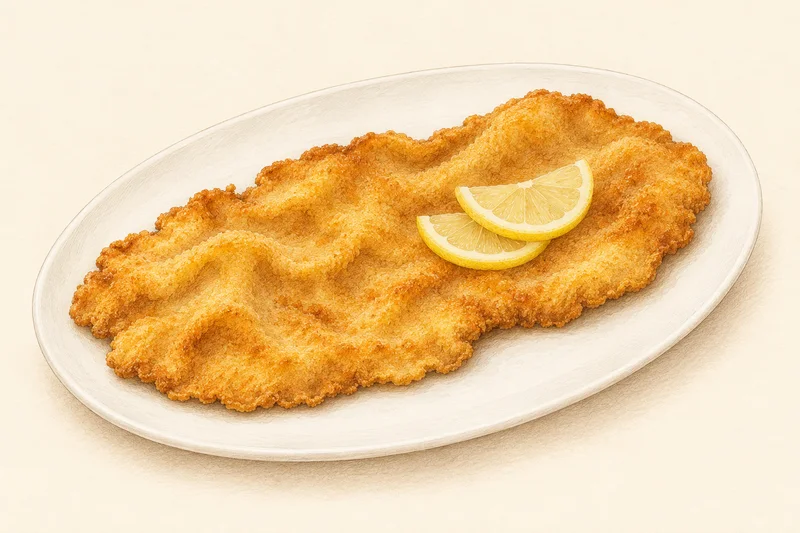
- similar Wiener Schnitzel