
Meat · Recipe · Vienna · Reference page
Wiener Schnitzel
Wiener Schnitzel
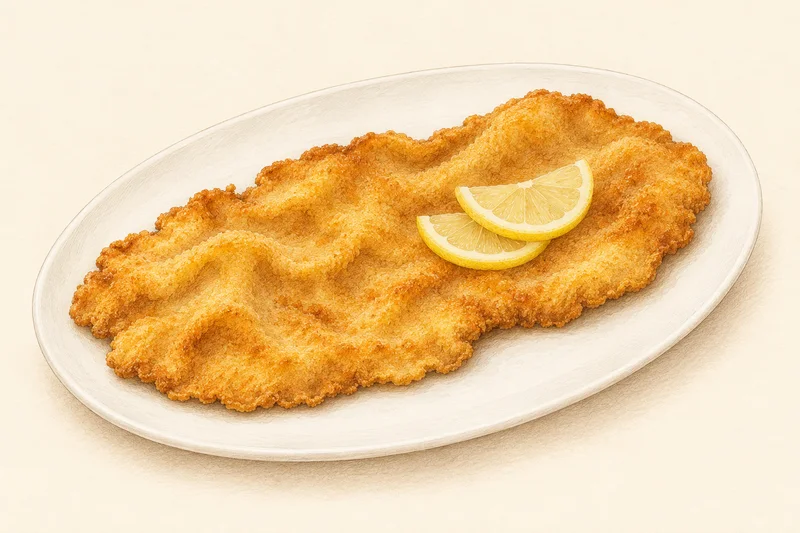
A thin veal escalope coated in flour, egg and breadcrumbs and fried in plenty of clarified butter until the crust puffs away from the meat. In Austria the name means veal: pork or turkey must be called something else. The recipe is from the Austrian National Tourist Office.
- Servings
- 4
- Preparation
- 30 min
- Cooking
- 15 min
- Total
- 45 min
- Difficulty
- Moderate
Equipment
- Meat mallet or heavy pan to beat the escalopes
- Three flat plates for flour, egg and crumbs
- One large or two medium frying pans deep enough for the escalopes to float
- Fish slice or spatula; kitchen paper
Ingredients
The schnitzel
To serve
Method
Lay out the escalopes, trim off any membrane and beat them thin. Season both sides with salt and pepper.
Why Thin, even meat cooks in the few minutes it takes the crust to brown.
Put the flour and the crumbs on two flat plates and beat the eggs on a third. Turn each escalope in flour, draw it through the egg so that no spot stays dry, then turn it in the crumbs. Press the crumbs on only lightly with the back of a fork.
Why Loosely applied crumbs let the coating lift and ripple (*soufflieren*) in the fat; pressed hard, it stays flat.
Melt enough clarified butter in one large or two medium pans for the escalopes to float. Heat it until a few crumbs or a scrap of butter dropped in foam and sizzle.
Fry the escalopes until golden, about 2 minutes for thin veal, then turn them with a spatula without piercing them and fry the other side the same way.
Why Thicker pork escalopes need up to 4 minutes a side, according to the source.
Timer · 4 min4:00Lift them out, drain on kitchen paper and pat gently dry. Serve at once with lemon slices.
To drink & serve with
- Austria
Editorial suggestion: a dry Austrian white. The source recommends parsley potatoes, rice, potato salad or a mixed salad.
Substitutions
- Veal → Pork or turkey escalopes, as the source allows; in Austria they are not called Wiener Schnitzel.
- Clarified butter → Vegetable oil with 1–2 tbsp clarified butter or butter for flavour.
Common mistakes
- Pressing the crumbs on hard: the crust stays flat instead of puffing.
- Frying in too little fat or in fat that is not hot enough: the crust soaks up fat and turns pale.
- Piercing the meat with a fork when turning: juice runs into the crust.
Storage & reheating
Eat at once; the crust softens as it stands. Refrigerate leftovers within 2 hours and eat within 2 days.
Safety
Contains gluten, egg and milk (clarified butter). Hot fat: keep children away and never leave the pan. Veal escalopes are whole cuts; pork must be cooked through.
Allergens
Gluten · Egg · Milk
Check labels: stock, bacon and sauces can contain further allergens.
Veal by law of custom, Milan by legend
Austria's National Tourist Office states the rule that every Austrian diner knows: when Wiener Schnitzel is on the menu, it means a veal escalope fried in clarified butter. Other meats are served as schnitzels under other names.
The same page tells two stories and labels both carefully. One links the golden crumb to a Venetian ban of 1514 on gilding food. The other says that Field Marshal Radetzky brought the cotoletta alla milanese to Vienna around 1857; the page calls this a legend and adds that the first known mention of Wiener Schnitzel in Austrian cooking dates from 1831, before Radetzky's supposed import.
A crust that floats
The point of a good Wiener Schnitzel is a crust that rises in waves away from the meat. Three things make it happen in the source recipe: the escalope is beaten thin, the crumbs are laid on and not pressed, and the escalope floats in fat hot enough to make crumbs foam at once. Thin veal needs only about two minutes a side, so the meat stays juicy while the crust browns.
How it connects
Continue exploring
- CountryAustria8 entries in the atlas so far
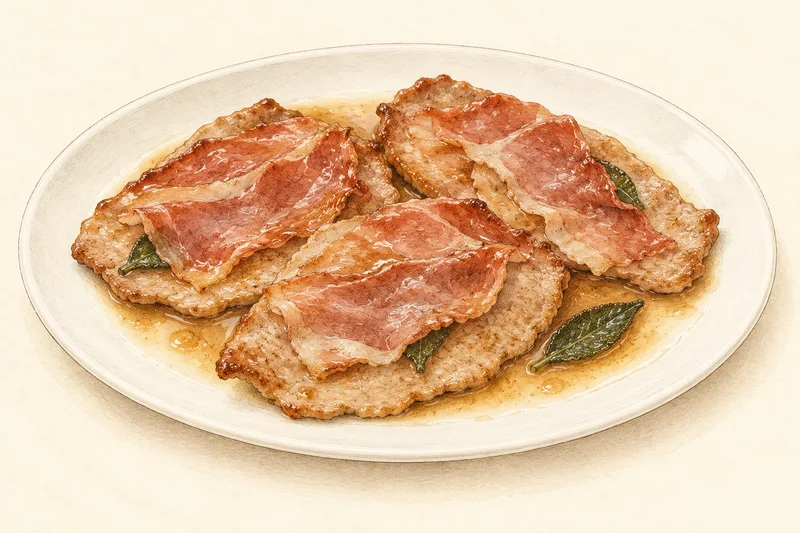 RecipeSaltimbocca alla romanaRome, Italy
- Wine regionAustriaAustria
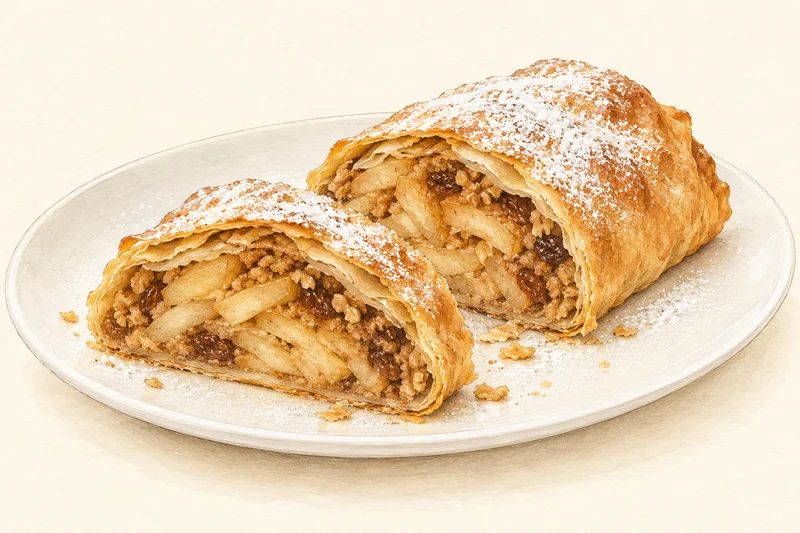 RecipeWiener ApfelstrudelVienna, Austria
- Wine regionBurgenlandEisenstadt, Austria
- Wine regionFrascati SuperioreFrascati, Italy
- Wine regionKamptalLangenlois, Austria
- Wine regionSüdsteiermarkLeibnitz, Austria
- Wine regionWachauWeißenkirchen in der Wachau, Austria