
Pasta · Pasta shape · Reference page
Spaghetti
Pronunciation: /spah-GET-tee/
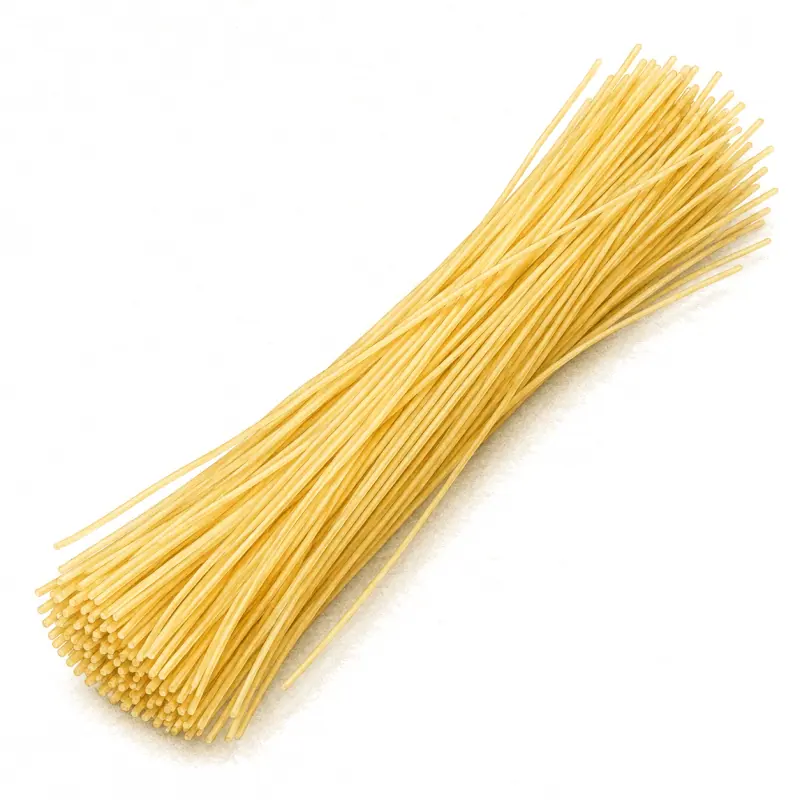
Long, solid, round strands of durum-wheat pasta — one of the best-known pasta shapes in the world. Its story runs through medieval Sicily, the pasta works of Naples and the emigrant kitchens of the Americas.
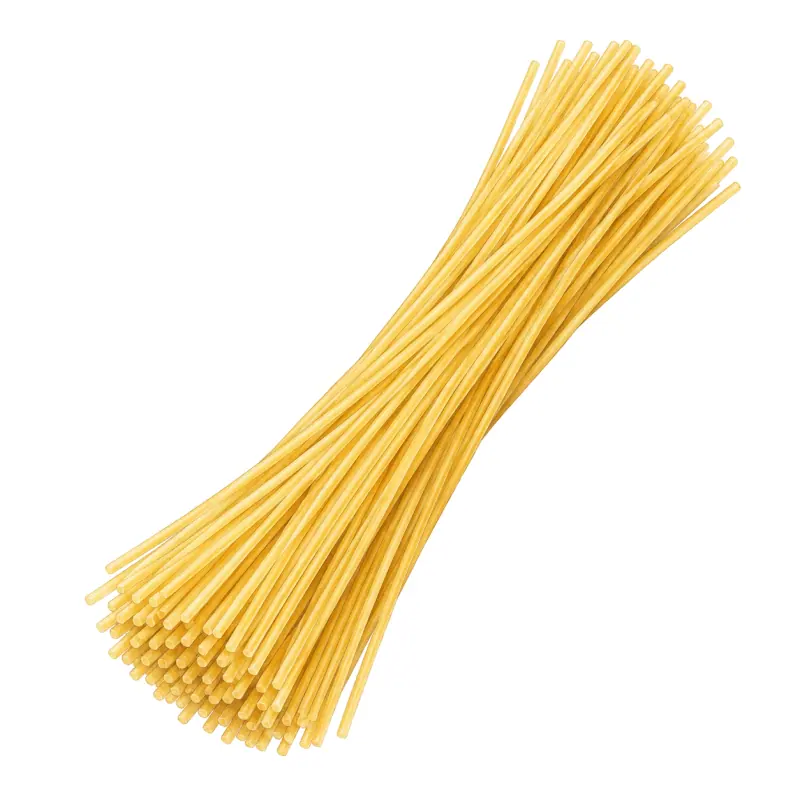
Anatomy of a strand
Spaghetti is made by forcing a stiff dough of durum-wheat semolina and water through a die with round holes, then cutting and drying the strands. Under Italian law, dried pasta sold under the name pasta di semola di grano duro must be made from durum-wheat semolina and water alone — a definition first set out in Law 580 of 1967 and restated in Presidential Decree 187 of 2001, which replaced it.
The die matters. Traditional bronze dies leave a microscopically rough, matte surface, which many cooks find holds sauce better; PTFE (Teflon) dies, common in industrial production, give a smoother strand. Measurements confirm the difference in roughness. Drying matters too: slow drying at moderate temperatures, still practised by many artisan makers, is said to preserve flavour and texture, while modern high-temperature drying is faster and gives very firm pasta. Both claims are about tendencies; the label rarely tells you everything.
What follows is cooking advice rather than rule. Round and solid, spaghetti has a modest surface area for its weight, and it is usually paired with sauces that coat rather than catch: emulsions of oil and pasta water, smooth tomato sauces, egg-and-cheese carbonara. Many cooks find that chunky ragùs slip off it; in Bologna, ragù is traditionally served with tagliatelle, not spaghetti.
From itriyya to spaghetti
Long strands of dried dough were made around the Mediterranean centuries before the word "spaghetti" existed. In 1154 the Arab geographer al-Idrisi, writing for King Roger II of Sicily, described Trabia, near Palermo, as a place where itriyya — a dried pasta, which later sources describe as string-like — was made in such quantities that it was "exported everywhere, especially to Calabria and other Muslim and Christian lands; many shiploads are sent." Sicily exported dried pasta from the twelfth century, and Genoa became an important pasta-trading port in the later Middle Ages.
Between the seventeenth and eighteenth centuries pasta became the everyday food of Naples, and Neapolitans, once nicknamed "leaf-eaters", became mangiamaccheroni, "macaroni eaters". The historian Emilio Sereni linked the change to rising meat prices, though not all historians agree. Around Naples, Torre Annunziata and above all Gragnano — whose dried pasta has been protected as an EU geographical indication (PGI) since 2013 — built a pasta industry from the eighteenth century, drying pasta in the open air. The name spaghetti itself is recorded in Italian by the 1840s; earlier, long thin pasta in Naples was often called vermicelli, a name that today usually means a related, slightly thicker strand.
Tomatoes came to Europe from the Americas in the sixteenth century. The first printed recipes pairing them with pasta date from the late eighteenth century, and the combination became everyday food in Naples in the nineteenth. Emigration then carried spaghetti around the world.
Cooking spaghetti well
Use a large pot. The traditional rule is a litre of water per 100 g of pasta, though Italian pasta makers now say about 0.7 litres is enough. Salt the water once it boils, with roughly 7–10 g of salt for every 100 g of pasta (about 1 litre of water). Stir in the first minute so strands do not stick. Cook until al dente, firm at the centre, usually a minute or two short of the packet time if the pasta will finish in the sauce.
Keep a cup of the cooking water before draining. It is cloudy with starch, and a splash tossed with the pasta and sauce in the pan binds oil, cheese and water into a glossy emulsion — the technique behind cacio e pepe and aglio e olio. Never rinse pasta meant for a hot sauce: the surface starch is what helps sauce cling.
How it connects
Place
- related Gragnano In preparation
- story Trabia, Sicily In preparation
Pasta shape
- similar Linguine
- similar Bucatini
- similar Capellini
- related Tagliatelle
- similar Bigoli
Story
Recipe
- made with Spaghetti alla carbonara
- made with Cacio e pepe
- made with Spaghetti all'amatriciana
- related Linguine alle vongole
Continue exploring
- CountryItaly107 entries in the atlas so far
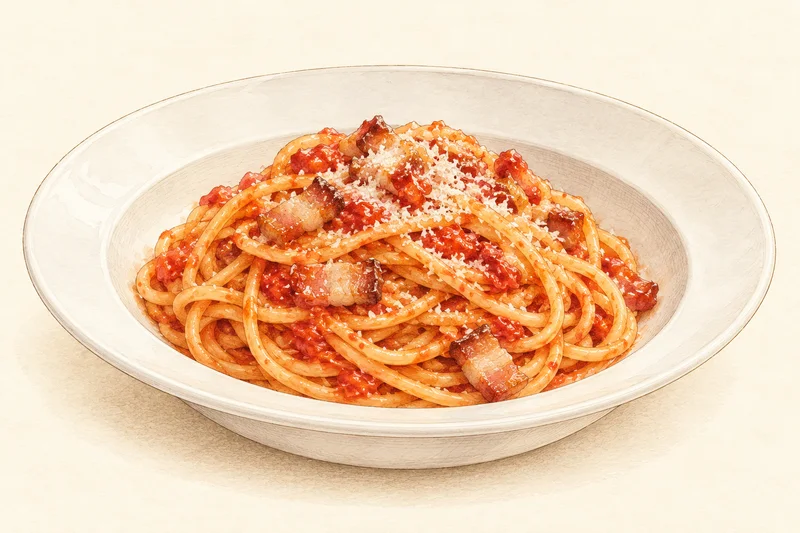 RecipeSpaghetti all'amatricianaAmatrice, Italy
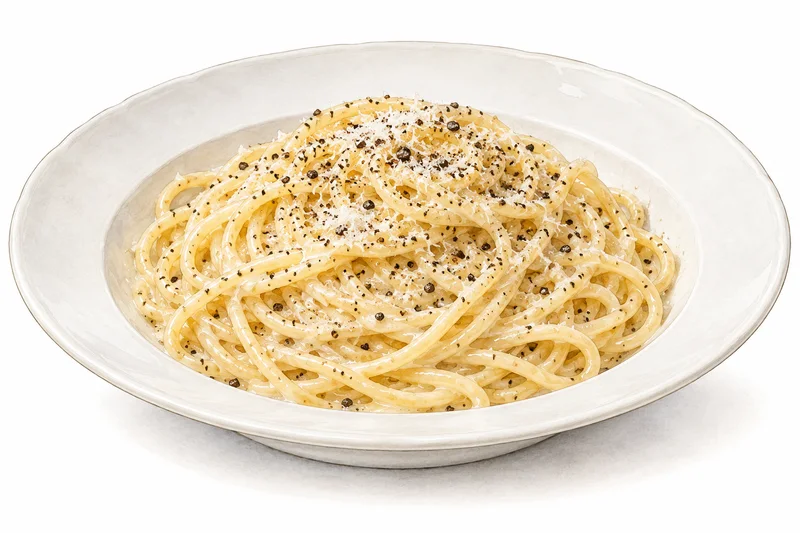 RecipeCacio e pepeRome, Italy
- RecipeLinguine alle vongoleItaly
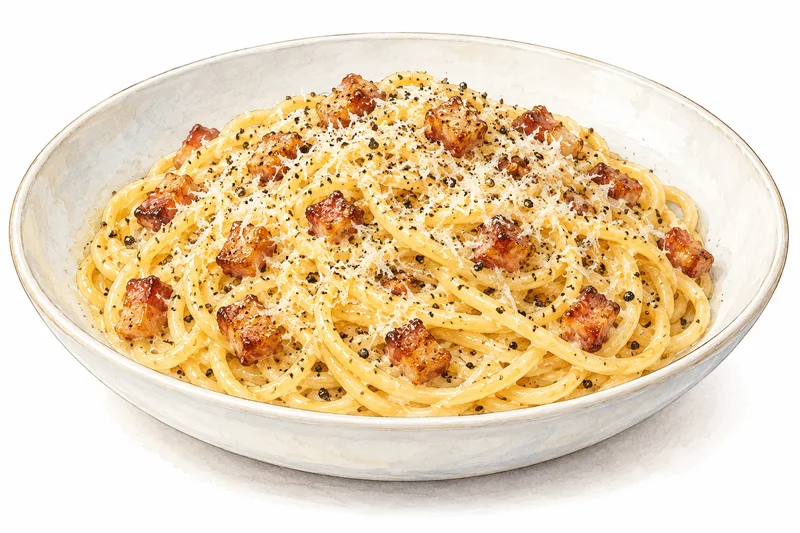 RecipeSpaghetti alla carbonaraRome, Italy
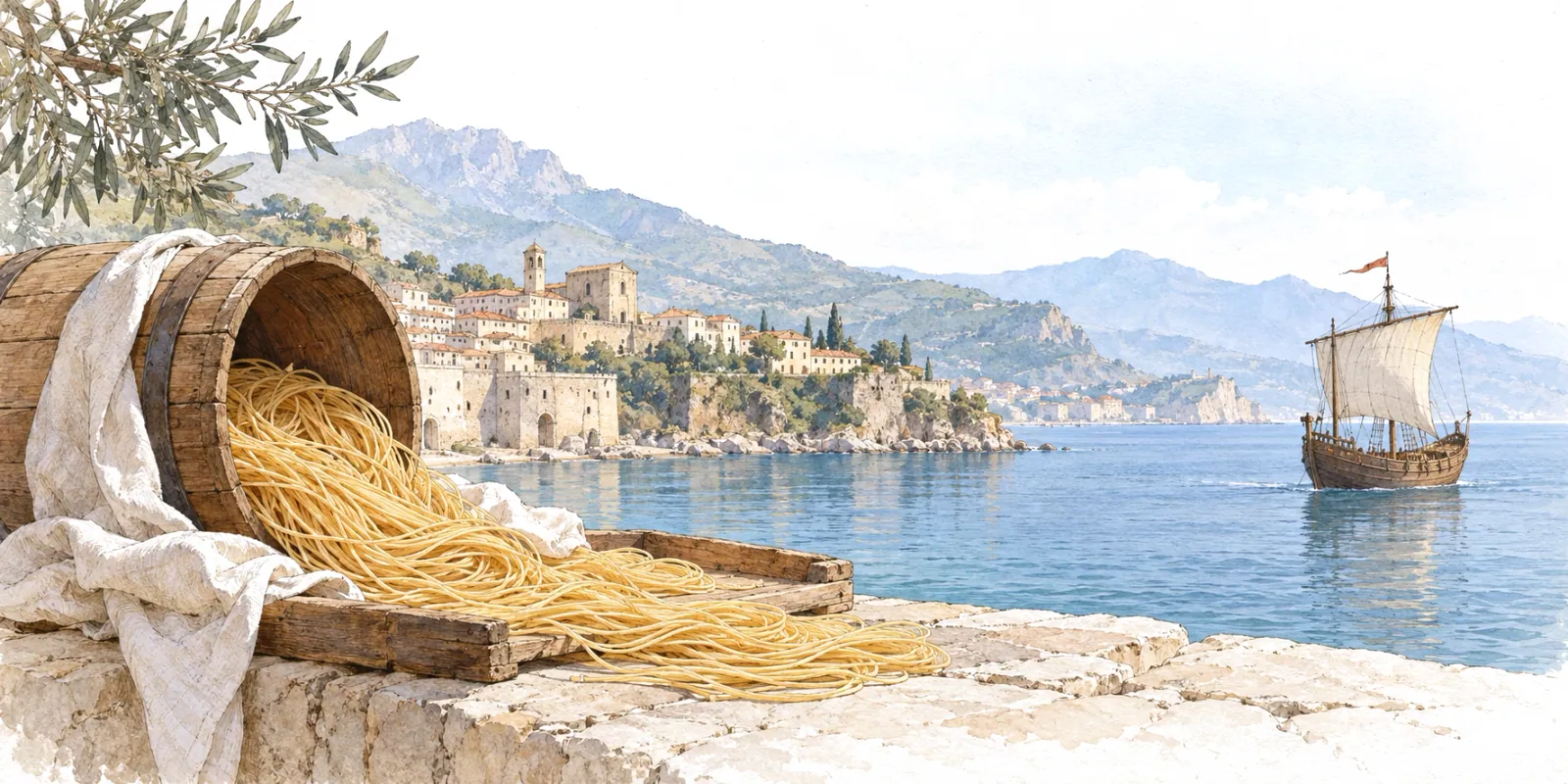 StoryDid Marco Polo bring pasta to Italy?Trabia, Italy
 RecipeBœuf bourguignonDijon, France
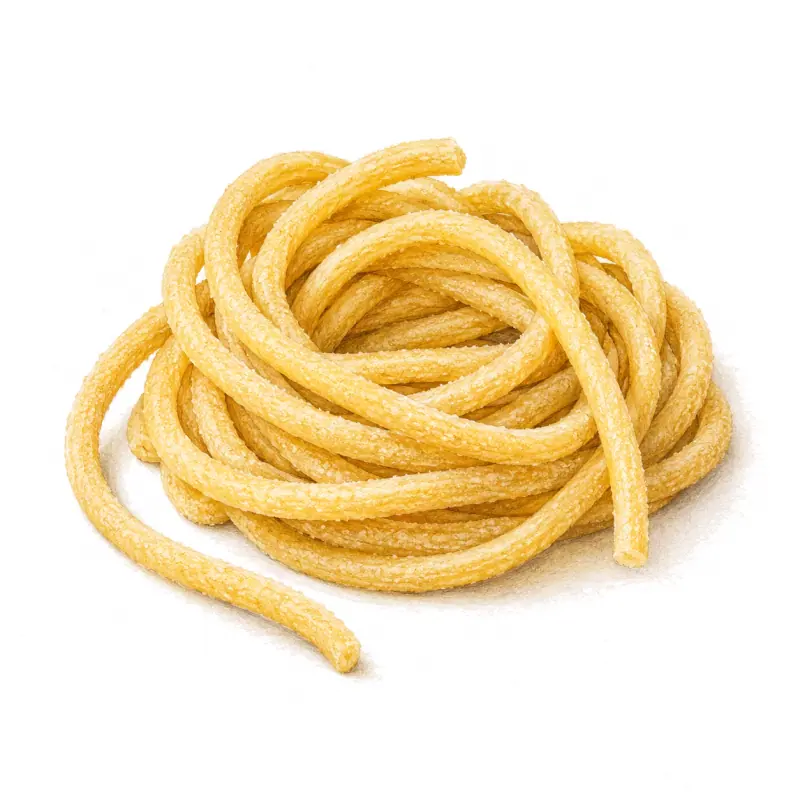 Pasta shapeBigoliPadua, Italy
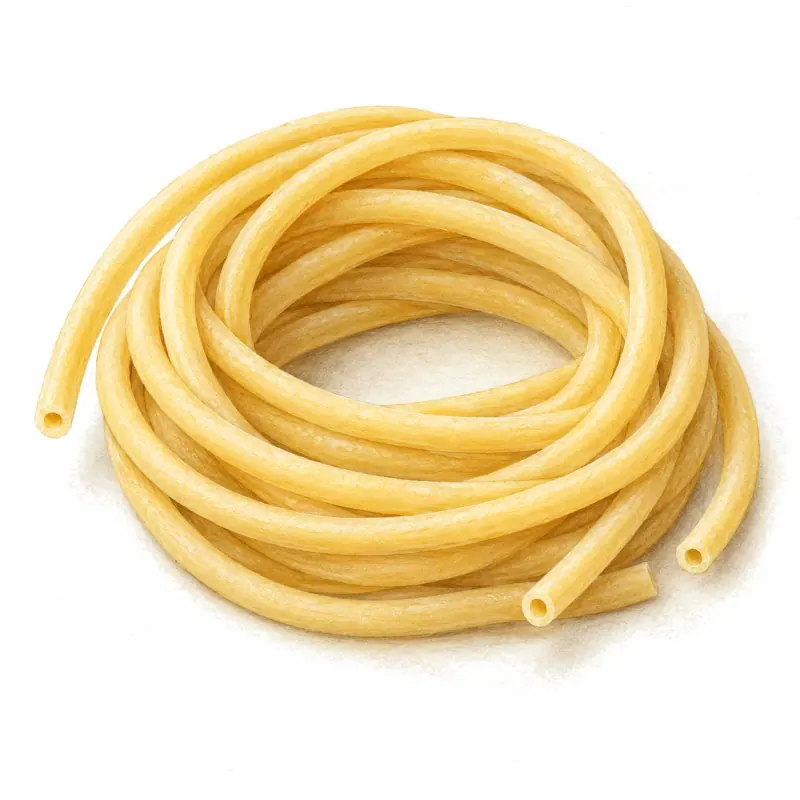 Pasta shapeBucatini
 Pasta shapeCapellini