
Rice · Recipe · Iran · Reference page
Chelow with tahdig
چلو با تهدیگ (chelow ba tahdig)
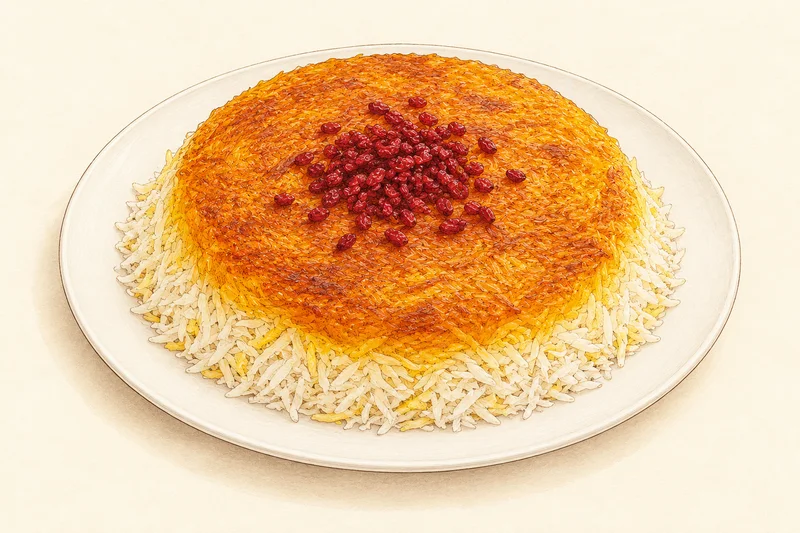
Persian rice part-boiled, then steamed in a covered pan over a layer of rice bound with yoghurt, egg yolk, butter and saffron, which turns into a golden crust, the tahdig. The recipe is Manuela Darling-Gansser's, from her book Pardiz, decorated with barberries.
- Servings
- 6
- Preparation
- 15 min
- Cooking
- 25 min
- Total
- 40 min
- Difficulty
- Moderate
Equipment
- Large saucepan for boiling; colander
- Non-stick saucepan with a tight-fitting lid
- Bowl of very cold water large enough to stand the pan in
- Serving plate larger than the pan
Ingredients
Rice
Tahdig
For the pan
To decorate
Method
Wash the rice in cold water, changing the water 3–4 times. If you have time, leave it in plenty of lightly salted water for up to 4 hours.
Why Washing removes surface starch so the grains stay separate; soaking helps them lengthen.
Drain the rice, cover with water in a saucepan and boil gently until just al dente, about 5 minutes. Drain and rinse under cold water to stop the cooking.
Timer · 5 min5:00Mix the egg yolk, yoghurt, melted butter and saffron water in a bowl, then stir in 4–5 tablespoons of the rice.
Melt 1 tbsp butter in the non-stick pan. Spread the tahdig mixture evenly over the base, then heap the rest of the rice on top in a pyramid.
Why The pyramid lets steam circulate so the top grains cook evenly.
With the handle of a wooden spoon make about 6 deep holes in the rice and put a little knob of butter in each. Cover with a tight lid and cook over medium heat for 20 minutes.
Why The holes let steam escape from the bottom so the crust fries rather than steams.
Timer · 20 min20:00Take the pan off the heat and stand it in very cold water for 2 minutes, then shake it gently.
Why The sudden cooling loosens the crust from the pan.
Timer · 2 min2:00Carefully, as the pan is still very hot, turn the rice out onto a serving plate; the crust should come away easily. Scatter with the barberries.
Substitutions
- Barberries → Leave them out, or use a few dried cranberries soaked briefly (editorial).
- Yoghurt and egg tahdig → Plain rice and butter, or thin slices of potato or flatbread, are other common bases (editorial).
Common mistakes
- Boiling the rice too long: soft grains turn to mush in the steaming.
- A loose lid: steam escapes and the top stays hard.
- Too high a heat: the crust burns before the rice is cooked.
Storage & reheating
Best eaten at once while the crust is crisp. Cool leftovers within an hour, keep no more than a day, reheat once until steaming hot (UK FSA).
Safety
Contains egg (yolk) and milk (yoghurt, butter). Take care when inverting the hot pan.
Allergens
Egg · Milk
Check labels: stock, bacon and sauces can contain further allergens.
Dietary
gluten-free
The prize at the bottom of the pot
Chelow is plain Persian steamed rice; tahdig means "bottom of the pot", the golden crust that forms under it. Manuela Darling-Gansser calls rice with a golden crust "one of the signature dishes of Persian cooking". The crust can be made from many things; she likes this simple version, with crimson barberries set against the gold.
Parboil, then steam
The rice is washed several times and ideally soaked, boiled for only about five minutes until just al dente, then rinsed cold. A few spoonfuls are bound with yolk, yoghurt, melted butter and saffron and spread over a buttered base; the rest is heaped on top in a pyramid, holes are poked down to the bottom, and the pan is covered tightly for 20 minutes. Standing the hot pan in very cold water for two minutes frees the crust, so the whole thing can be turned out in one piece.
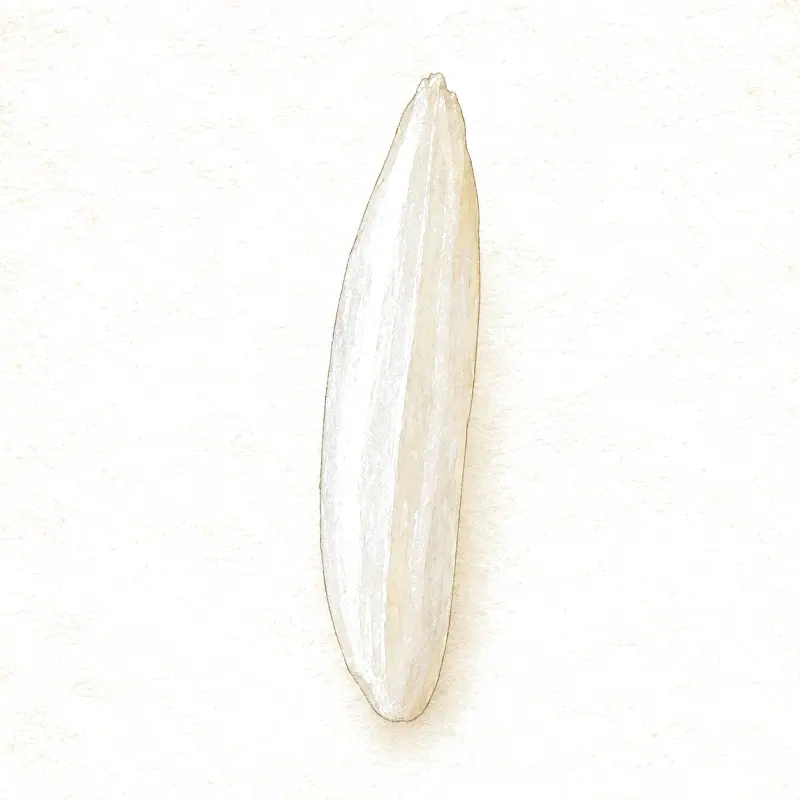
Persian varieties such as Hashemi and Tarom are long and aromatic; the source allows basmati.
How it connects
Continue exploring
- CountryIran3 entries in the atlas so far
 RiceBasmati
- RiceHashemiIran
- RiceTaromIran
 RecipeHyderabadi chicken dum biryaniHyderabad, India
 RecipeJollof rice with chickenNigeria
 RecipeKedgereeBritain, United Kingdom
 RiceBasmati 370Kala Shah Kaku, Punjab, Pakistan
 RiceJasmine rice (Thai Hom Mali)
 RicePusa Basmati 1121Haryana and Punjab Basmati belt, India