Rice · Rice · Short entry
Tarom
طارم
A traditional Iranian long-grain rice included as a distinct sample from Hashemi in published quality studies. The catalogue uses the source’s local-variety identity without assuming that every market use of Tarom denotes identical seed material.
Long grain, with a measurement caveat
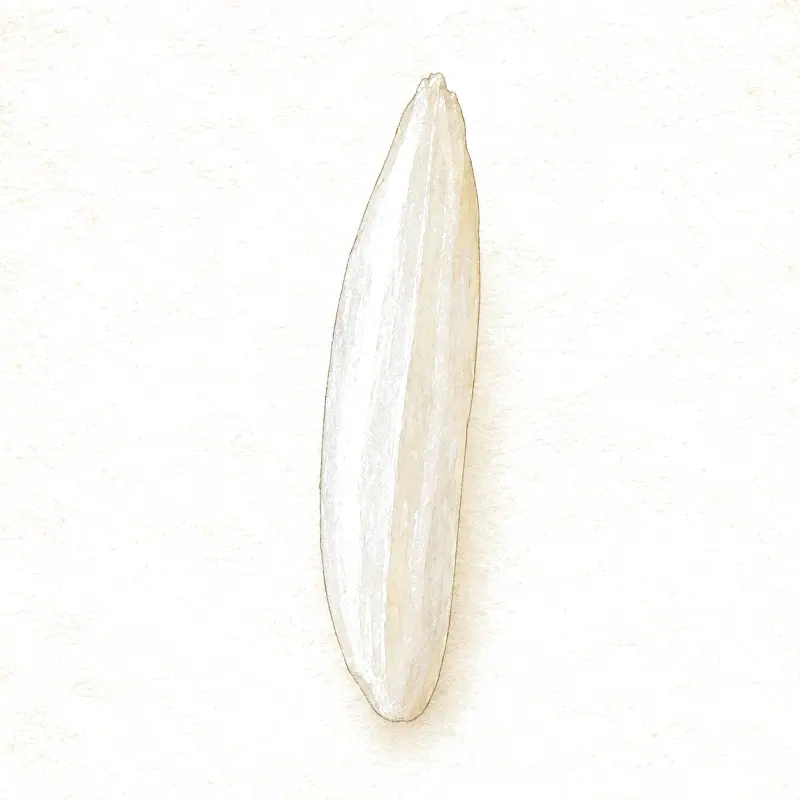
The Iranian physical study places Tarom in its local long-grain group, alongside Hashemi and other named rices. The experimental material was obtained through the Rice Research Institute of Iran. Its mechanical tests use brown kernels at specified moisture levels; those dimensions are not polished-rice measurements. Here the drawing is a class-based estimate, with no claim of a measured milled kernel.
A flour with different behaviour
In the 2018 bread study, Tarom was a separate broken-rice flour sample used by a gluten-free-products company. It had apparent amylose of 23.57 g per 100 g flour in the reported analysis, compared with 21.38 for Hashemi. Tarom also showed different flour hydration and dough behaviour. These results demonstrate why the two names should not be collapsed into one generic rice entry.
Read the seed name carefully
An original Iranian field study lists Hashemi separately from Sang tarom, Tarom mahalli and Tarom deylamani. These are named experimental materials, so a shortened market name should not be treated as a certified seed-lot identity. The measurements on this page refer to the cited samples, rather than every rice sold under the name.
How it connects
Recipe
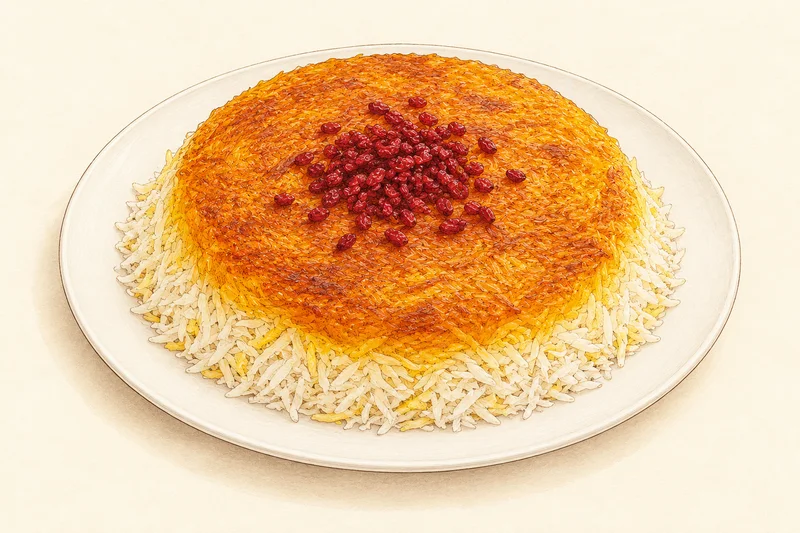
- related Chelow with tahdig