
Meat · Recipe · West Sumatra · Reference page
Beef rendang
rendang daging
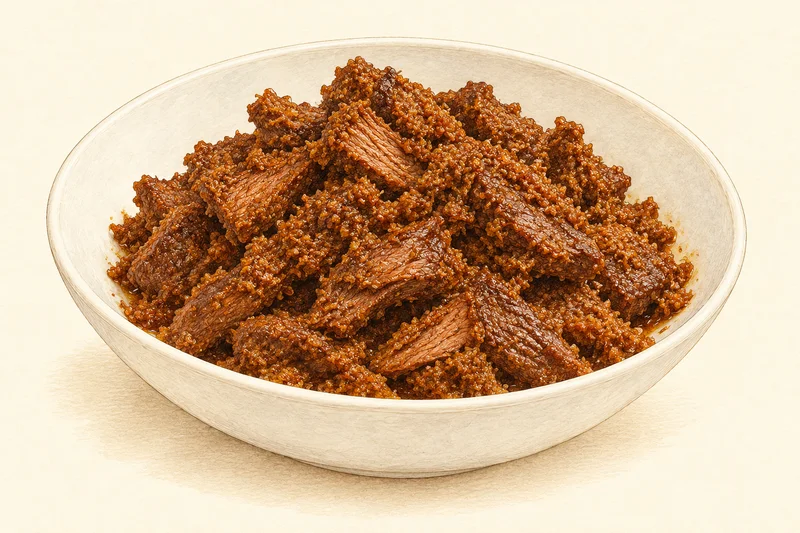
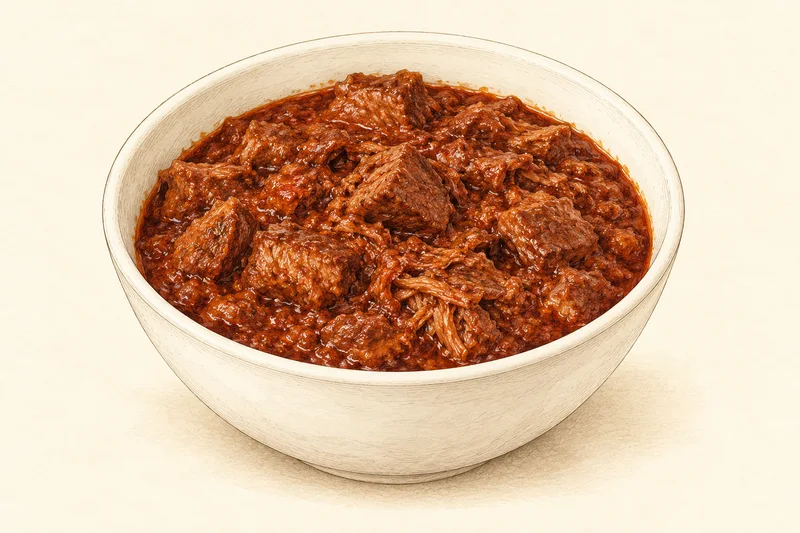
Beef cooked for hours in coconut cream with chilli, garlic, ginger, galangal, lemongrass and turmeric until the liquid has gone and the meat fries dark in the separated oil. The recipe is Charmaine Solomon's. Rendang began in West Sumatra and keeps for days.
- Servings
- 8
- Preparation
- 20 min
- Cooking
- 3 h
- Total
- 3 h 20
- Difficulty
- Moderate
Equipment
- Food processor or blender
- Large heavy wide saucepan or wok
Ingredients
The paste
The spices
The meat
To serve
Method
Soak the tamarind in 125 ml hot water for 10 minutes. Squeeze it to dissolve the pulp, then strain, discarding the seeds and fibre.
Timer · 10 min10:00Meanwhile, blend the onions, garlic, ginger, chillies and 125 ml of the coconut cream until smooth. Pour into the saucepan and add the remaining 375 ml coconut cream.
Stir in the salt, turmeric, chilli powder, coriander, daun salam, lemongrass and galangal. Add the beef and bring to the boil.
Reduce the heat to medium, add the tamarind liquid and simmer, stirring now and then, until the sauce has thickened.
Lower the heat and keep simmering for about 2½ hours, stirring often so nothing sticks, until the sauce is almost dry.
Why As the water evaporates the coconut cream splits and releases its oil. The meat then fries in that oil instead of stewing.
Timer · 2 h 30150:00When the oil starts to separate, add the sugar and stir to dissolve. Let the meat cook in the oil, stirring, until it turns dark brown.
Why This final frying is what makes a rendang dry and dark rather than a curry with sauce.
To drink & serve with
Solomon serves it with rice, one or two vegetable dishes, sambal and prawn crisps (prawn crisps contain crustaceans).
Substitutions
- Daun salam → Leave them out; they are optional in the recipe.
- Galangal → A little more ginger.
Common mistakes
- Not stirring in the last hour: the reduced coconut sticks and burns.
- Stopping while there is still sauce: the dish is meant to be almost dry.
Storage & reheating
Keeps well and gains flavour over the following days; suitable to freeze. Cool quickly and refrigerate within 2 hours.
Safety
No major allergens in the rendang itself; prawn crackers served alongside contain crustaceans. Stir the hot, spitting oil with care in the last stage.
Allergens
None
Check labels: stock, bacon and sauces can contain further allergens.
Dietary
gluten-free · dairy-free
From West Sumatra
SBS's guide to Indonesian cooking places the origin of rendang in West Sumatra, where it is cooked for hours until the coconut milk has reduced completely and the meat is tender and intensely flavoured. It is traditionally made with beef, though lamb and other meats are also used.
The recipe here is by Charmaine Solomon, published by SBS. She notes that it is worth making a large quantity because rendang keeps so well and develops more flavour each day.
From curry to dry fry
A rendang passes through two stages in one pot. First it is a simmered curry: beef in coconut cream with a blended paste and dried spices, sharpened with tamarind. Then, as the liquid evaporates over two and a half hours, the coconut cream splits, its oil separates and the meat begins to fry. Sugar goes in at that point, and the meat is cooked on until it is dark brown and coated rather than sauced.
How it connects
Place
- origin West Sumatra In preparation
Cut
- made with Chuck (US)
Recipe
- related Nasi lemak
- related Nasi goreng (kambing)
Continue exploring
- CountryIndonesia7 entries in the atlas so far
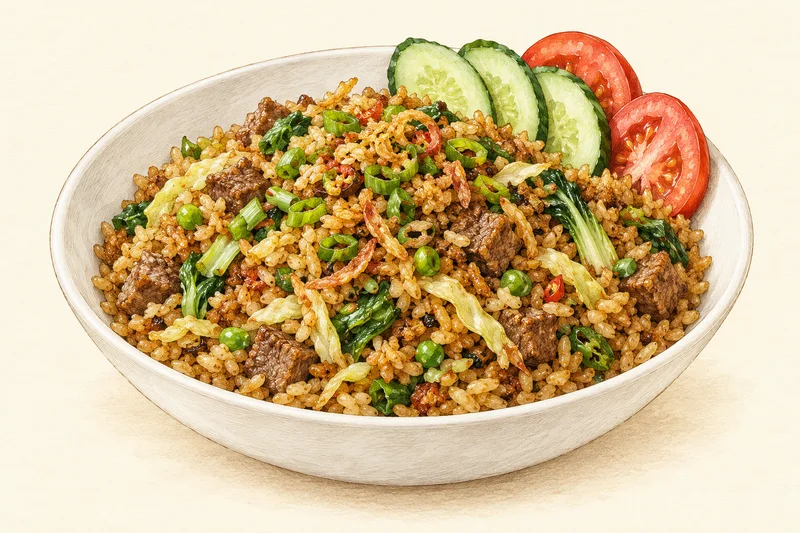 RecipeNasi goreng (kambing)Jakarta, Indonesia
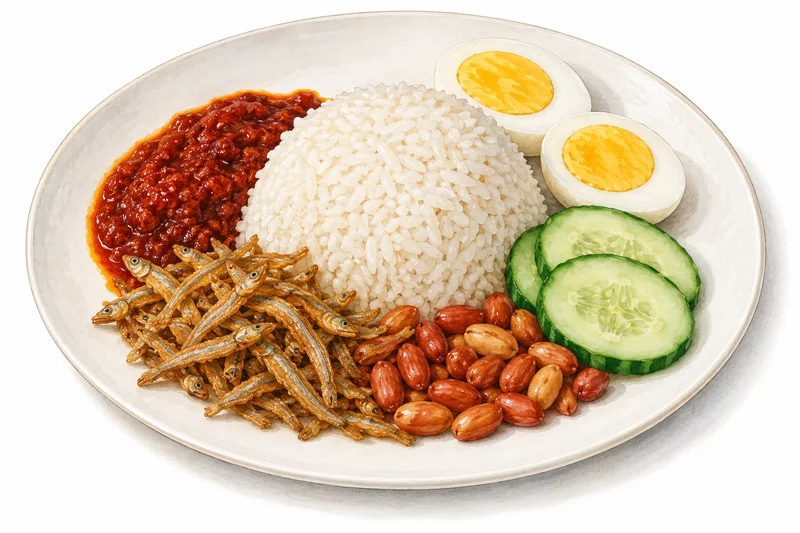 RecipeNasi lemakMalaysia
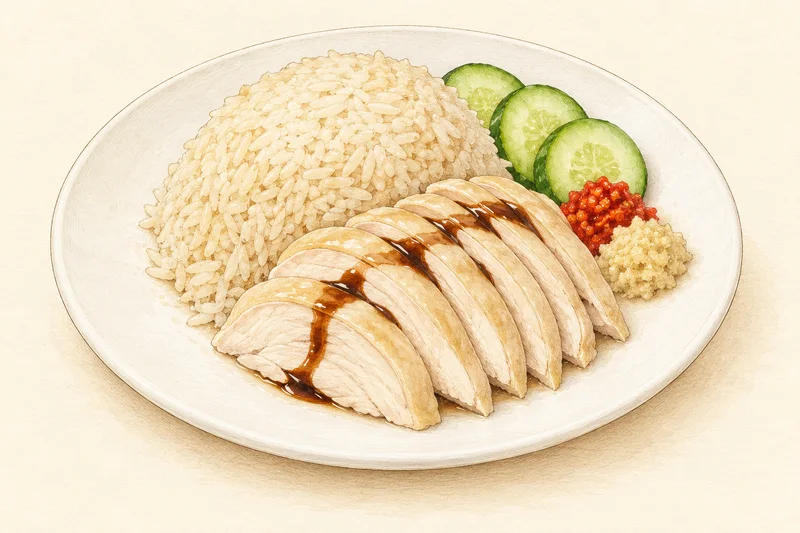 RecipeHainanese chicken riceSingapore
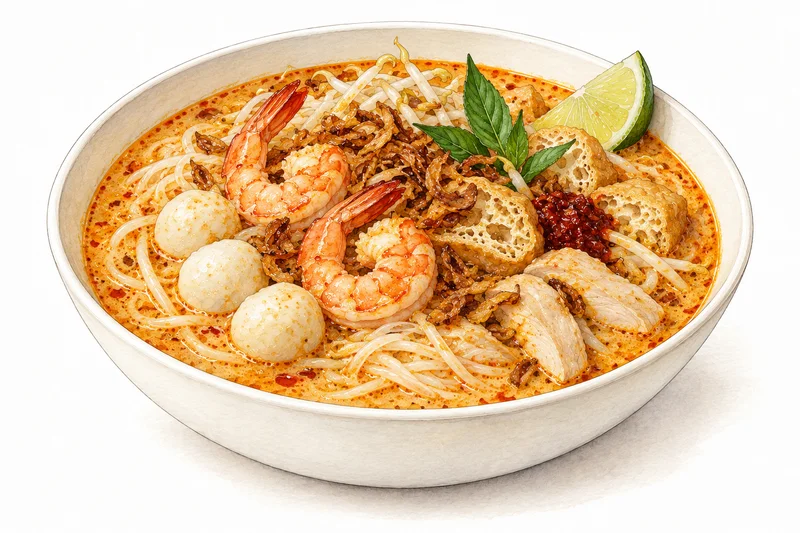 RecipeLaksa lemak (Malay curry laksa)Malaysia
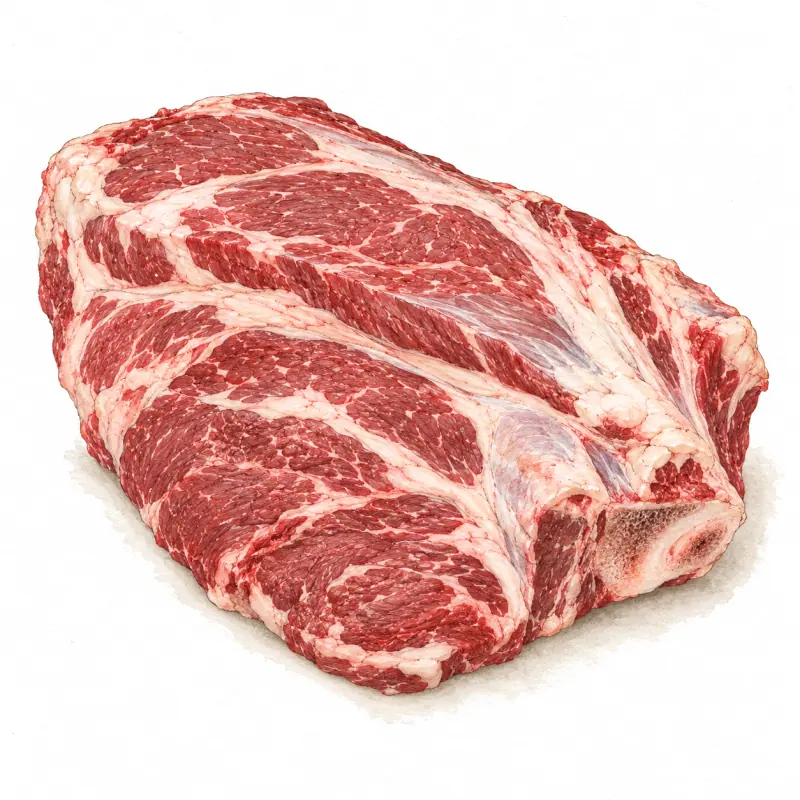 CutChuck (US)
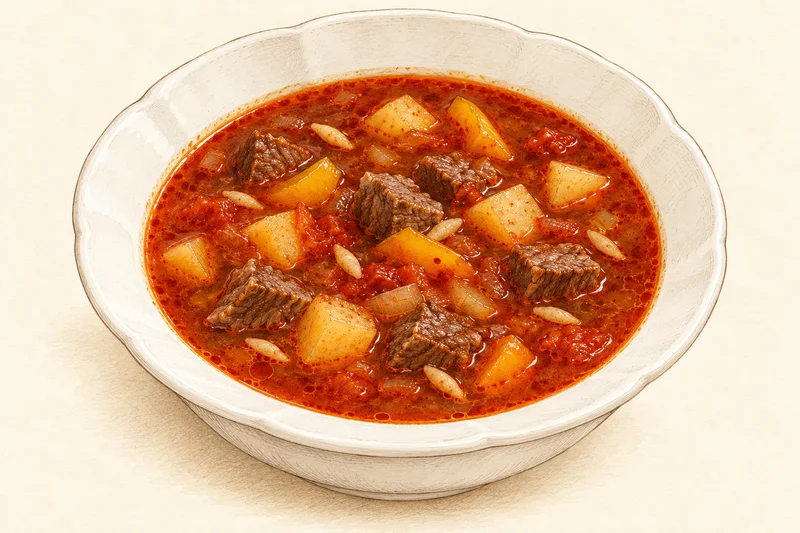 RecipeBogrács gulyásHungary
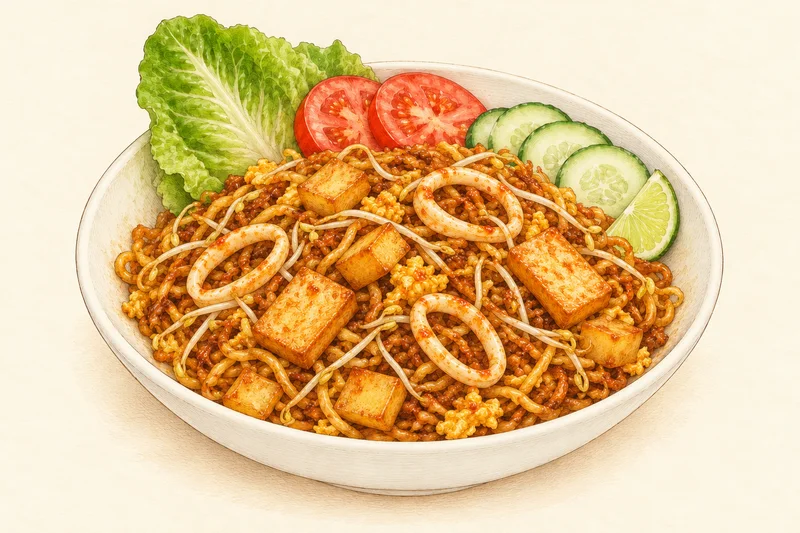 RecipeMee goreng mamakKuala Lumpur, Malaysia
 RecipeBowl of Texas redTexas, United States of America
 RiceJasmine rice (Thai Hom Mali)