
Rice · Recipe · Malaysia · Reference page
Nasi lemak
Nasi lemak
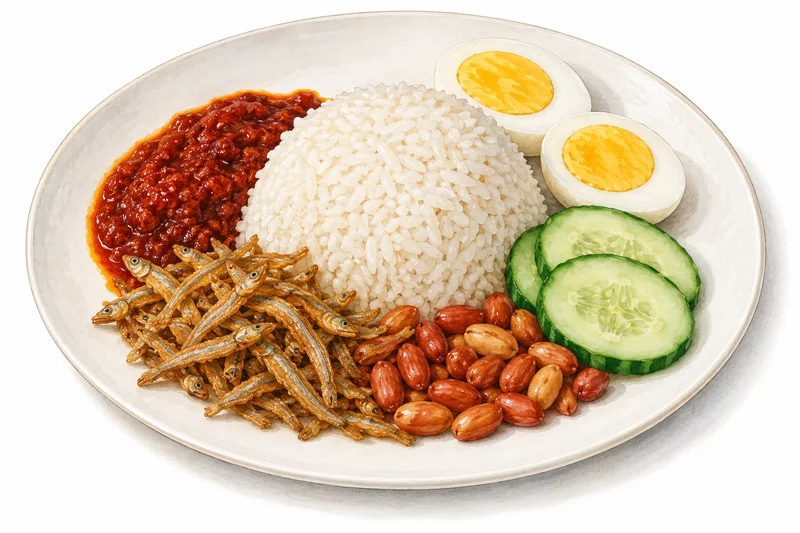
Rice cooked with coconut milk and knotted pandan leaves, served with a sweet-sour chilli sambal, fried anchovies, peanuts, cucumber and boiled egg. Adam Liaw's version for SBS Food serves four; he calls it Malaysia's national dish.
- Servings
- 4
- Preparation
- 15 min
- Cooking
- 25 min
- Resting
- 5 min
- Total
- 45 min
- Difficulty
- Moderate
Equipment
- Saucepan with a tight lid
- Blender
- Wok or frying pan
Ingredients
Coconut rice
Sambal
To serve
Method
Wash the rice and put it in the saucepan with the coconut milk and a pinch of salt. Add cold water to cover the rice by 2 cm and the knotted pandan leaves. Bring to the boil over medium-high heat and boil until the liquid is level with the top of the rice.
Why Boiling down to the surface of the rice before covering is the absorption method: the rest of the liquid is taken up by steaming.
Turn the heat to very low, cover and cook 12 minutes. Turn off the heat and leave covered 5 minutes.
Timer · 17 min17:00For the sambal, blend the chillies, the 25 g ikan bilis, onion, lemongrass, ginger, garlic, candlenuts and belacan to a smooth paste.
Heat the oil in a wok over low-medium heat and fry the paste about 10 minutes, until deeply fragrant and the oil separates.
Why Long, gentle frying cooks out the raw chilli and shrimp paste; the oil separating is the sign it is done.
Timer · 10 min10:00Strain in the tamarind water, add both sugars and the salt and simmer about 5 minutes until thick. Taste and adjust.
Timer · 5 min5:00Heat about 1 cm of oil in a wok over medium-high heat. Fry the 200 g ikan bilis and the peanuts separately until crisp; drain on paper and season each lightly with sugar and salt.
Serve the rice with the sambal, cucumber, fried anchovies, peanuts and egg halves.
Substitutions
- Pandan leaves → Leave them out; the rice loses its grassy aroma but is still good.
- Candlenuts → Macadamia nuts are a common stand-in (this adds a tree-nut allergen).
Common mistakes
- Lifting the lid during the 12 minutes: steam escapes and the rice stays hard.
- Frying the sambal paste on high heat: it burns before it cooks.
Storage & reheating
Rice is best fresh; cool leftovers quickly and keep 1 day in the fridge. The sambal keeps a week in the fridge in a clean jar.
Safety
Cooked rice left warm can grow Bacillus cereus: cool leftovers within an hour and refrigerate. Allergens: fish (anchovies), crustaceans (belacan), peanuts, egg. Candlenuts are tree seeds; people with nut allergies should check.
Allergens
Fish · Crustaceans · Peanuts · Egg
Check labels: stock, bacon and sauces can contain further allergens.
Dietary
gluten-free
A national dish with many versions
Adam Liaw's recipe for SBS Food calls nasi lemak Malaysia's national dish and notes that there are many versions; what they share is coconut rice, a few crunchy accompaniments and a strongly flavoured sambal.
Coconut rice and sambal
The jasmine rice is cooked by the absorption method. Coconut milk and water cover it by 2 cm; the pan boils uncovered until the liquid is level with the rice, then is covered and left on very low heat for 12 minutes and off the heat for 5. Knotted pandan leaves perfume it as it cooks.
The sambal is a cooked paste. Chillies, dried anchovies, aromatics, candlenuts and shrimp paste are blended and fried slowly for about 10 minutes until the oil separates, then simmered with tamarind water and sugar until thick: hot, sour, sweet and salty at once.
How it connects
Place
- origin Malaysia In preparation
Rice
- made with Jasmine rice (Thai Hom Mali)
Recipe
- related Laksa lemak (Malay curry laksa)
- related Beef rendang
- related Hainanese chicken rice
- related Nasi goreng (kambing)
- related Mee goreng mamak
Continue exploring
- CountryMalaysia5 entries in the atlas so far
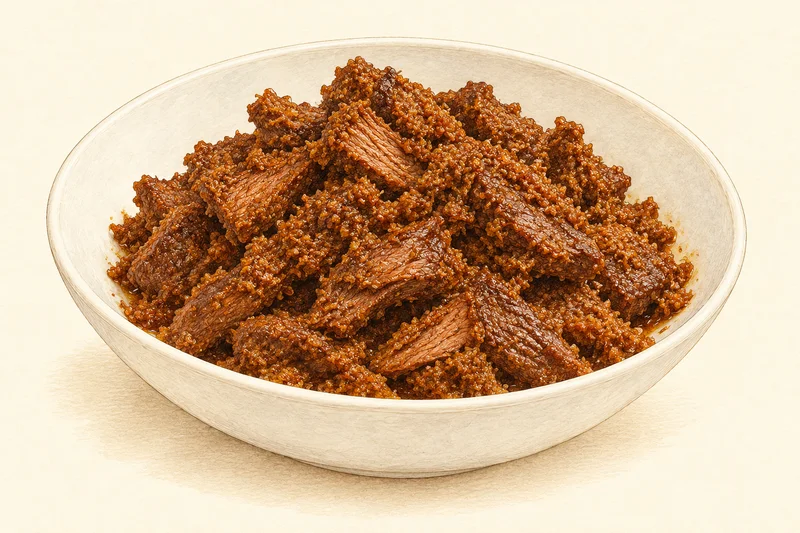 RecipeBeef rendangWest Sumatra, Indonesia
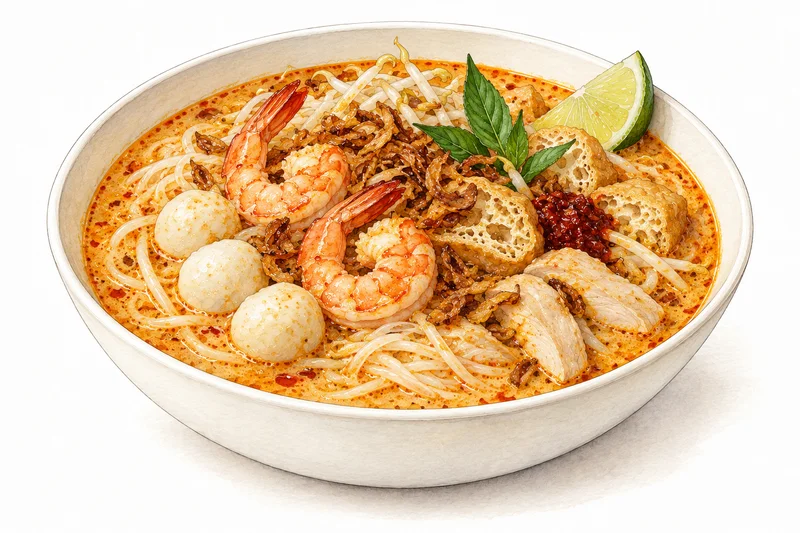 RecipeLaksa lemak (Malay curry laksa)Malaysia
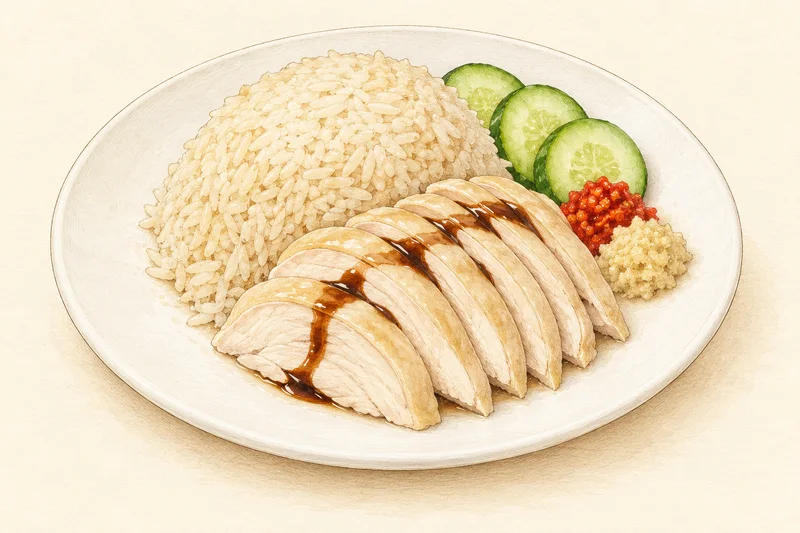 RecipeHainanese chicken riceSingapore
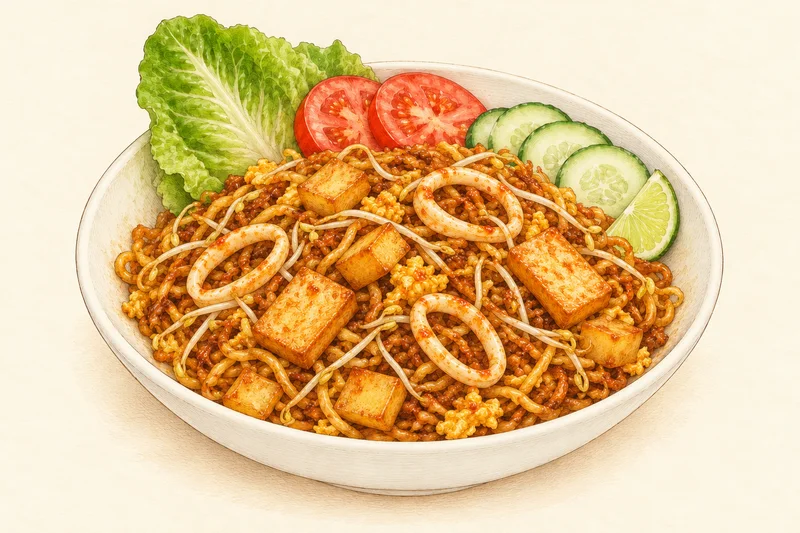 RecipeMee goreng mamakKuala Lumpur, Malaysia
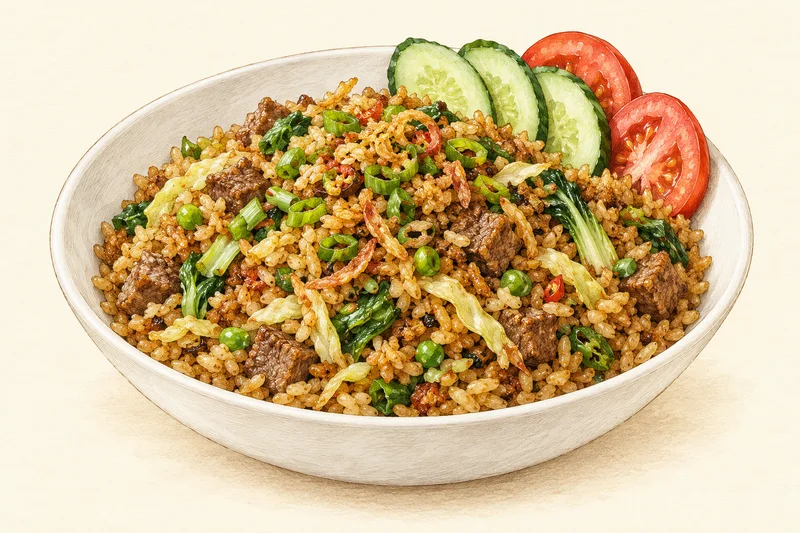 RecipeNasi goreng (kambing)Jakarta, Indonesia
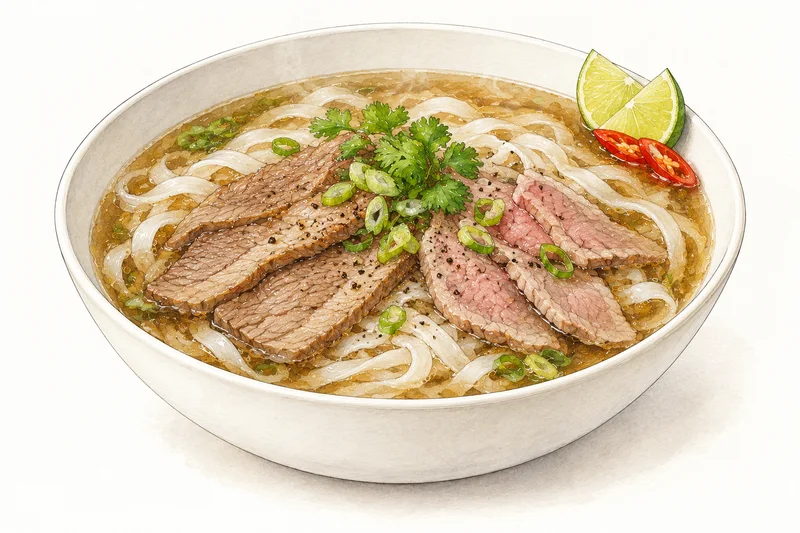 RecipePhở bò (beef noodle soup)Vietnam
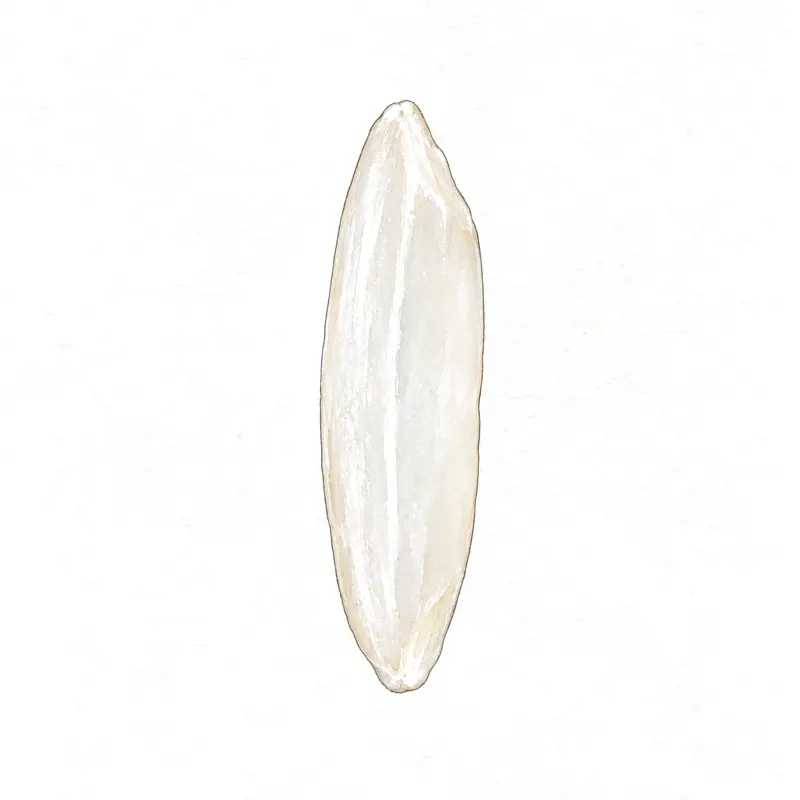 RiceJasmine rice (Thai Hom Mali)
 RecipeArroz caldoPhilippines
 CutChuck (US)