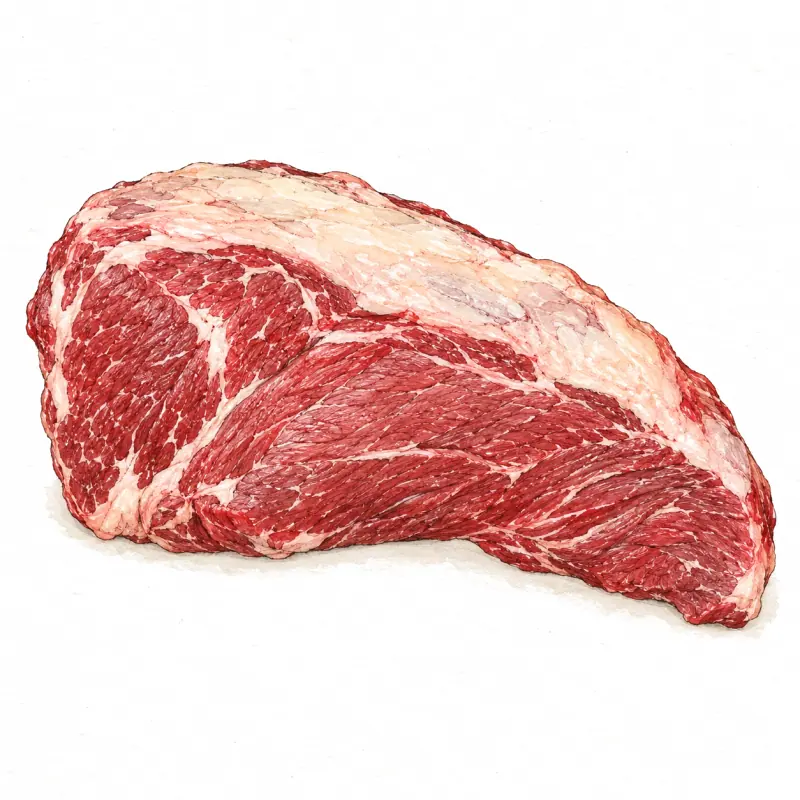
Meat · Cut · Short entry
Onglet (hanger)
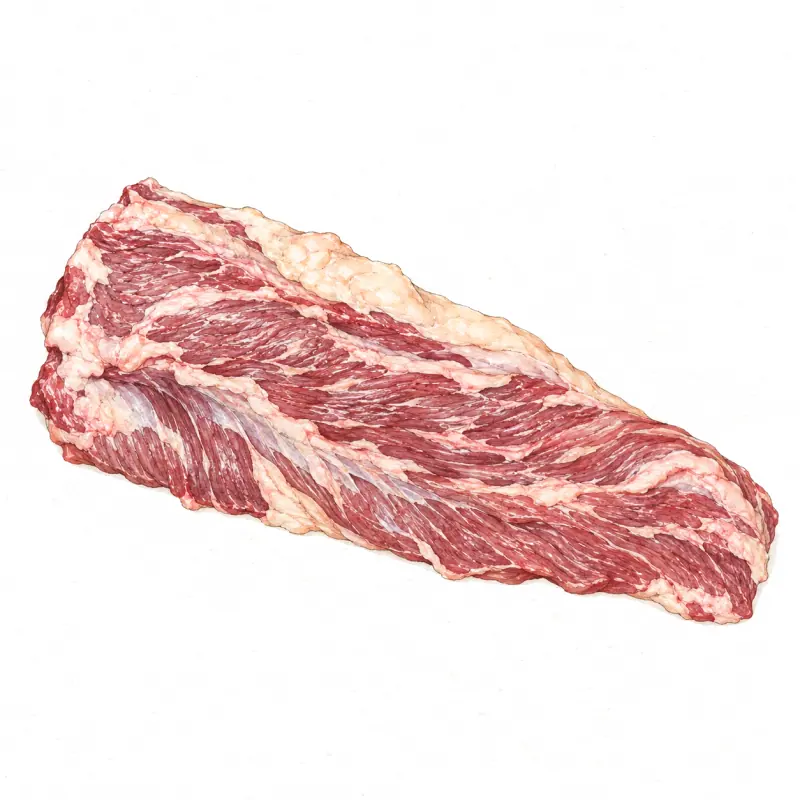
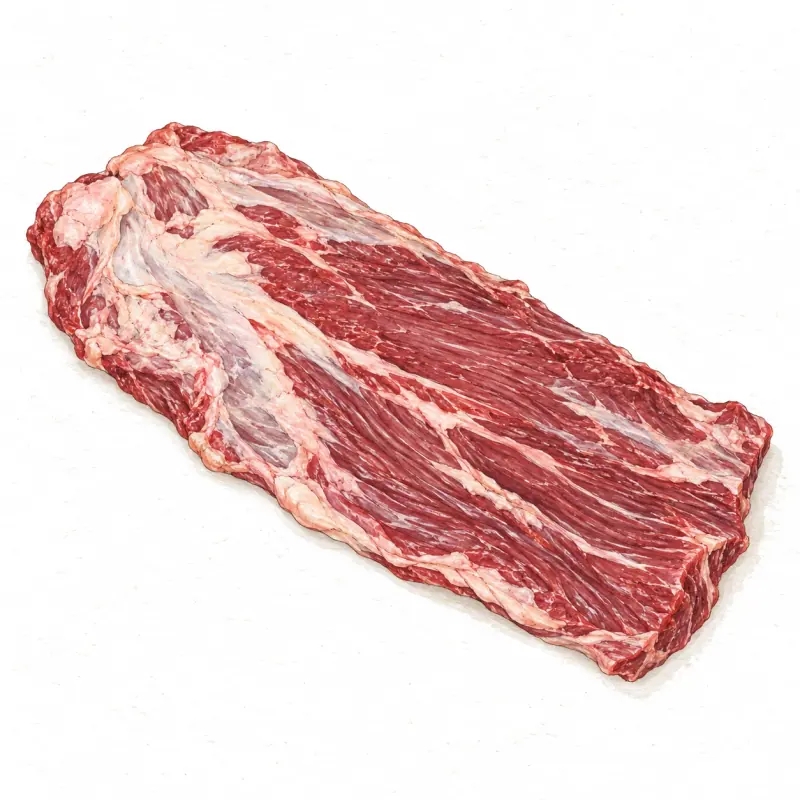
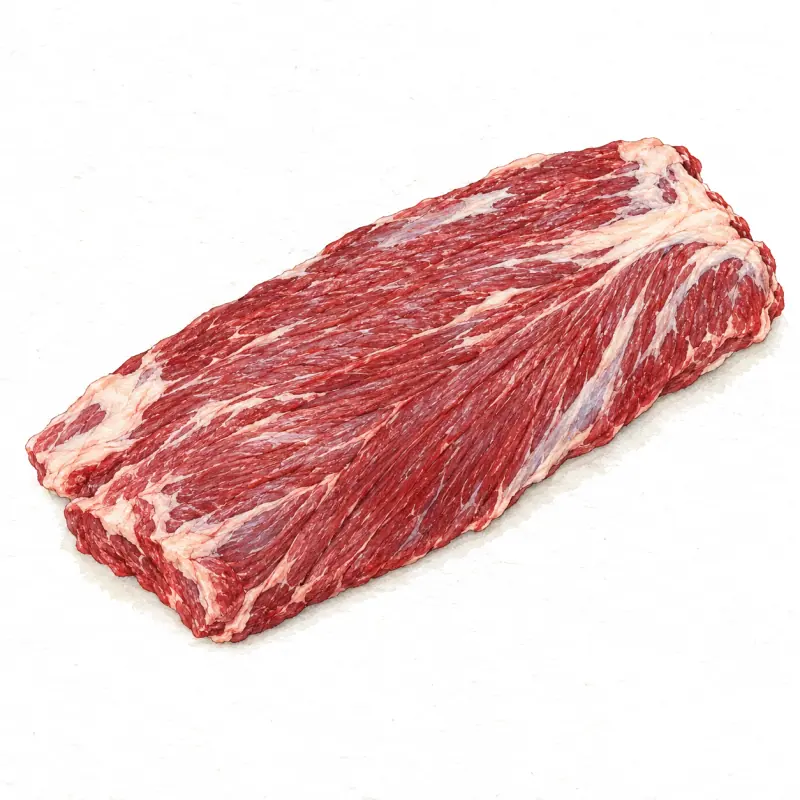
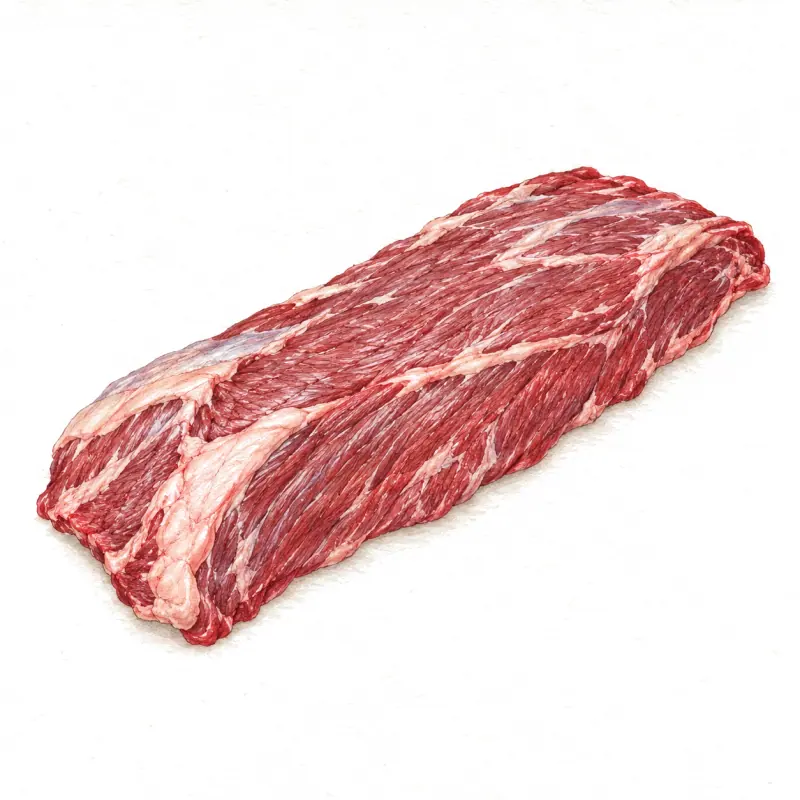
The onglet is the pillars of the diaphragm, the thick muscular part that hangs from the lumbar spine. It is one of the French 'morceaux du boucher': there is little of it on each animal, so it is rarely in supermarkets and is usually sold by tripe butchers. Long-fibred, it is seared for about a minute a side and eaten rare.
What it is
The Québec terminology office defines the onglet as the piece that corresponds anatomically to the pillars of the diaphragm. The UNECE beef standard gives the same French name to its item 2180, thick skirt (hanging tender), which it describes as the lumbar portion of the diaphragm. The American IMPS item 140, hanging tender, is a soft, grainy, elliptical muscle attached to the diaphragm where the lumbar and thoracic vertebrae meet; IMPS notes that the heavy connective tissue in its centre is removed with a butterfly cut, and that the result is sold as "pillars" or "hanger".
This is an internal diaphragm muscle. The side-view chart therefore lists it separately rather than treating it as a piece of the surface bavette region. Use the anatomical description to distinguish it from hampe.
Buying and cooking
Interbev counts the onglet among the morceaux du boucher: cuts hard to supply because each carcass yields little of them and they take patient work. It is generally not sold in supermarkets and is most often found at a tripier, although some butchers stock it.
Interbev's advice is short. Bring the meat to room temperature, sear it about 1 minute on each side, season with salt and pepper and serve it rare, because it hardens if cooked longer. Rest it briefly under foil. Like any steak it keeps 2 to 3 days in the refrigerator.
How it connects
Cut
- related Hampe (skirt)
- similar Bavette (flank / flap)