Meat · Cut · Short entry
Hampe (skirt)
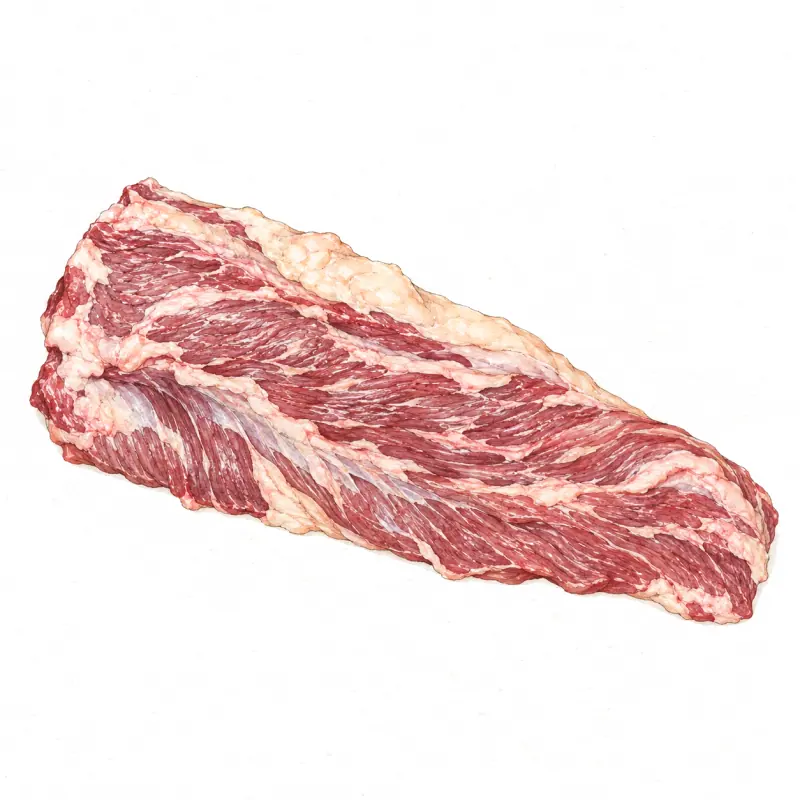
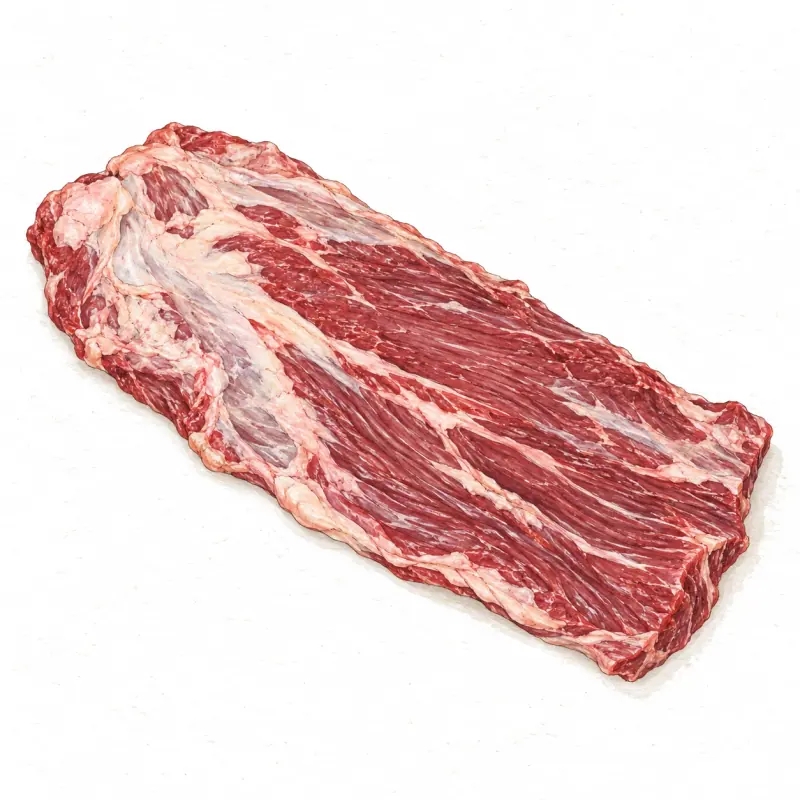
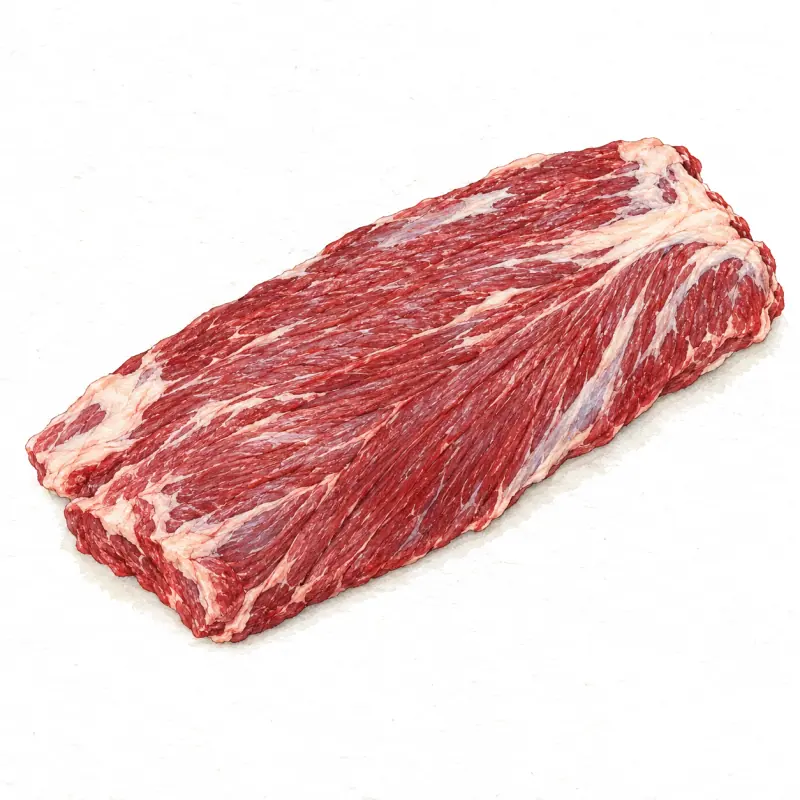
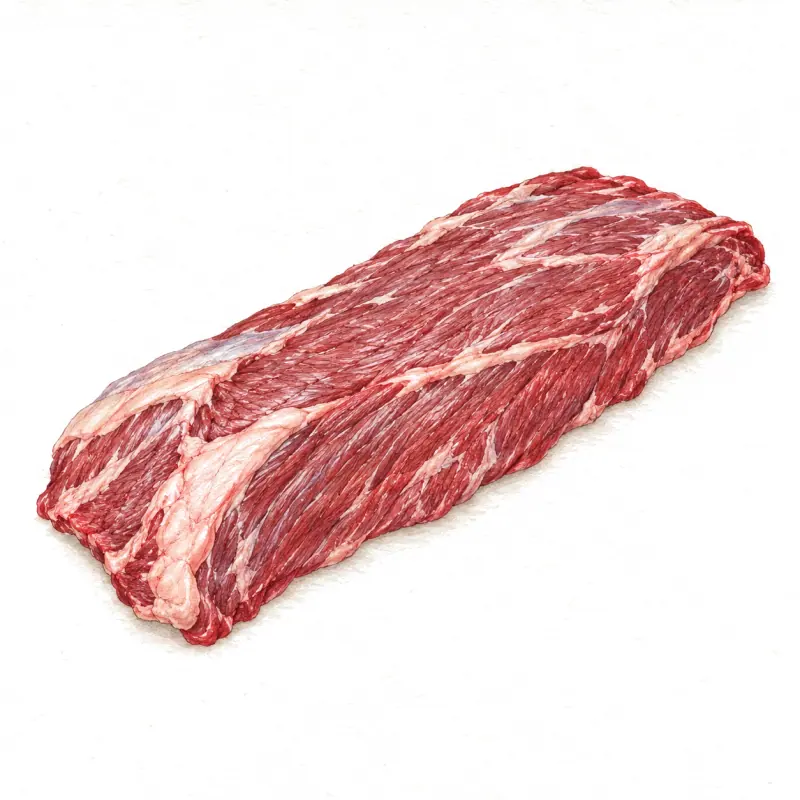
The hampe is the muscular rim of the diaphragm, the part attached along the ribs. In France it is classed among the produits tripiers and is usually bought from a tripe butcher. Its long, very visible fibres and fine marbling make a flavourful steak, seared fast and served rare.
What it is
The Québec terminology office defines the hampe as the base of the diaphragm and gives "skirt" as the English term. The UNECE beef standard pairs hampe with its item 2190, thin skirt (outside skirt), the costal muscle portion of the diaphragm, from which white tendinous tissue not covering red muscle is trimmed. The thicker lumbar part of the same muscle is the onglet.
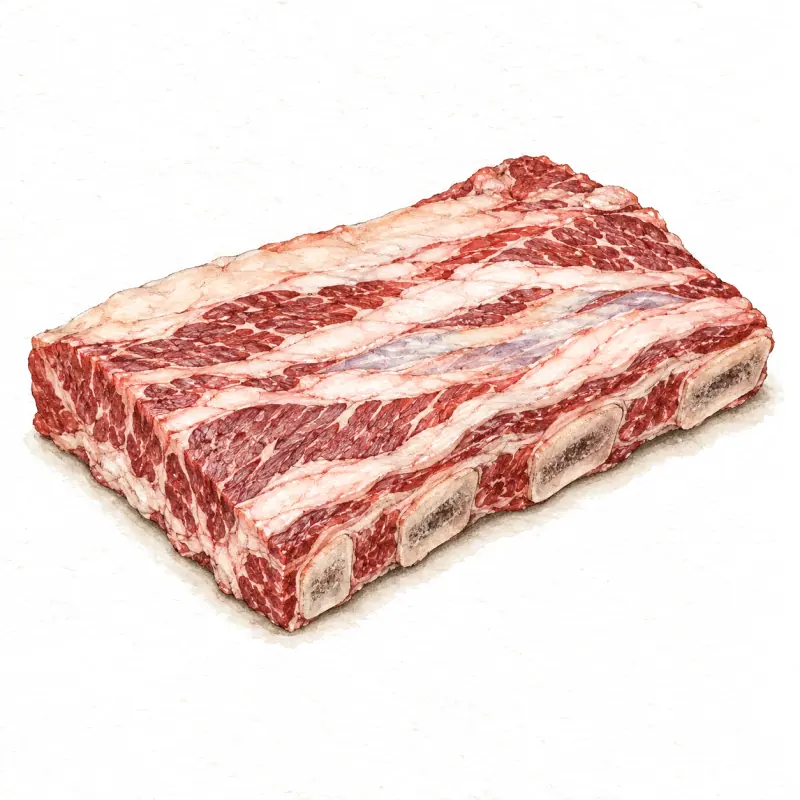
In the United States the same muscle is IMPS 121C, outside skirt, removed from the short plate. In British trade the AHDB Meat Purchasing Guide lists skirt steaks from the diaphragm under its offal codes (Offal B002), which matches the French habit of selling the hampe as a produit tripier.
Buying and cooking
Interbev describes the hampe as having long, very visible fibres and fine threads of fat (persillage) that give it a flavour prized by lovers of rare beef. It is often cut into steaks, seasoned with salt and pepper only, seared about 1 minute on each side and rested briefly under foil. Because supply is small and the piece needs trimming, it is generally not sold in supermarkets.
How it connects
Cut
- related Onglet (hanger)
- similar Bavette (flank / flap)
- compare Short plate (US)