
Potatoes · Recipe · Savoie · Reference page
Tartiflette
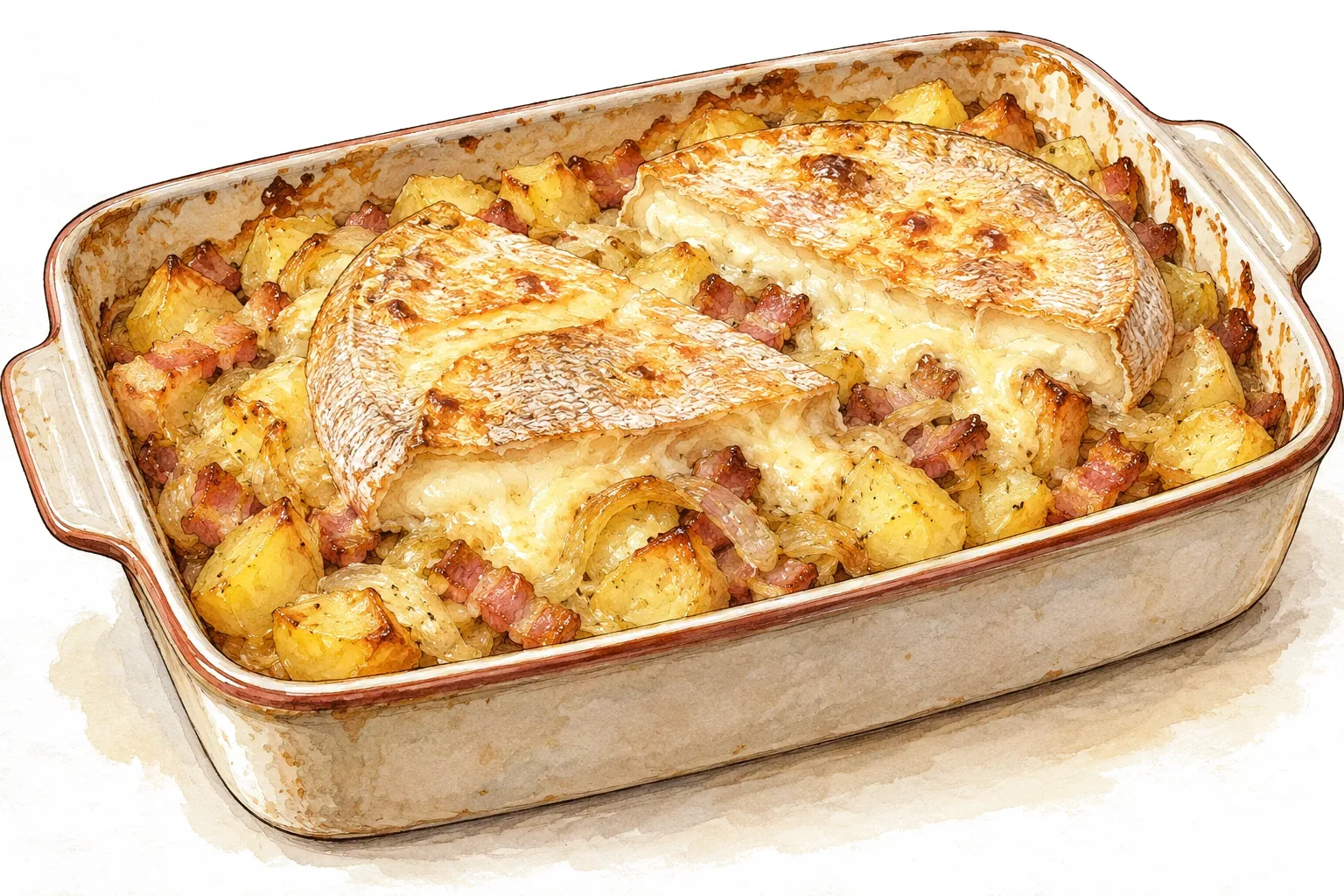
Firm potatoes fried with smoked lardons and onions, deglazed with Savoie white wine and baked under a whole Reblochon cut in half, rind up. The Reblochon interprofession dates it to the 1980s, adapted from an older Savoyard pan dish, the péla.
- Servings
- 4
- Preparation
- 25 min
- Cooking
- 50 min
- Total
- 1 h 15
- Difficulty
- Easy
Equipment
- Large frying pan or sauté pan with a lid
- Ovenproof dish about 25 × 20 cm
Ingredients
Method
In the pan, cook the lardons with the onions for about 3 minutes until they begin to colour. Add no fat: the lardons supply it.
Timer · 3 min3:00Add the potatoes and cook over a medium heat for about 20 minutes, turning them now and then, until tender and lightly golden. Cover for part of the time if they colour before they are cooked.
Why The interprofession prefers frying the raw potatoes with the lardons for a richer result; boiling them first is the alternative it allows.
Timer · 20 min20:00Heat the oven to 200 °C. Pour the wine into the pan, scrape up the browned bits and cook for about 5 minutes. Season with pepper, and nutmeg if you like. Add no salt.
Why Lardons and Reblochon are both salty; the interprofession calls for pepper only.
Timer · 5 min5:00Cut the Reblochon in half horizontally, leaving the rind on. Cut one half into small cubes. Cut the other half into 2 or 4 pieces to fit your dish.
Tip the potato mixture into the ovenproof dish and stir in the Reblochon cubes. Lay the remaining pieces on top, rind side up.
Why Rind up, the top half melts down into the potatoes while the rind browns and protects the cheese from drying.
Bake 15–20 minutes, until the cheese has melted and the top is golden. Serve hot with a green salad.
Timer · 18 min18:00
To drink & serve with
A dry white from Savoie, ideally the one used in the dish: Apremont, Chignin or Roussette de Savoie.
A green salad with a sharp dressing alongside.
Substitutions
- Firm potatoes → Any waxy variety, such as Charlotte or Amandine. Floury potatoes break up.
- Crème fraîche → The interprofession treats cream as optional and advises against letting the potatoes sit in cream for an authentic version.
Common mistakes
- Removing the rind: it is part of the dish and protects the top half of the cheese.
- Salting: the dish becomes too salty.
Storage & reheating
Best eaten straight from the oven. Leftovers keep 2 days in the fridge; reheat covered at 180 °C until piping hot.
Safety
Reblochon is a raw-milk cheese. Baked until bubbling throughout, it is cooked; pregnant women and other people at higher risk of listeriosis should eat it only when piping hot. Allergens: milk and sulphites (wine).
Allergens
Milk · Sulphites
Check labels: stock, bacon and sauces can contain further allergens.
Dietary
gluten-free
A recent classic
The tartiflette is younger than it looks. The Syndicat Interprofessionnel du Reblochon, which represents the producers of the protected cheese, dates it to the 1980s. It was adapted from an older Savoyard dish, the péla, potatoes and onions cooked in a long-handled pan over the hearth or in the communal bread oven. The interprofession gives two reasons for the change: to use surplus Reblochon, and to give the old dish a modern name. The name is linked to tartifla, the Savoyard word for potato.
The interprofession also sets the rules for an authentic version: a Reblochon de Savoie, firm potatoes such as Roseval or Belle de Fontenay, smoked lardons, onions, a little dry Savoie white, pepper and perhaps nutmeg, and nothing else. Crème fraîche is optional, and it advises against letting the dish sit in cream.
One cheese, two ways
A Reblochon is a flat washed-rind cheese 13–14 cm across, about 3.5 cm thick and weighing 450–550 g, made from raw whole milk. The tartiflette uses all of it, in two ways. Half is cubed and stirred through the hot potatoes, where it melts into a sauce. The other half goes on top with its rind facing up: in the oven the paste melts downwards while the rind browns.
The potatoes are cooked raw in the pan with the lardons and onions, so they take on the smoky fat and colour a little before the wine goes in. The dish needs no salt.
How it connects
Place
- origin Savoie In preparation
Potato
- made with Belle de Fontenay
- similar Charlotte
Recipe
- similar Gratin dauphinois
Continue exploring
- CountryFrance162 entries in the atlas so far
 RecipeGratin dauphinoisVercors, Dauphiné, France
 RecipeBaeckeoffeAlsace, France
 RecipeBœuf bourguignonDijon, France
 RecipeChoucroute garnieAlsace (Krautergersheim), France
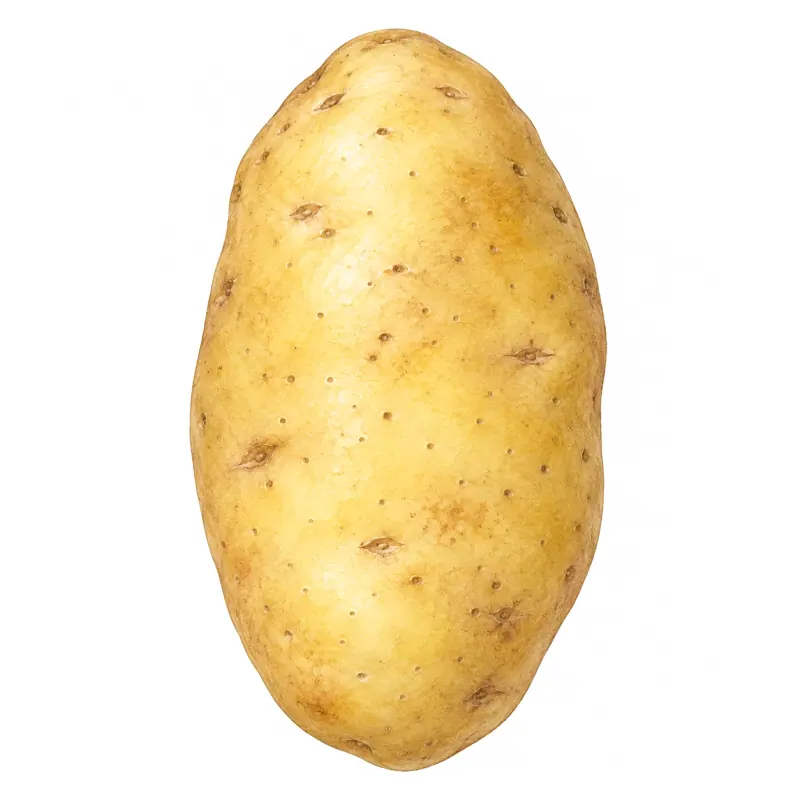 PotatoBelle de Fontenay
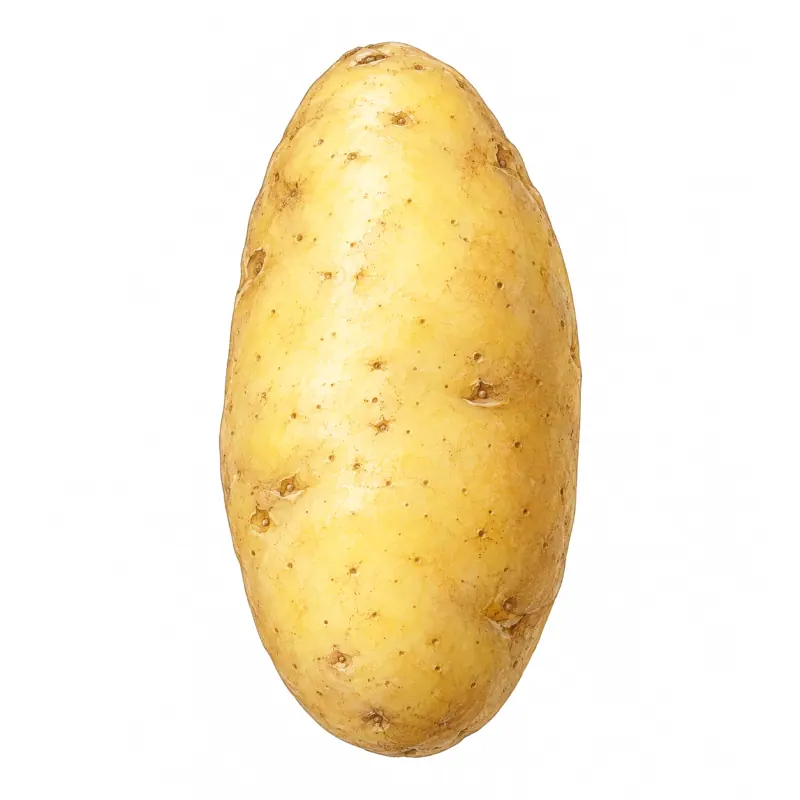 PotatoCharlotte
 RecipeJanssons frestelseSweden
 RecipePapas a la huancaínaHuancayo, Peru
 RecipePommes AnnaParis, France