
Potatoes · Recipe · Paris · Reference page
Pommes Anna
pommes Anna / pommes de terre Anna
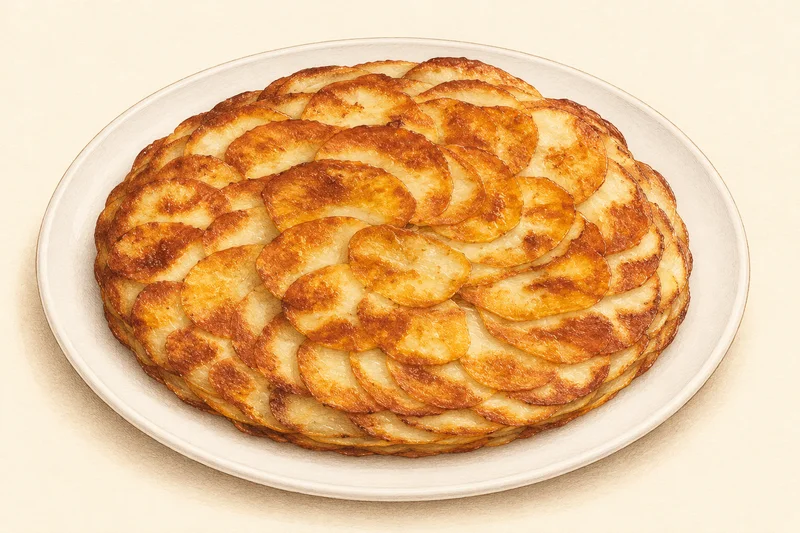
Thin rounds of waxy potato laid in overlapping rings with butter and salt, cooked slowly under a lid until they fuse into a golden cake, then turned out like a tarte tatin. The recipe is Tommaso Melilli's for Slate.fr; Escoffier's 1903 method is given alongside.
- Servings
- 4
- Preparation
- 20 min
- Cooking
- 45 min
- Resting
- 5 min
- Total
- 1 h 10
- Difficulty
- Moderate
Equipment
- Flat non-stick frying pan with a lid (or a heavy sauteuse or a pommes Anna mould)
- Mandoline or very sharp knife
- Plate or lid for turning out
Ingredients
Method
Slice the potatoes 2 mm thick with a knife or a mandoline. Do not rinse them.
Why Melilli relies on the surface starch to glue the slices into a cake. Escoffier washed and dried them and relied on more butter and a hotter oven.
Melt half the butter in the pan until the whole base is coated. As soon as it has melted, take the pan off the heat and lay the slices in overlapping circles.
Why Arranging off the heat stops the first layer browning before the cake is built.
Salt each finished layer lightly and dot it with small flakes of the remaining butter. Go on until all the slices are used.
Press the cake down gently, cover and set over a very low heat.
After 20 minutes press again and shake the pan lightly to free the edges and check that the slices are sticking together into a cake.
Timer · 20 min20:00When the potatoes are tender, uncover and cook for 10 minutes more.
Why Uncovered, the steam escapes and the base turns crisp and golden.
Timer · 10 min10:00Turn off the heat, leave for 5 minutes, then turn the cake out onto a plate like a tarte tatin.
Timer · 5 min5:00
To drink & serve with
Editorial suggestion: roast or grilled meat, or a green salad.
Substitutions
- Stovetop method → Escoffier's: layer in a buttered mould or heavy sauteuse, 5 or 6 layers with butter between, cover and bake in a hot oven for about 30 minutes, then turn out and drain off the butter.
- Salted butter → Clarified unsalted butter, which does not burn; salt each layer a little more.
Common mistakes
- Uneven slices: thick ones stay hard while thin ones burn.
- Too high a heat: the base burns before the middle is cooked.
- Cutting down the butter: the cake sticks and does not brown.
Storage & reheating
Best at once. Leftovers keep 2 days in the refrigerator and can be crisped again in a hot pan.
Safety
Contains milk (butter). Use a pan with a secure lid and take care when turning out: the butter is very hot.
Allergens
Milk
Check labels: stock, bacon and sauces can contain further allergens.
Dietary
vegetarian · gluten-free
A cake named after a courtesan
Slate.fr's Tommaso Melilli tells the usual story with care: the dish "is said to have been invented" by the chef Adolphe Dugléré, who named it after the courtesan Anna Deslions, about a century after Parmentier persuaded the French to eat potatoes. Escoffier gave the method in his Guide culinaire of 1903: potatoes trimmed into cylinders, sliced into thin rounds, washed and dried, laid in circles in a special mould or a heavy buttered sauteuse, each row reversed, five or six layers with butter between them, covered and baked in a hot oven for half an hour, then turned out.
Starch and butter
Melilli cooks his on the hob in a lidded non-stick pan, with 150 g of salted butter for four potatoes. The slices are not rinsed, so their starch glues them together, and the cake is pressed twice and shaken to check that it has set before the lid comes off for a final ten minutes. Escoffier, with a professional oven, washed and dried the slices and turned the cake out onto a lid to drain off the extra butter.
How it connects
Continue exploring
- CountryFrance162 entries in the atlas so far
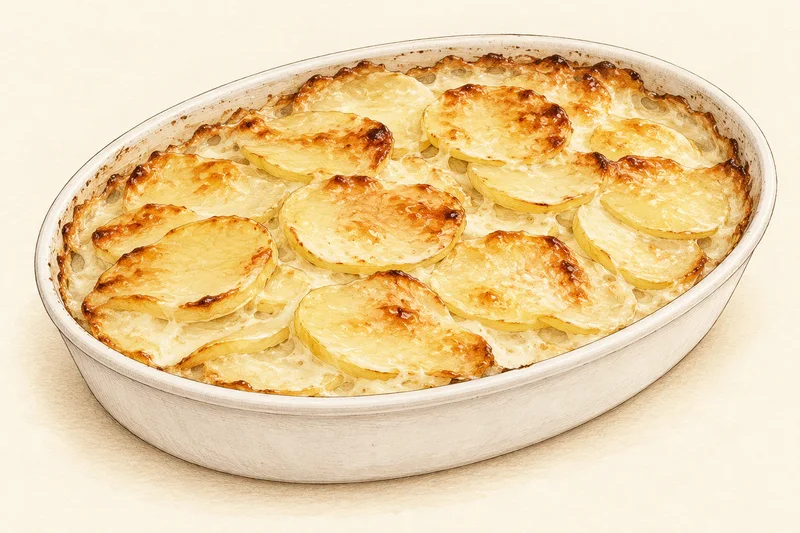 RecipeGratin dauphinoisVercors, Dauphiné, France
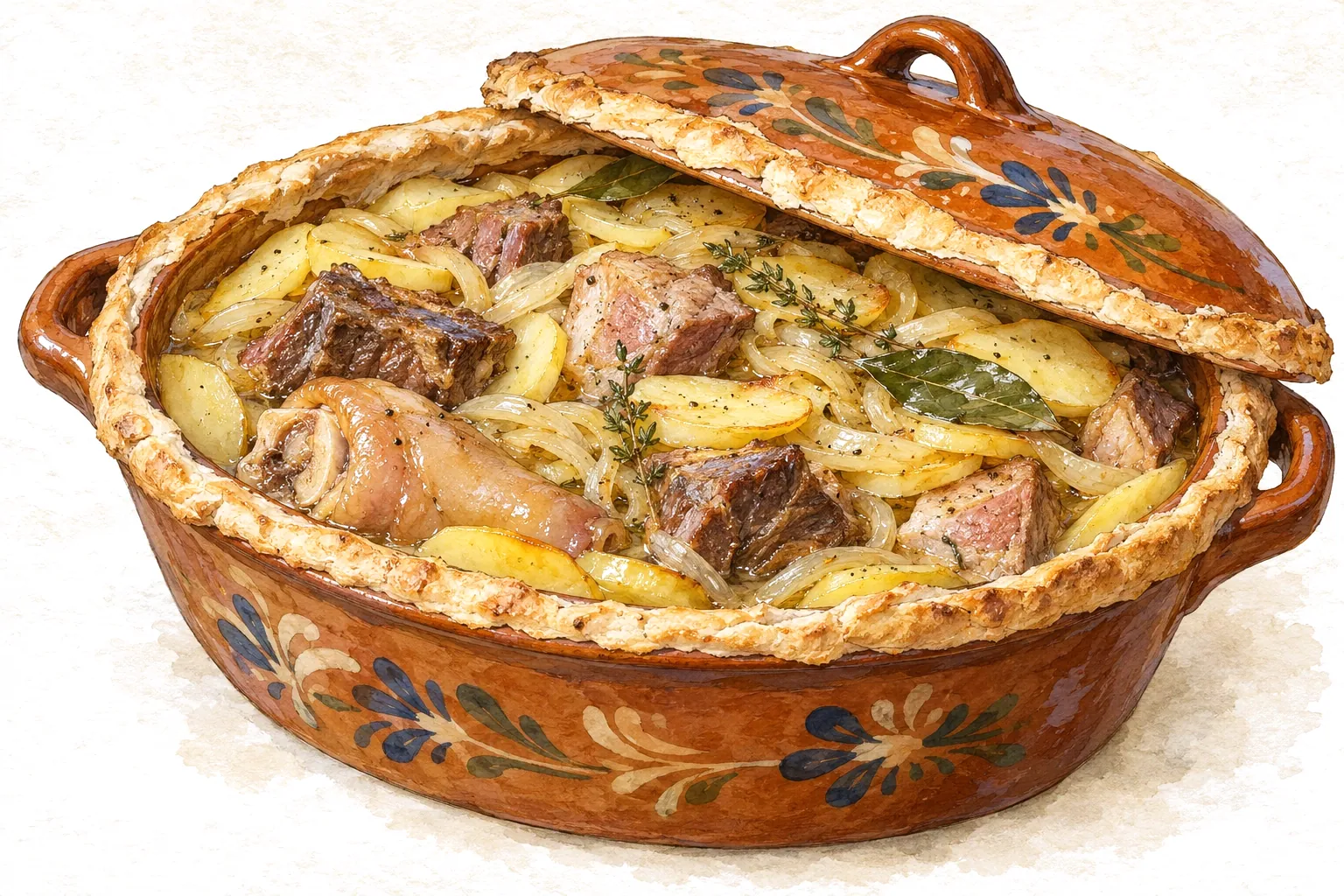 RecipeBaeckeoffeAlsace, France
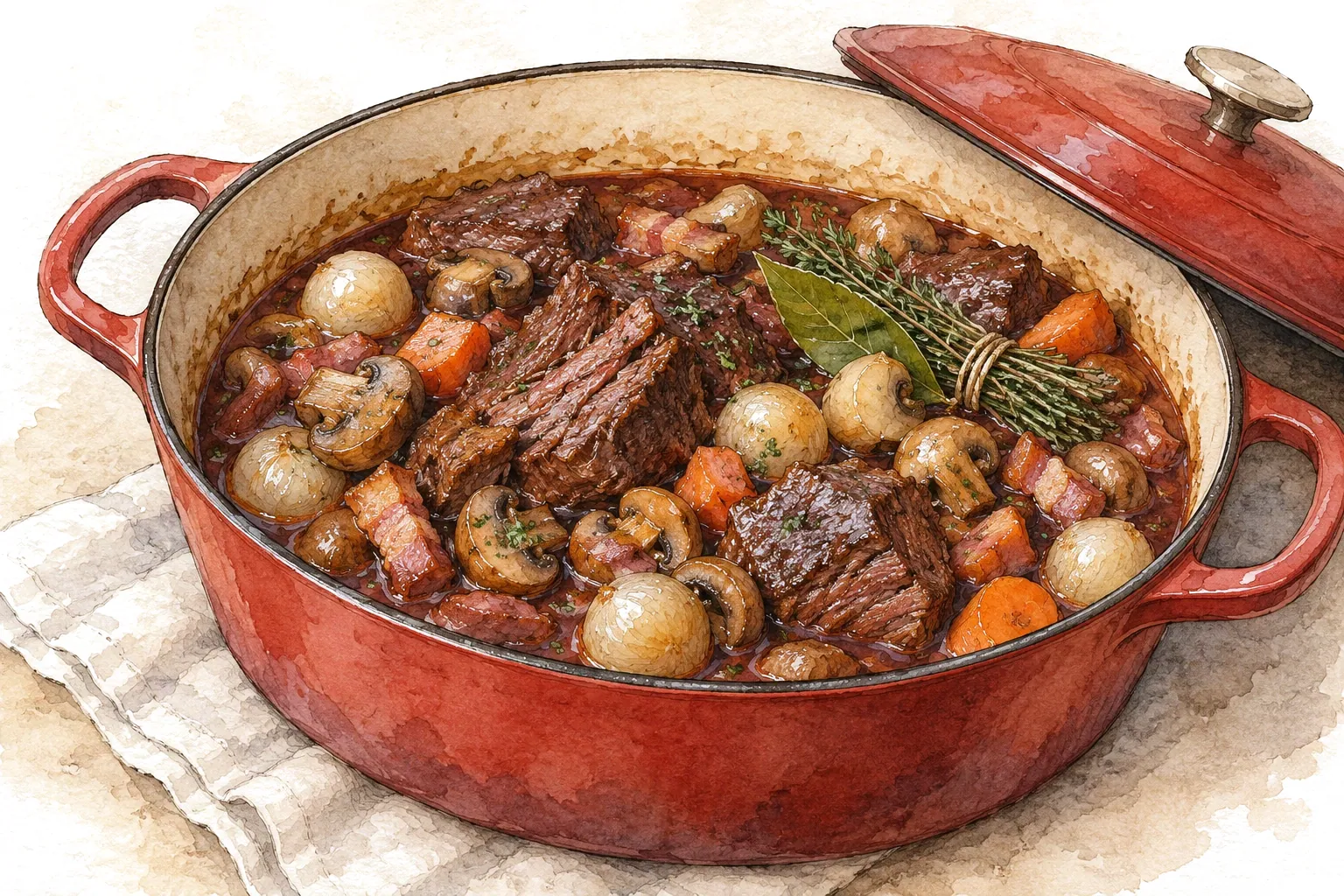 RecipeBœuf bourguignonDijon, France
 RecipeChoucroute garnieAlsace (Krautergersheim), France
 PotatoCharlotte
 RecipeJanssons frestelseSweden
 RecipePapas a la huancaínaHuancayo, Peru
 RecipePommes de terre à la lyonnaiseLyon, France
 RecipeRöstiSwitzerland