
Explore the world · Recipe · France · Reference page
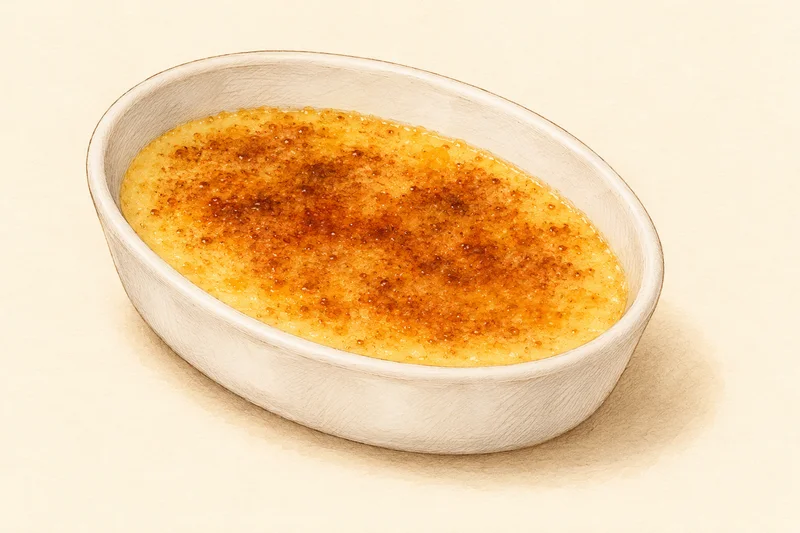
Crème brûlée
A rich vanilla custard of cream and egg yolks, baked gently in a water bath, chilled, then covered with a thin layer of sugar burnt to a brittle glaze just before serving. Simon Rimmer's recipe for six ramekins.
- Servings
- 6
- Preparation
- 30 min
- Cooking
- 40 min
- Resting
- 2 h
- Total
- 3 h 10
- Difficulty
- Moderate
Equipment
- 6 ramekins
- Saucepan, heatproof bowl, fine sieve and jug
- Roasting tray for the bain-marie; foil
- Cook's blowtorch (or a very hot grill)
Ingredients
Topping
Method
Heat the oven to 150 °C (130 °C fan).
Pour the cream into a pan. Split the vanilla pod, scrape the seeds into the cream, chop the pod and add it too.
Bring to the boil, lower the heat and simmer very gently for 5 minutes. Meanwhile whisk the sugar and yolks together in a large heatproof bowl.
Timer · 5 min5:00Bring the cream back to the boil, watching that it does not boil over, and pour it onto the yolks, whisking all the time until slightly thickened.
Strain into a jug and fill the ramekins two-thirds full.
Stand them in a roasting tray, pour in freshly boiled water to come halfway up their sides and cover the tray with foil. Bake 30–40 minutes, checking after 25 minutes and then every 5, until set with a slight wobble in the middle.
Why The water bath keeps the custard well below boiling, so the yolks thicken it smoothly instead of scrambling.
Timer · 35 min35:00Lift out of the water, cool to room temperature, then chill until needed.
Timer · 2 h120:00To serve, sprinkle 1 level tsp of sugar evenly over each custard and caramelise with a blowtorch or under a very hot grill. Leave a couple of minutes for the caramel to harden, then serve.
Substitutions
- Vanilla pod → Paul Merrett's BBC version allows a few drops of vanilla extract.
Common mistakes
- Overbaking: the custard turns grainy and weeps. Take it out while it still wobbles.
- Too much sugar on top: a thick crust burns before it melts evenly.
Storage & reheating
Custards keep 2 days covered in the fridge. Burn the sugar only just before serving; the crust softens within a few hours.
Allergens
Milk · Egg
Check labels: stock, bacon and sauces can contain further allergens.
Dietary
vegetarian · gluten-free
Massialot's burnt cream
The French name appears in print in François Massialot's Le cuisinier roïal et bourgeois of 1691. His crème brûlée is cooked on the stove, not in the oven: four or five yolks with a good pinch of flour and about a chopine of milk (some 4.5 dl), flavoured with cinnamon and chopped lime peel, stirred until thick, then sugared and burnt with a fire shovel heated red. The food historian Christianne Muusers notes that the dish's origin is unclear between France, England and Spain, where crema catalana is caramelised the same way, and that Sabban and Serventi lean towards Spain.
A slow custard and a fast top
The modern version is a baked custard. Rimmer infuses the cream with vanilla, pours it boiling onto yolks and sugar and strains it, then bakes the ramekins in a covered water bath at 150 °C until just set. Only after chilling is the thin layer of sugar burnt with a torch, so the custard is cold under a crust that is still warm and brittle.
How it connects
Place
- origin France In preparation
Recipe
- similar Crema catalana
Continue exploring
- CountryFrance162 entries in the atlas so far
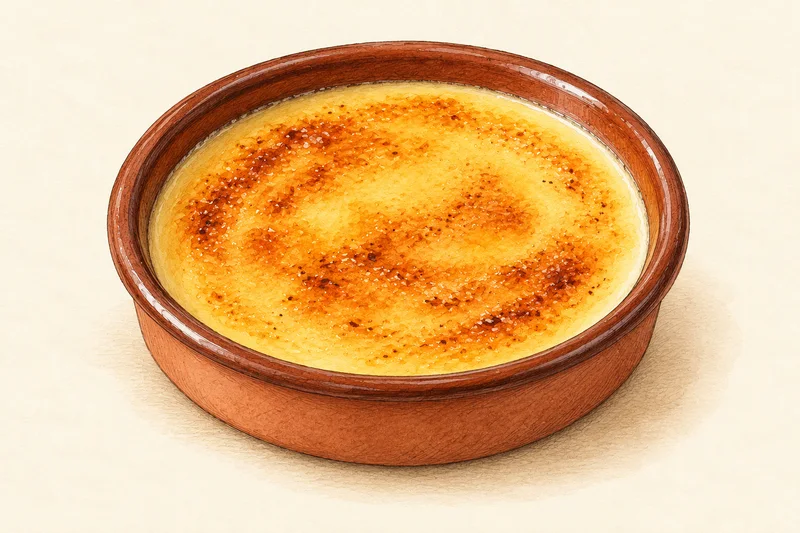 RecipeCrema catalanaCatalonia (Barcelona), Spain
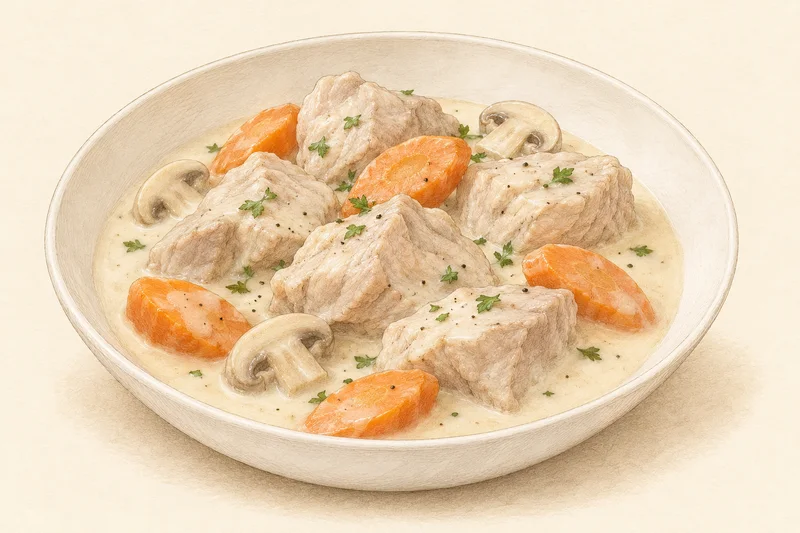 RecipeBlanquette de veauFrance
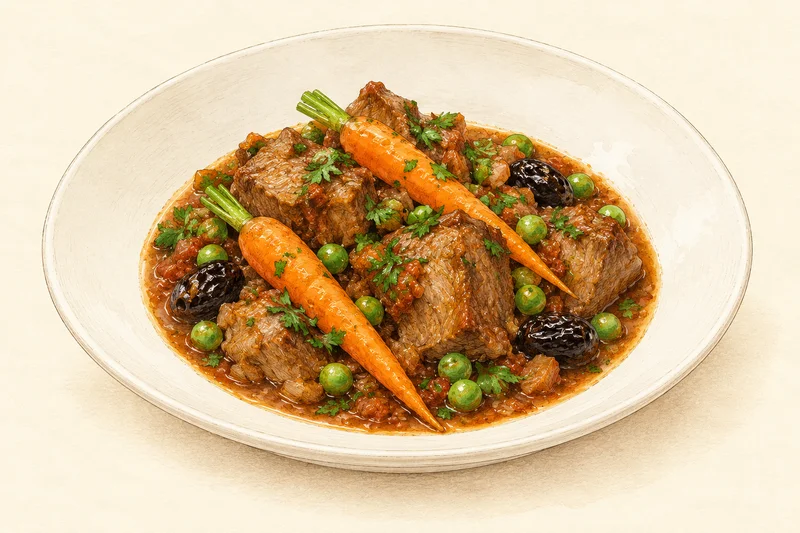 RecipeNavarin d'agneau printanierFrance
 RecipeBaguette de tradition françaiseFrance
 RecipeStuffed mushrooms with duxellesFrance
 RecipePain de campagneFrance
 RecipeSole meunièreFrance