Explore the world · Recipe · France · Reference page
Pain de campagne
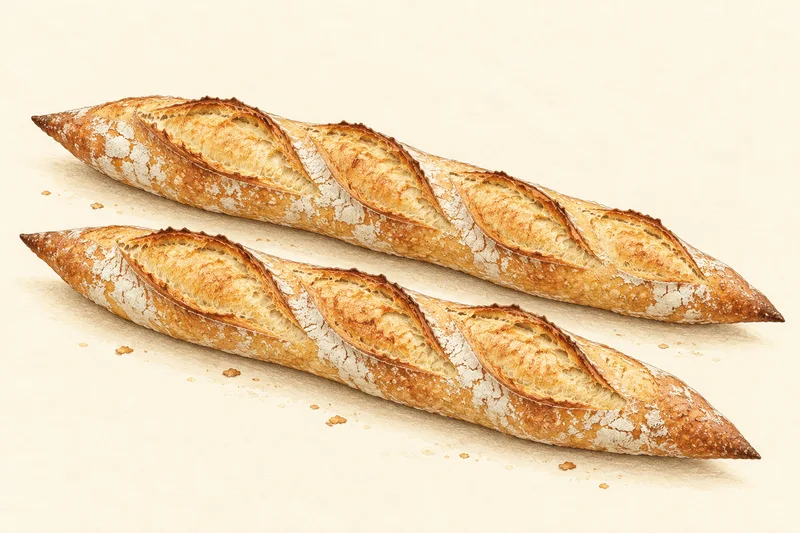
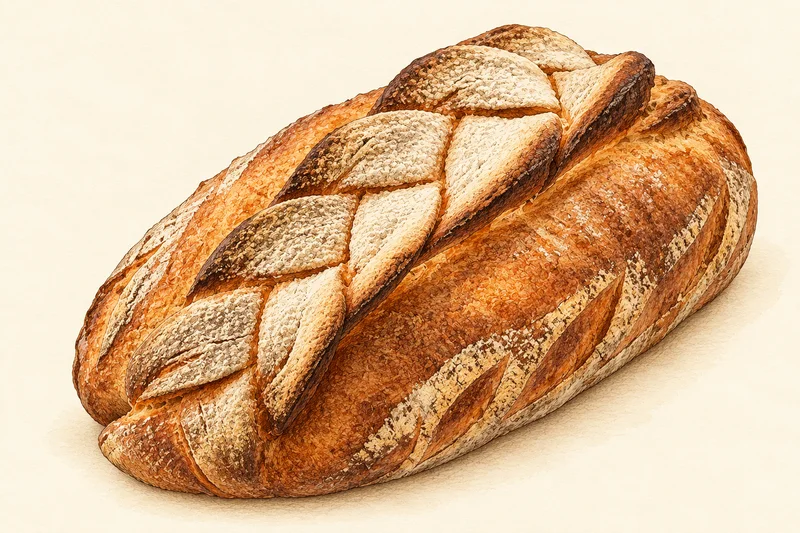
The French country loaf: white wheat flour with a share of rye, raised with a piece of old dough (pâte fermentée) made the day before. Le Cordon Bleu's version makes three loaves of about 350 g.
- Servings
- 3
- Preparation
- 40 min
- Cooking
- 30 min
- Resting
- 2 h 45
- Total
- 3 h 55
- Difficulty
- Moderate
Equipment
- Stand mixer with dough hook, or a bowl and spatula
- Baking tray; razor blade
- Cling film; fridge at about 5 °C
Ingredients
Pâte fermentée (the day before)
Final dough
Method
The day before, whisk the yeast into the cold water, add the flour and then the salt, and knead for 10 minutes. Cover with cling film and refrigerate overnight at 5 °C.
Why Old dough brings the acidity and depth of a long fermentation into a same-day loaf.
Timer · 10 min10:00On the day, whisk the 8 g of yeast into the cold water. Add the flour, rye flour and 250 g of pâte fermentée and mix until smooth.
Knead 4 minutes on slow speed and 6 minutes on medium (or by hand).
Timer · 10 min10:00Cover with a cloth and leave at room temperature for 1 to 1½ hours, until doubled.
Timer · 1 h 1575:00Divide into three pieces of about 350 g and rest 15 minutes.
Timer · 15 min15:00Shape each piece. Le Cordon Bleu rolls one end thin, cuts it into three strips and plaits them as a decorative tail, brushes the sides with a little olive oil and sticks the plait to the loaf with a damp brush.
Prove at room temperature for 45 minutes to 1 hour.
Timer · 50 min50:00Heat the oven to 240–250 °C. Dust the loaves with flour, score the sides and bake about 30 minutes.
Timer · 30 min30:00
Substitutions
- Pâte fermentée → Any piece of plain yeasted bread dough (flour, water, salt, yeast) kept overnight in the fridge.
- The plaited decoration → Shape a plain ball or bâtard and score it; it does not change the bread.
Common mistakes
- Calling it 'au levain': under the French decree that needs a real levain and a crumb of pH 4.3 or less. Old dough or deactivated rye levain does not qualify.
- Warm water in the final dough: the source uses cold water because the pâte fermentée is already active.
Storage & reheating
Keeps 2–3 days in a paper bag or bread bin; the rye keeps it moist longer than a baguette.
Allergens
Gluten
Check labels: stock, bacon and sauces can contain further allergens.
Dietary
vegan
What 'campagne' means, and does not
French bread law defines pain de tradition française and pain au levain, but has no definition for pain de campagne. Millers sell ready mixes for it. Grands Moulins de Paris launched one in 1968, with deactivated rye levain for a mild sour taste, and notes on its sheet that such a levain does not entitle the baker to call the bread au levain. The decree reserves that word for bread raised with a living levain, with a crumb of pH 4.3 or less and at least 900 ppm of acetic acid.
Old dough and rye
Le Cordon Bleu's method keeps a small, salted yeast dough overnight at 5 °C and works 250 g of it into the next day's dough. With 75 g of rye in 525 g of flour, the dough is less elastic than a baguette dough, so it gets a short knead (4 minutes slow, 6 medium), a single rise until doubled, and a hot oven of 240–250 °C.
How it connects
Place
- origin France In preparation
Recipe
- related Baguette de tradition française