
Explore the world · Recipe · France · Reference page
Sole meunière
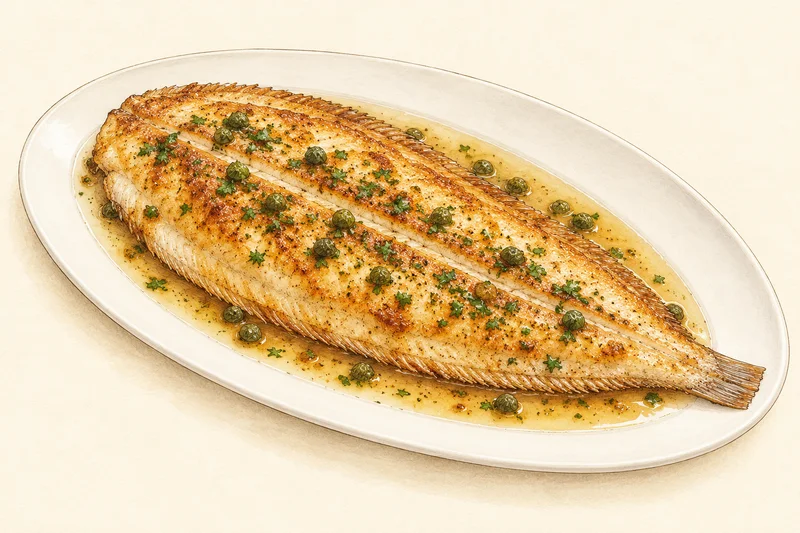
Whole sole dusted with flour, fried in butter and served under lemon, parsley and butter cooked until it smells of hazelnuts. Escoffier set out the method in 1903; the quantities here follow a modern recipe by Louise Pickford for two.
- Servings
- 2
- Preparation
- 10 min
- Cooking
- 10 min
- Total
- 20 min
- Difficulty
- Moderate
Equipment
- Large frying pan that holds both fish (or cook one at a time)
- Fish slice; warm serving platter
Ingredients
The fish
The butter
Method
Pat the sole dry, season with salt and pepper and dust both sides lightly with flour. Shake off the excess.
Why The thin flour coat browns quickly and keeps the skinless flesh from sticking.
Heat the clarified butter or oil in the pan over a medium heat. Fry the sole for 2 minutes until golden, turn carefully with a fish slice and fry 2 minutes more, until cooked through. Thick fish need a little longer: the flesh should lift from the bone.
Timer · 4 min4:00Lay the fish on the warm platter, squeeze over a few drops of lemon juice, season lightly and scatter with the parsley.
Wipe the pan, add the butter and heat until it foams and turns light golden brown with a nutty smell (*beurre noisette*). Add the rest of the lemon juice, and the capers if using, then pour it over the fish at once and serve.
Why Escoffier pours the hot butter over damp parsley so the dish reaches the table still foaming; a fish served with lemon alone is called *doré*, not meunière.
Timer · 2 min2:00
To drink & serve with
- King Edward
Pickford serves it with wedges of King Edward potatoes roasted with garlic, and green beans.
Substitutions
- Dover sole → Lemon sole or plaice (Pickford). Fillets of any small flatfish cook in about half the time.
- Plain flour (gluten-free) → Rice flour or a fine gluten-free flour.
Common mistakes
- Letting the butter burn black: it turns bitter. Stop at hazelnut brown.
- Making the butter in the frying fat: the burnt flour specks spoil it. Wipe the pan first.
Storage & reheating
Eat at once.
Safety
Contains fish, gluten (flour) and milk (butter). Sole on the bone: warn guests about bones.
Allergens
Fish · Gluten · Milk
Check labels: stock, bacon and sauces can contain further allergens.
The miller's wife's method
Meunière means the miller's wife, a nod to the flour. Escoffier's Guide culinaire treats it as a general method for small fish, slices and fillets, and even turbot up to 1.5 kg: season, flour, and cook in very hot butter in a frying pan. He separates two finishes. Served with lemon only, the fish is doré. À la meunière, it gets lemon juice, salt, pepper and blanched parsley, then butter cooked à la noisette poured over at the last moment.
Julia Child's description of her first sole meunière in Rouen, in My Life in France, made the dish famous with English-speaking readers; Louise Pickford quotes it in her recipe.
Butter at two temperatures
The fish is fried in fat hot enough to brown the flour fast, so the thin flesh cooks through before it dries. Clarified butter, or oil, tolerates that heat; whole butter burns. The sauce is a second, fresh batch of butter, heated until its milk solids turn golden and nutty, sharpened with lemon. Pickford's capers and mixed herbs are a modern touch.
How it connects
Continue exploring
- CountryFrance162 entries in the atlas so far
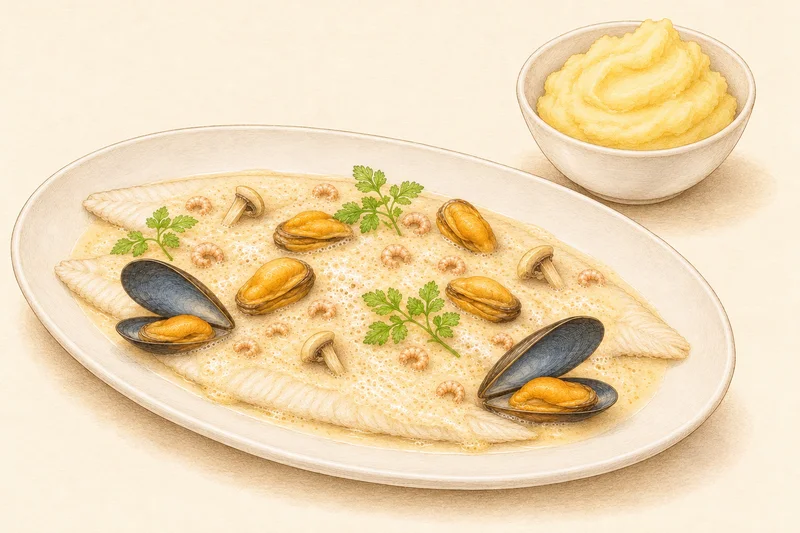 RecipeSole Ostend style (sole à l'ostendaise)Ostend, Belgium
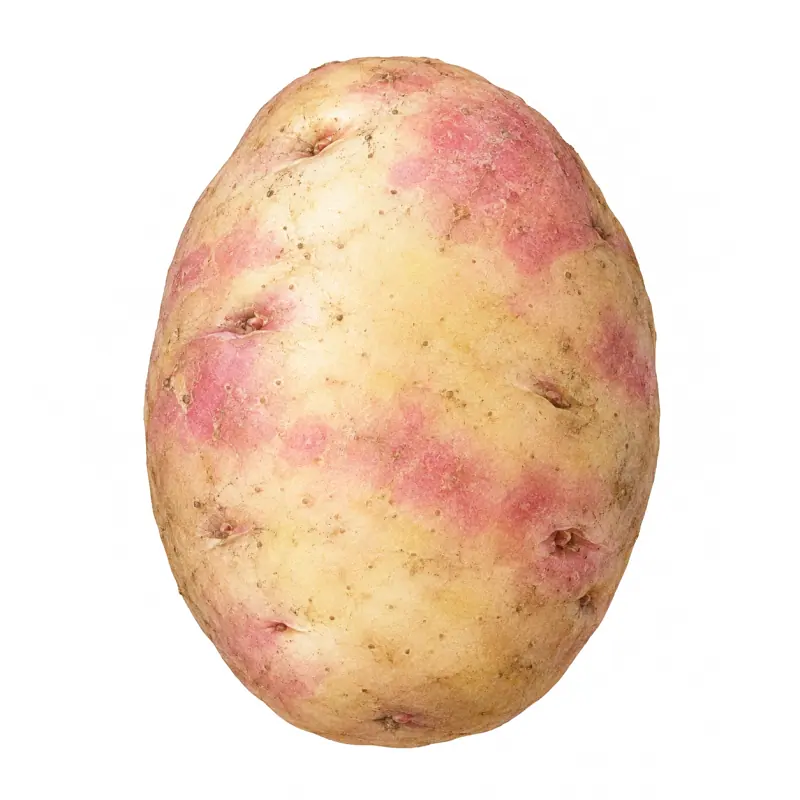 PotatoKing Edward
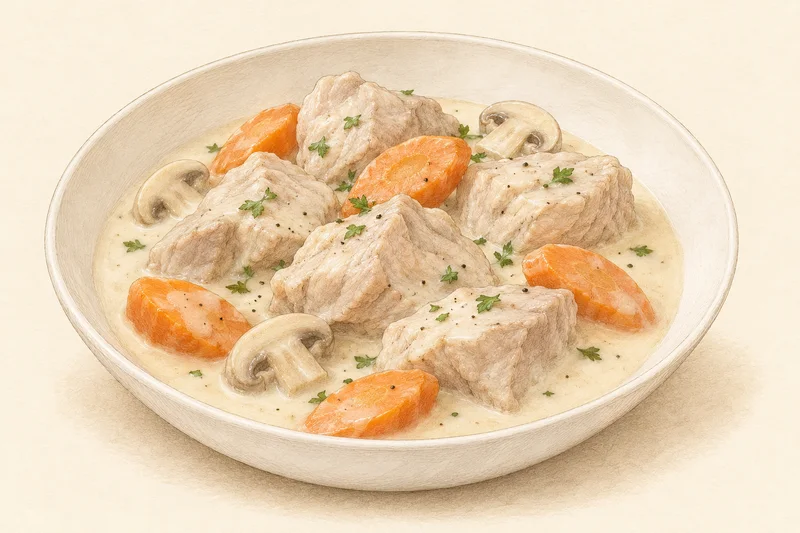 RecipeBlanquette de veauFrance
 RecipeKöttbullarSweden
 RecipeNavarin d'agneau printanierFrance
 RecipeBaguette de tradition françaiseFrance
 RecipeStuffed mushrooms with duxellesFrance
 RecipeCrème brûléeFrance
- RecipeMoules-fritesBelgium