Explore the world · Recipe · Ostend · Reference page
Sole Ostend style (sole à l'ostendaise)
sole à l'ostendaise / zeetong op Oostendse wijze
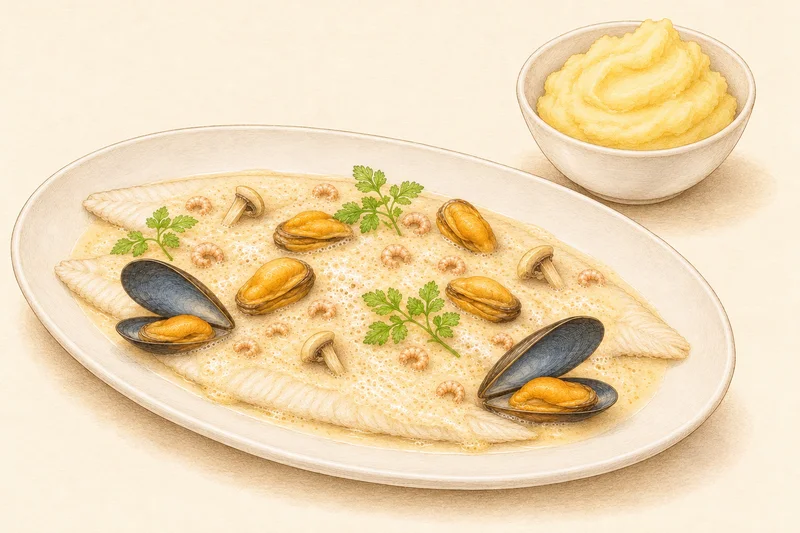
Poached sole under a creamy sauce made with mussel liquor, garnished with mussels, mushrooms and North Sea grey shrimps. Ostend's local history society keeps the 1968 Kursaal recipe of chef R. Parmentier; Jeroen Meus's home version uses lemon sole and gives the quantities.
- Servings
- 4
- Preparation
- 25 min
- Cooking
- 35 min
- Total
- 1 h
- Difficulty
- Involved
Equipment
- Large pot with a lid for the mussels; colander over a bowl
- Ovenproof dish and foil
- Saucepan, fine sieve and stick blender
- Potato masher
Ingredients
The mussels
The fish and sauce
The mash
Method
Melt a knob of butter in a large pot and soften the onion and celery. Turn the heat to high, add the mussels and plenty of pepper; no water or salt is needed. Shake the pot now and then; after a few minutes add the wine and cook briefly until the shells open.
Why Mussels release their own salty liquor, which becomes the base of the sauce. Throw away any that were open and do not close when tapped before cooking, and any that stay shut after cooking (US FDA).
Tip the mussels into a colander over a bowl and keep all the liquor. Take most of the mussels out of their shells, leaving about a quarter in the shell.
Heat the oven to 180 °C. Lay the sole fillets in an ovenproof dish, spoon over a small ladle of mussel liquor, cover with foil and set aside.
Melt a knob of butter in a saucepan and cook the mushrooms for a few minutes. Add most of the remaining mussel liquor, the cream, thyme and bay, and reduce by half over a low heat.
Why Reduction concentrates the mussel flavour and thickens the sauce without flour.
Meanwhile boil the potatoes in lightly salted water for just under 20 minutes, drain and mash with the butter, milk, egg, nutmeg and a pinch of salt.
Timer · 20 min20:00Peel the shrimps. Poach the fish in the oven, usually only about 4 minutes; check that it is just opaque.
Timer · 4 min4:00Strain the sauce, remove the herbs and set the mushrooms aside. Add a knob of butter and froth the sauce with a stick blender. Return the mushrooms and all the mussels and let them warm through. Taste; it should need no more salt.
Spoon the sauce with mussels and mushrooms over the fish, scatter with the peeled shrimps and chervil, and serve with the mash.
To drink & serve with
- Moules-frites
The same North Sea mussels in Belgium's best-known mussel dish.
Substitutions
- Lemon sole → Dover sole, as in the 1968 Kursaal recipe, or another flat white fish.
- Mash → Parmentier's 1968 version rings the dish with browned duchesse potatoes and adds a puff-pastry half-moon; the sauce is bound with beurre manié.
Common mistakes
- Salting the sauce before tasting: the mussel liquor is already salty.
- Overcooking the fillets: thin sole needs only a few minutes.
- Boiling the sauce hard after the mussels go back in: they turn rubbery.
Storage & reheating
Best eaten at once. Refrigerate leftovers within 2 hours and eat within a day; reheat gently until steaming hot.
Safety
Contains fish, crustaceans, molluscs, milk, egg, celery and sulphites. Mussels must be alive before cooking (shells closed or closing when tapped); discard any that do not open (US FDA). Cook the fish until opaque and flaking (63 °C).
Allergens
Fish · Crustaceans · Molluscs · Milk · Egg · Celery · Sulphites
Check labels: stock, bacon and sauces can contain further allergens.
Dietary
gluten-free
From the Kursaal kitchen
Ostend's local history society, De Plate, keeps a recipe card for sole à l'Ostendaise "after the recipe of R. Parmentier, head chef of the Casino Kursaal, Ostend (1968)". Soles are poached in fish stock and white wine, the side bones removed, and the fish is laid on a dish ringed with browned duchesse potatoes. The sauce is the poaching liquid and the mussel liquor reduced to a third, lightly bound with beurre manié and finished with lemon and butter. The garnish is the whole coast on a plate: bearded mussels, Ostend North Sea shrimps, turned mushrooms and a puff-pastry half-moon.
Jeroen Meus calls the dish a classic and keeps its structure for Dagelijkse kost, but uses lemon sole, which he finds as good as Dover sole if a little softer, binds the sauce by reduction and froth instead of flour, and swaps the duchesse potatoes for mash.
How it connects
Place
- origin Ostend In preparation
Recipe
- related Moules-frites
- related Sole meunière