Potatoes · Recipe · Belgian frites · Reference page
Belgian frites
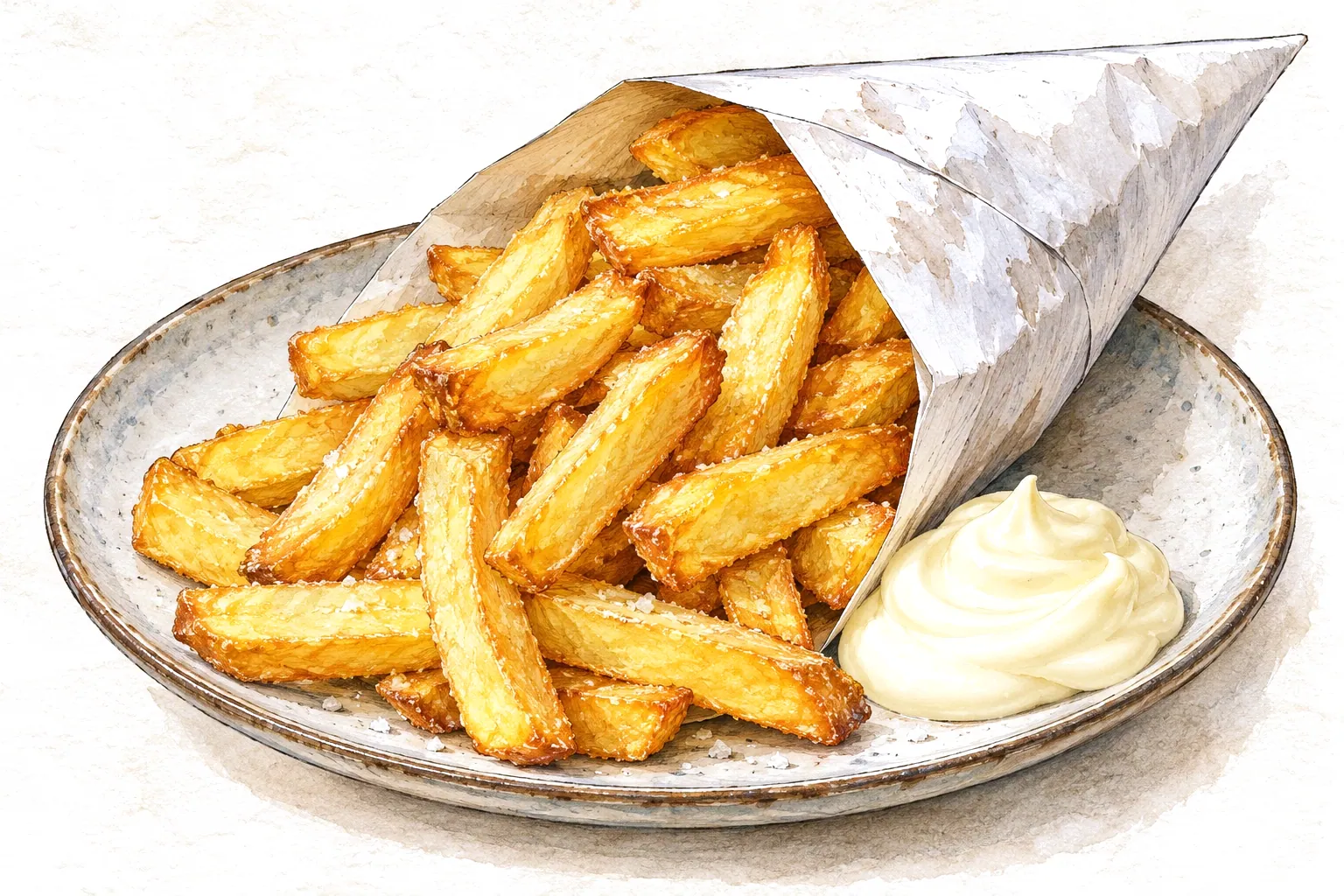
Thick-cut potatoes fried twice — first gently to cook them through, then hot to crisp them — and eaten from a paper cone with mayonnaise. Belgium's most democratic dish, and a lesson in potato science.
- Servings
- 4
- Preparation
- 25 min
- Cooking
- 20 min
- Resting
- 30 min
- Total
- 1 h 15
- Difficulty
- Moderate
Equipment
- Deep fryer with thermostat (the better choice), or a heavy, deep pan of at least 9 litres and a frying thermometer
- Frying basket or spider
- Clean tea towels
Ingredients
Method
Peel the potatoes and cut them into batons about 10–13 mm thick. Keep the size even so they cook at the same rate.
Why Belgian frites are cut thick — fry shops cut them about 9–14 mm wide: the higher ratio of soft interior to crust is the point.
Rinse the batons — or, to lower acrylamide further, soak them in cold water for 30 minutes to 2 hours — then rinse and dry them very thoroughly in a tea towel.
Why Rinsing removes surface starch and sugars that brown too quickly; EU acrylamide rules for fry shops recommend soaking. Oil and water are a dangerous mix: wet potatoes make hot fat spit.
First fry: heat the fat to 140–160 °C. Fry the frites in small batches for 5–7 minutes, until cooked through and soft but still pale. Drain.
Why At this temperature the inside cooks before a crust forms; too hot, and the batons seal straight away. Too many frites at once drop the temperature and they turn limp and greasy.
Timer · 6 min6:00Rest the blanched frites for at least 30 minutes, spread out, to cool and steam off. Fry shops often leave them a few hours.
Why As they cool, the surface dries out, which helps the second fry build a crisp crust.
Timer · 30 min30:00Second fry: heat the fat to about 170 °C — never above 175 °C — and fry in batches for 1–3 minutes, until crisp and golden-yellow. Do not take them to dark brown.
Why A golden-yellow rather than brown colour limits acrylamide, which forms when starchy foods are fried at high temperature. EU acrylamide rules (Regulation (EU) 2017/2158) require fry shops and restaurants to fry below 175 °C and to use colour guides; golden-yellow is the target.
Timer · 2 min2:00Drain, shake in a bowl with salt, and serve at once — in a paper cone if you have one — with mayonnaise or another sauce.
To drink & serve with
Mayonnaise is the Belgian default; also andalouse, samurai or the gravy of a carbonnade flamande (beef and beer stew).
A Belgian beer: a crisp pils, or a sour Flemish red with stoofvlees.
- Belgian Blue
With steak (steak-frites) — Belgian Blue's lean meat cooks fast and pairs naturally.
Substitutions
- Beef dripping → A neutral oil with a high smoke point (e.g. high-oleic sunflower or peanut) — lighter in taste, and suitable for vegetarians.
- Bintje → Agria, Maris Piper or Russet Burbank.
Common mistakes
- Using cold-stored potatoes: sugars build up below about 6–8 °C and the frites brown before they crisp. This matters most for long-stored potatoes; frying a test batch shows whether they brown too fast.
- Skipping the rest between the two fries.
- Salting before frying: salt the frites after the second fry.
Storage & reheating
Frites are best eaten immediately. Blanched (once-fried) frites can be cooled, refrigerated for a day or frozen, and given their second fry from cold.
Safety
Hot fat causes serious burns. Never fill a pan more than one-third full of fat or oil, keep children away, make sure the potatoes are dry before they go into the fat, and never use water on a fat fire. If a fire starts, switch off the heat only if it is safe to do so; otherwise leave the room, close the door, warn others and call the emergency services (112).
Allergens
None
Check labels: stock, bacon and sauces can contain further allergens.
Dietary
vegan if fried in vegetable oil
Who invented fries?
Belgians and French both claim the fried potato. Historian Pierre Leclercq argues that the deep-fried stick was a Parisian street food that reached Belgium in the 1840s; Belgium made it a national culture. A widely repeated story says that people around Namur, in the Meuse valley, fried potatoes cut like little fish. It traces back to historian Jo Gérard, who in 1984 published a 1781 manuscript describing the practice. Leclercq points out that the text describes thin slices of potato browned in a very little fat, not deep-fried sticks; the story is best treated as legend.
What is documented is a nineteenth-century culture of fried potatoes sold at fairs: around the middle of the century the first frites were fried and eaten at fairs in Belgium, and the first fixed frietkoten — street-corner fry shacks — date from the 1880s. The double fry, thick cut and generous sauces distinguish the Belgian style today. In 2014 Belgian frietkotcultuur was added to the Flemish Inventory of Intangible Cultural Heritage.
How it connects
Place
- origin Belgian frites In preparation
Breed
- pairs with Belgian Blue
Region
- related Belgium
Recipe
- pairs with Moules-frites
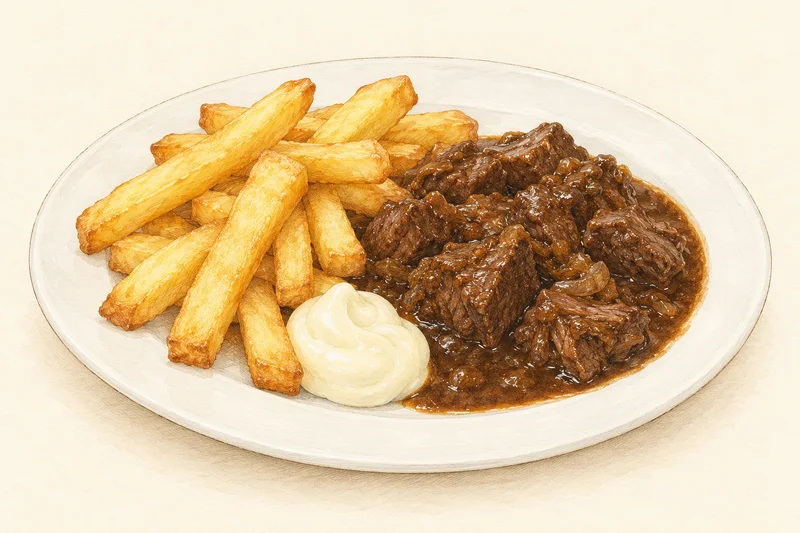
- pairs with Stoofvlees
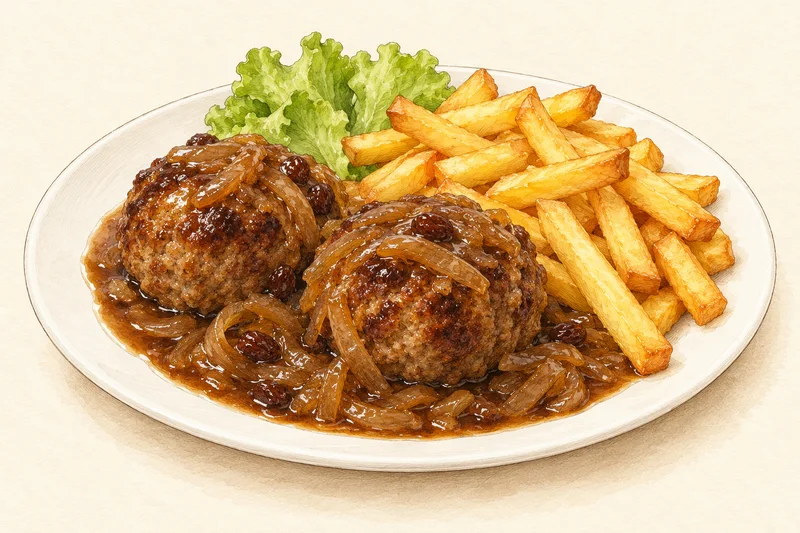
- pairs with Boulets à la liégeoise
- related Poutine
Continue exploring
- CountryBelgium46 entries in the atlas so far
 RecipeBoulets à la liégeoiseLiège, Belgium
 RecipeStoofvleesBelgium
- RegionBelgiumBelgium
- RecipeMoules-fritesBelgium
 RecipePoutineCentre-du-Québec (Drummondville), Canada
 BreedBelgian BlueBelgium
 PotatoBintjeFriesland, Netherlands
 RecipeKöttbullarSweden
 RecipePoulet à la bièreBelgium