
Meat · Recipe · Belgium · Reference page
Stoofvlees
stoofvlees / carbonade flamande
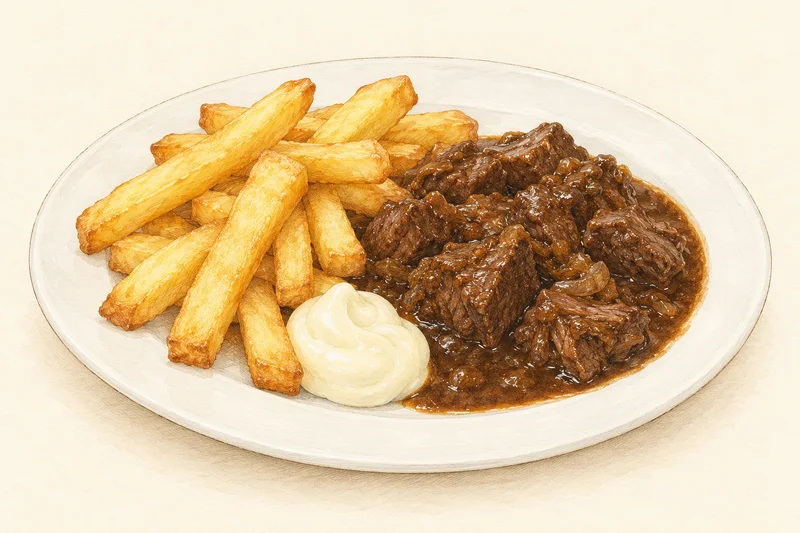
Flemish beef stewed slowly in dark beer with onions, thyme and bay, thickened by a slice of bread spread with mustard and sweetened with Liège syrup. This is Jeroen Meus's version from the VRT programme Dagelijkse kost, served in Belgium with frites and mayonnaise.
- Servings
- 4
- Preparation
- 20 min
- Cooking
- 3 h
- Total
- 3 h 20
- Difficulty
- Easy
Equipment
- Large heavy stew pot (5 litres)
- Frying pan for browning the meat
- Kitchen string for the herbs
Ingredients
The stew
Method
Melt a knob of butter in the stew pot and sweat the onions over a medium heat without letting them colour.
Melt the second knob of butter in a frying pan over a medium heat and brown the beef until golden, seasoning it with pepper and a pinch of salt as it browns. Work in batches if the pan is crowded.
Why Browning gives the sauce its roasted depth; a crowded pan steams the meat grey.
Move the meat to the pot with the onions. Pour the beer into the hot frying pan, scrape up the browned bits as it comes to the boil, and pour it over the meat.
Tie the bay and thyme together with string and add them with the clove and the Luikse stroop.
Spread the mustard generously on the bread and lay it on top of the stew, mustard side down.
Why The bread falls apart as it cooks and thickens the sauce; the mustard sharpens it.
Simmer uncovered on a low heat for 1½ to 3 hours, stirring now and then, until the meat is tender. When the sauce has the thickness you want, put the lid on.
Why Simmering without a lid reduces the beer into a sauce. The time depends on the cut: test a piece.
Timer · 2 h 30150:00Finish with a small splash of vinegar, stir, and correct the salt and pepper.
Why The acid balances the sweetness of the syrup and the dark beer.
To drink & serve with
- Belgian frites
Meus serves it with home-made frites (fried at 140 °C, then 180 °C) and a spoonful of fresh mayonnaise.
- Trappist beer (Authentic Trappist Product)
Editorial suggestion: a glass of the same kind of dark Belgian abbey or Trappist ale used in the pot.
Substitutions
- Luikse stroop → Brown sugar or Belgian candi syrup (Escoffier used 50 g cassonade for 1.2 kg beef).
- Bread and mustard (gluten-free) → Leave out the bread and reduce the sauce longer, or thicken at the end with a little cornflour slaked in cold water.
Common mistakes
- Using a light lager: the sauce lacks body and colour. Choose a dark, malty beer.
- Covering the pot from the start: the sauce stays thin.
- Boiling hard: the meat turns stringy.
Storage & reheating
Better the next day. Cool quickly, refrigerate within 2 hours and eat within 2 days (UK FSA; US USDA allows 3–4 days). Reheat once, until steaming hot, bringing the sauce to the boil.
Safety
Contains gluten (bread, beer), mustard and milk (butter). Long-braised beef is far above safe cooking temperatures; the risk is in cooling and reheating leftovers.
Allergens
Gluten · Mustard · Milk
Check labels: stock, bacon and sauces can contain further allergens.
A Flemish braise in the classical canon
Beef stewed in beer is a Flemish classic, and it was already in the French professional repertoire in 1903. Escoffier's Guide culinaire gives carbonades à la flamande: thin escalopes of lean beef (hampe or paleron) browned in fat, layered with five onions coloured in butter, then cooked for two and a half to three hours in a bottle of beer, "old lambic, preferably", with the same volume of brown stock, a brown roux and 50 g of brown sugar.
Jeroen Meus's version for the VRT programme Dagelijkse kost is simpler and more domestic. Bigger pieces of stewing beef, no stock and no roux: the sauce is thickened by a slice of brown bread spread with mustard, sweetened with Luikse stroop and finished with a dash of vinegar. He serves it the Belgian way, with double-fried frites and mayonnaise.
Bread, beer and an open pot
The beer is the only liquid, so it does the work of both wine and stock. Meus deglazes the browning pan with it to keep every caramelised scrap, and simmers the stew uncovered so that the liquid reduces while the meat softens. The bread dissolves into the sauce, and the mustard spread on it adds a sharp note that the syrup then rounds off. Only when the sauce is thick enough does the lid go on.
How it connects
Region
- origin Belgium
Recipe
- pairs with Belgian frites
- similar Boulets à la liégeoise
- similar Poulet à la bière
Style
- pairs with Trappist beer (Authentic Trappist Product)
- related Lambic
Cut
- made with Gîte avant (fore shin)
Continue exploring
- CountryBelgium46 entries in the atlas so far
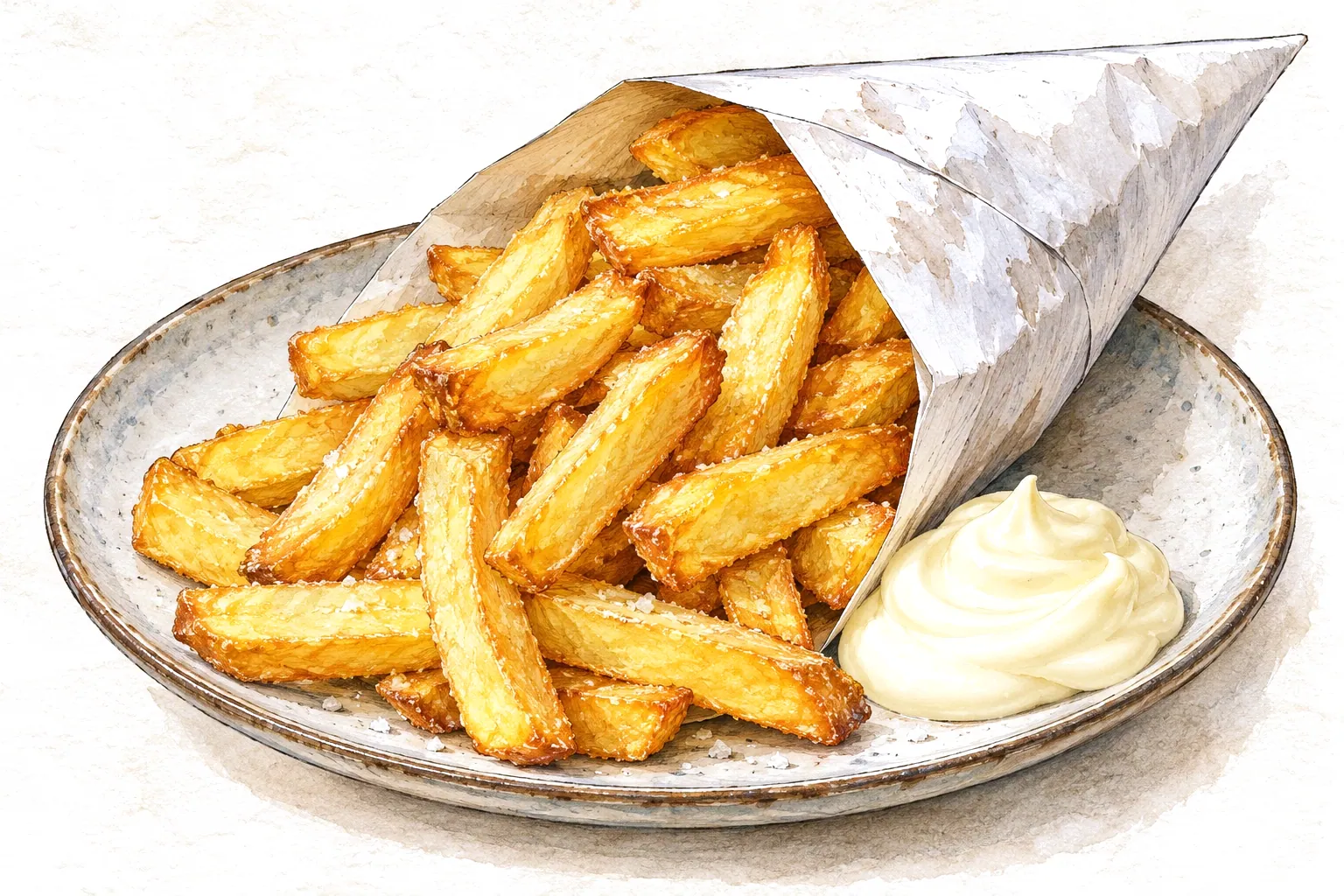 RecipeBelgian fritesBelgium
- RegionBelgiumBelgium
- StyleLambicRecognised style
- StyleTrappist beer (Authentic Trappist Product)Certification label
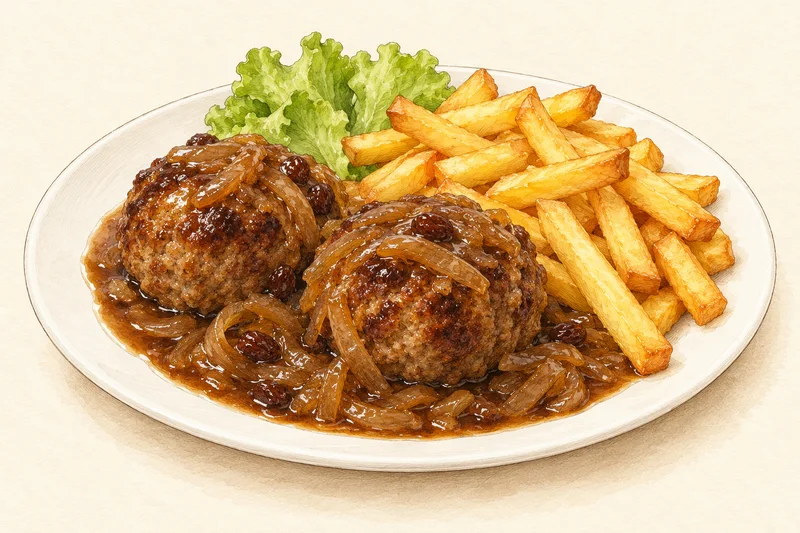 RecipeBoulets à la liégeoiseLiège, Belgium
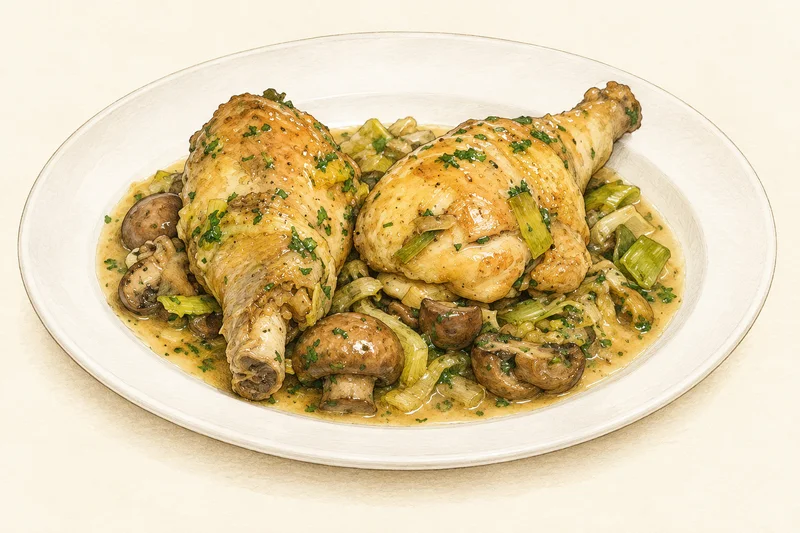 RecipePoulet à la bièreBelgium
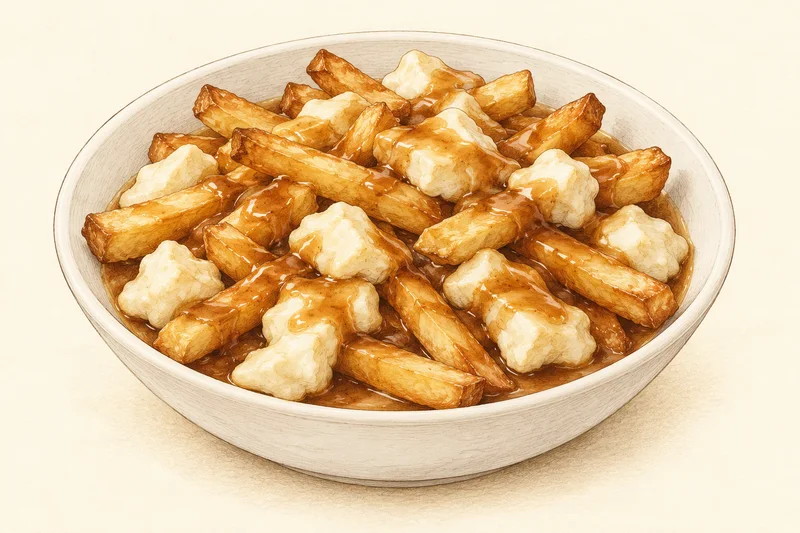 RecipePoutineCentre-du-Québec (Drummondville), Canada
- StoryA history of beer
- CutGîte avant (fore shin)