Explore the world · Recipe · Catalonia · Reference page
Crema catalana
crema catalana / crema de Sant Josep
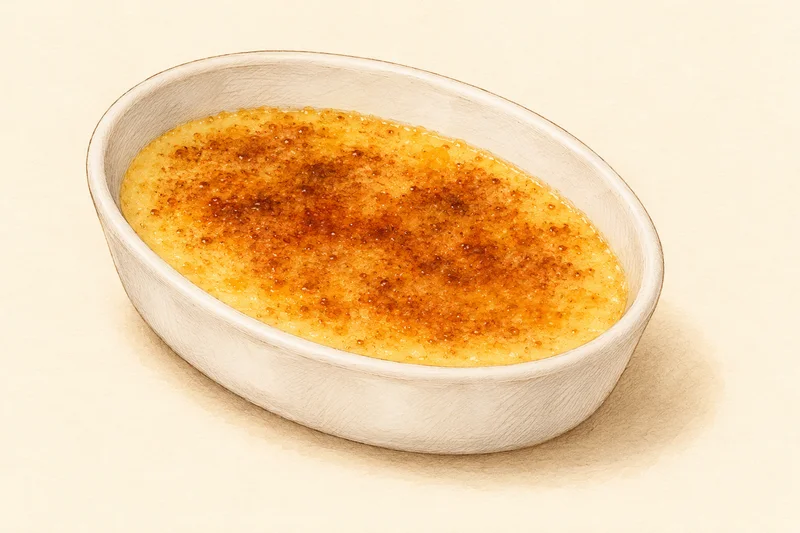
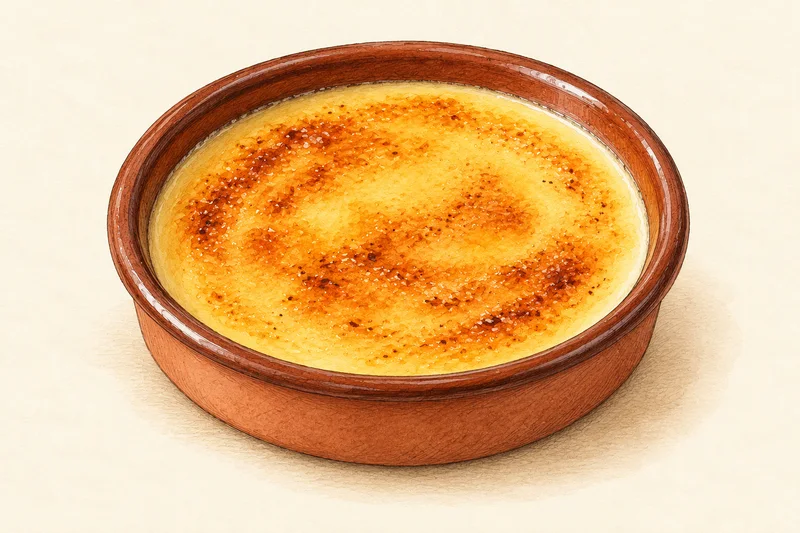
Milk infused with cinnamon and lemon peel, thickened with egg yolks, sugar and cornflour, set in shallow dishes and covered at the last minute with a crust of sugar caramelised with a hot iron. Catalonia's best-known dessert, in the recipe of the Fundació Institut Català de la Cuina published by Barcelona City Council.
- Servings
- 6
- Preparation
- 10 min
- Cooking
- 15 min
- Resting
- 2 h
- Total
- 2 h 25
- Difficulty
- Moderate
Equipment
- Saucepan and a second heavy pan
- Balloon whisk; fine sieve
- Six shallow earthenware dishes (cassoles)
- Caramelising iron (salamander) or a kitchen blowtorch
Ingredients
Method
Bring the milk to the boil with the cinnamon stick and the lemon peel.
Why Cinnamon and lemon are the classic Catalan flavourings; boiling infuses them quickly.
In a bowl, mix the egg yolks with the sugar. Strain the milk, dissolve the cornflour in it and pour it onto the yolks.
Why Dissolving the cornflour in the liquid first prevents lumps.
Heat the mixture, whisking all the time, until it reaches boiling point, then take it off the heat immediately.
Why Cornflour needs to reach the boil to thicken; the yolks scramble if it keeps boiling.
Timer · 8 min8:00Pour the cream into shallow dishes and leave to cool.
Timer · 2 h120:00Just before serving, sprinkle sugar over each cream and caramelise it with a hot iron or a blowtorch until it forms a hard, amber crust.
Why Done at the last minute, the crust stays crisp; in the fridge it softens into syrup.
To drink & serve with
Editorial suggestion: a glass of sweet Catalan muscat.
Substitutions
- Caramelising iron → A kitchen blowtorch, or a very hot grill (watch closely).
Common mistakes
- Leaving it on the heat after it boils: the yolks curdle.
- Caramelising hours ahead: the crust melts.
- Stopping whisking: the cream catches on the bottom.
Storage & reheating
Keep the set creams covered in the fridge for up to 2 days; caramelise only when serving.
Safety
Contains egg and milk. Cool quickly and keep refrigerated. Hot caramel and blowtorches burn: keep children away.
Allergens
Egg · Milk
Check labels: stock, bacon and sauces can contain further allergens.
Dietary
vegetarian
The cream of Saint Joseph
Barcelona City Council's popular-culture portal calls crema de Sant Josep, or crema catalana, Catalonia's best-known sweet. It was once typical of Saint Joseph's Day, 19 March, and is now eaten all year round, at home and in restaurants; its flavour has passed into ice creams, liqueurs, coques, milkshakes and torrons. The portal states that it appears in medieval recipes and is documented in Catalan literature from the 14th century onwards.
It is close to French crème brûlée, but cooked on the stove, thickened with cornflour as well as yolks, and flavoured with cinnamon and lemon rather than vanilla.
Stove, not oven
The Fundació Institut Català de la Cuina's recipe uses a litre of milk infused with cinnamon and lemon, eight yolks, 200 g of sugar and 40 g of cornflour. The mixture is whisked over the heat only until it reaches the boil and then taken off at once, so the starch thickens without the eggs curdling. The crust is made at the very end: sugar sprinkled over the cold cream and burnt with a hot iron.
How it connects
Place
- origin Catalonia In preparation
Recipe
- similar Crème brûlée