Meat · Cut · Reference page
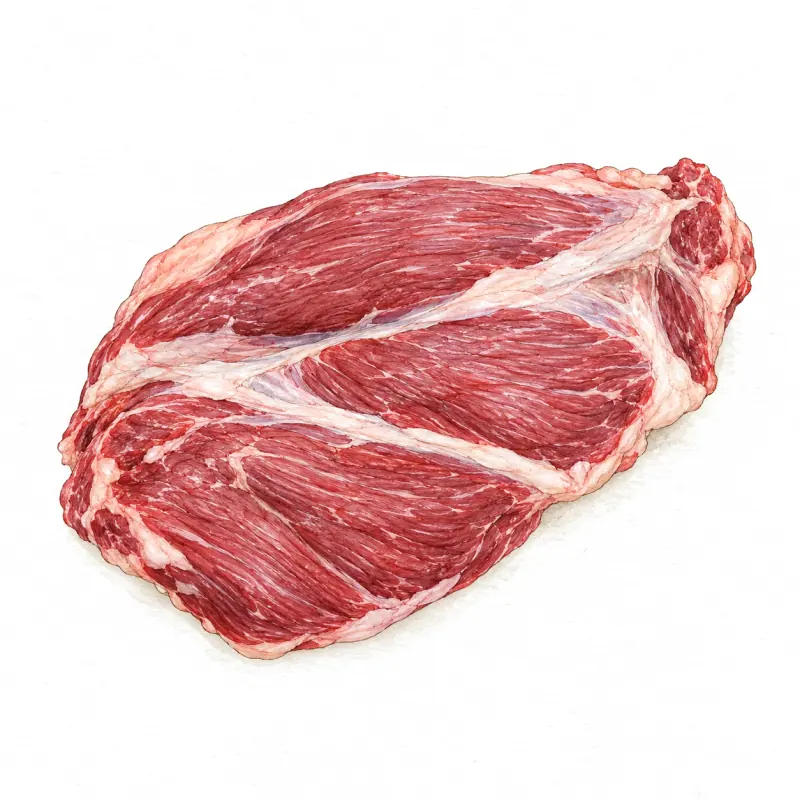
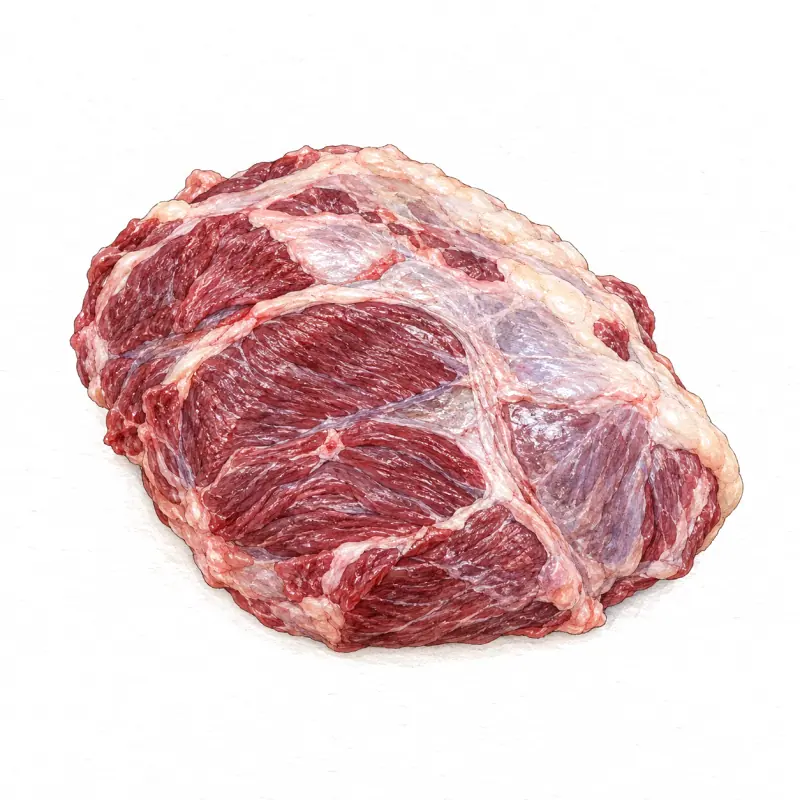
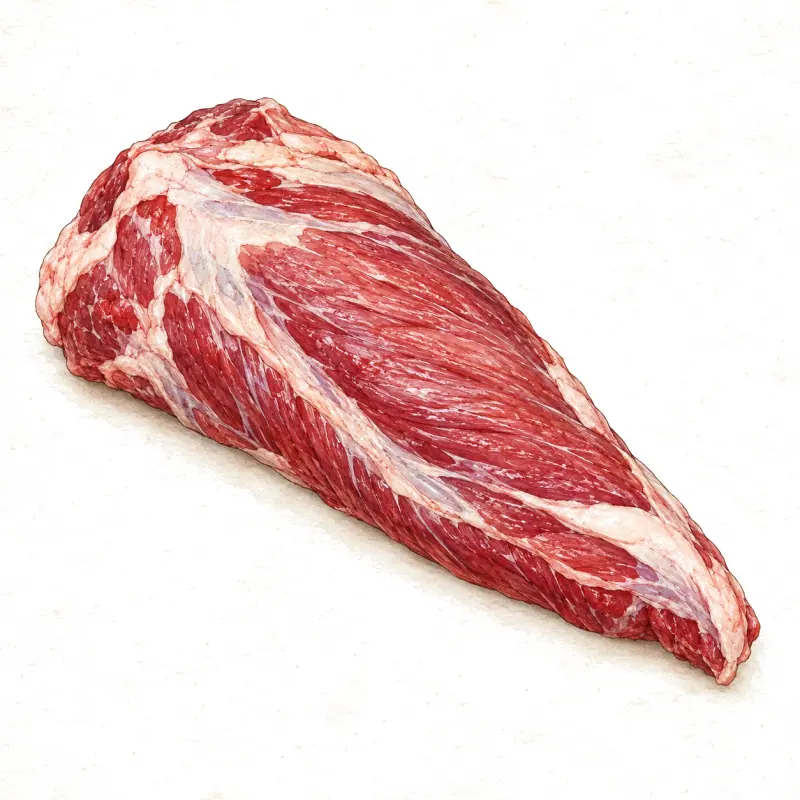
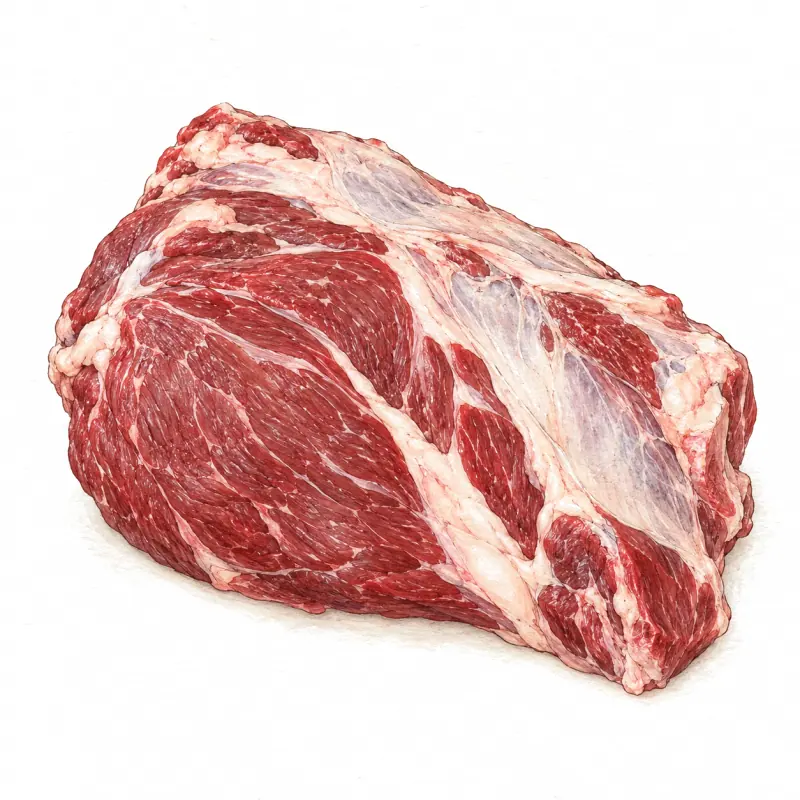
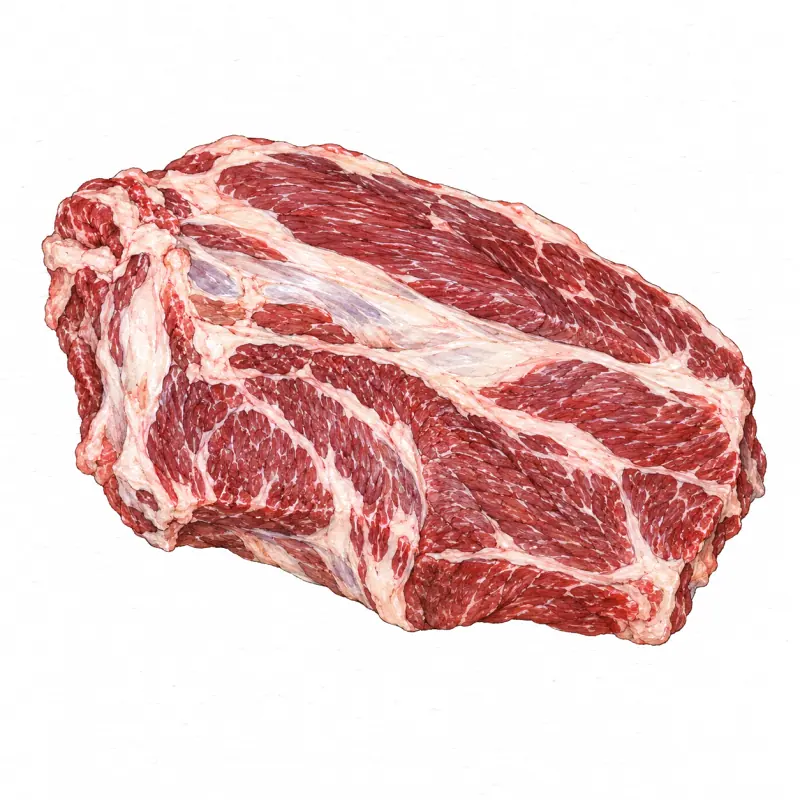
Paleron (shoulder blade)
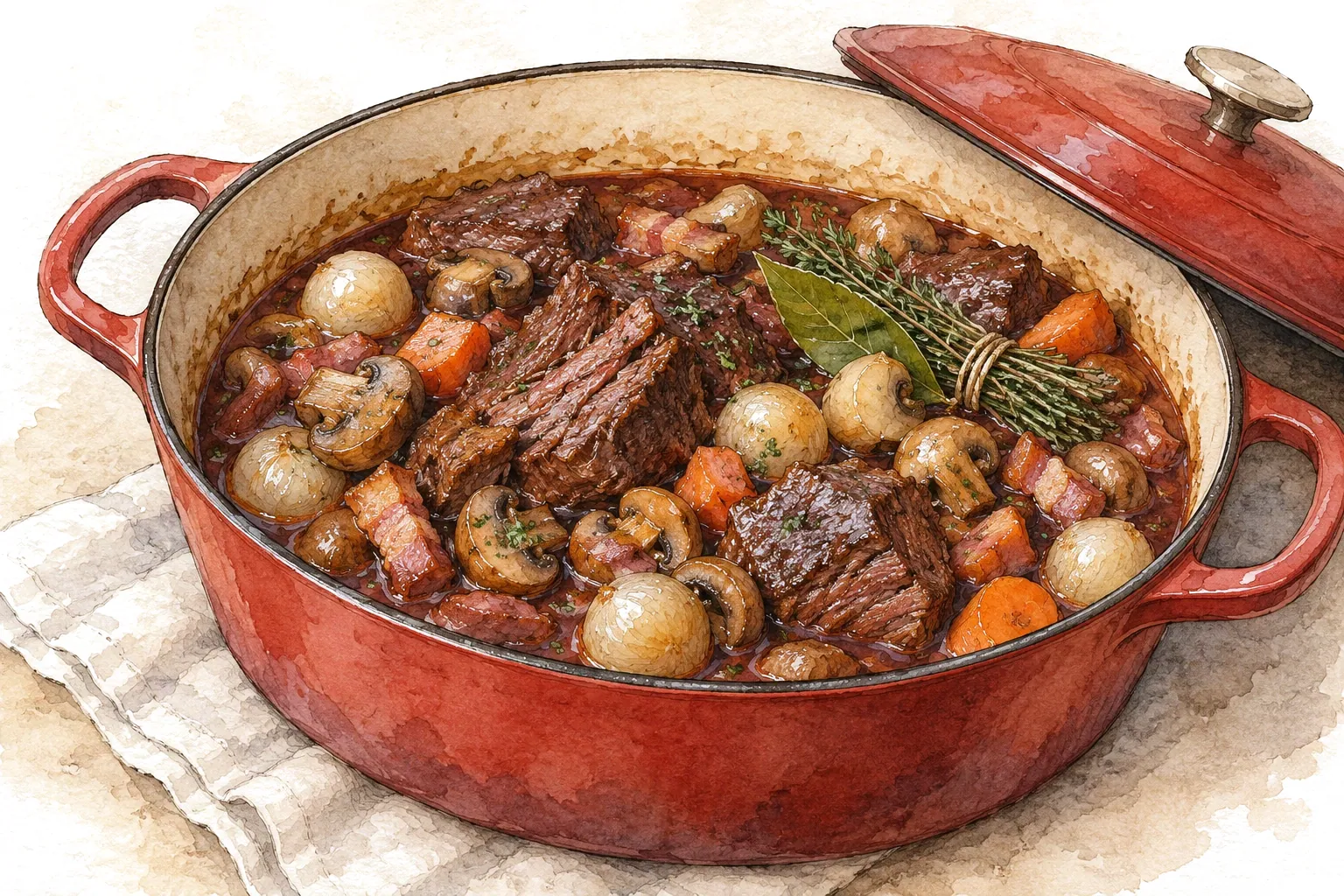
A muscle-rich piece from the top of the shoulder, over the shoulder blade. Threaded with a seam of connective tissue that melts into gelatine during slow cooking, it is one of the classic French cuts for bœuf bourguignon and pot-au-feu.
Why a tough cut becomes tender
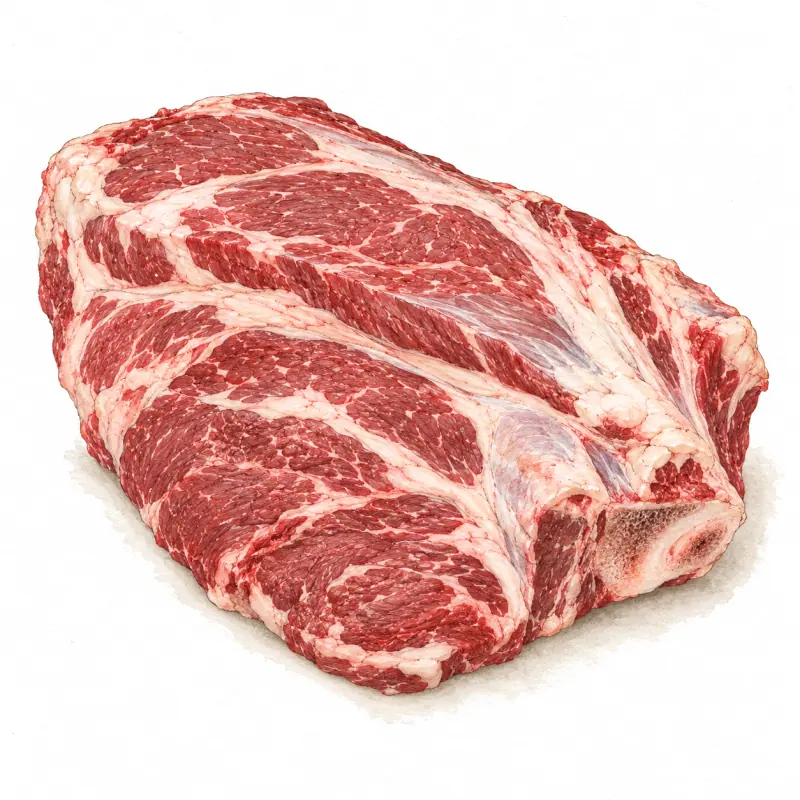
Shoulder muscles work constantly, so they are rich in collagen, the protein of connective tissue. Cooked fast, collagen tightens and the meat is chewy. Collagen dissolves into gelatine over a wide range of temperatures, very slowly when the meat is merely warm and faster the hotter it gets. Held for hours at a bare simmer, so that the inside of the meat sits well above 70 °C, it slowly turns to gelatine, which lubricates the fibres and thickens the cooking liquid. That is why paleron is braised rather than grilled, and why a bourguignon made with it has a glossy, clinging sauce.
The muscle fibres themselves still tighten and squeeze out moisture as they heat, so the art is to keep the liquid at a bare simmer — boiling hard makes fibres dry and stringy even as the collagen melts.
How it connects
Cut
- compare Chuck (US)
- compare Chuck & blade (UK)
- similar Macreuse (shoulder clod)
- similar Joue (cheek)
- related Jumeau à bifteck (chuck tender)
- related Dessus de palette (blade undercut)
Recipe
- used in Bœuf bourguignon
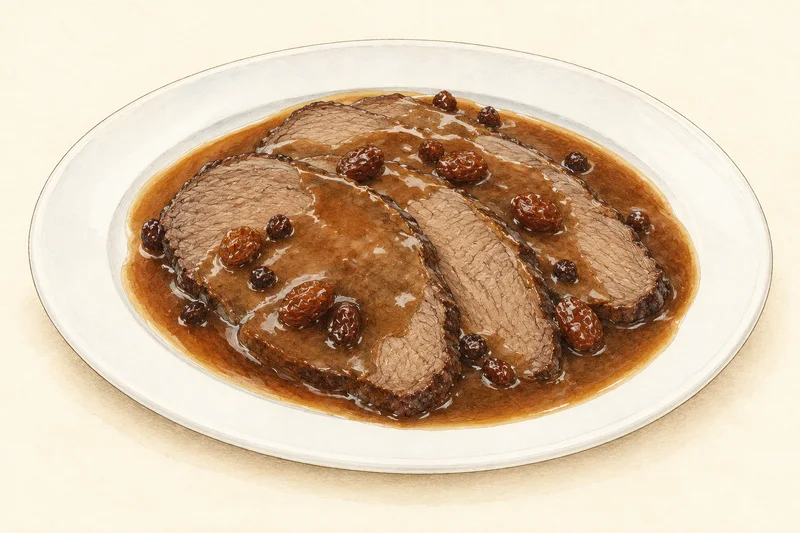
- made with Rheinischer Sauerbraten
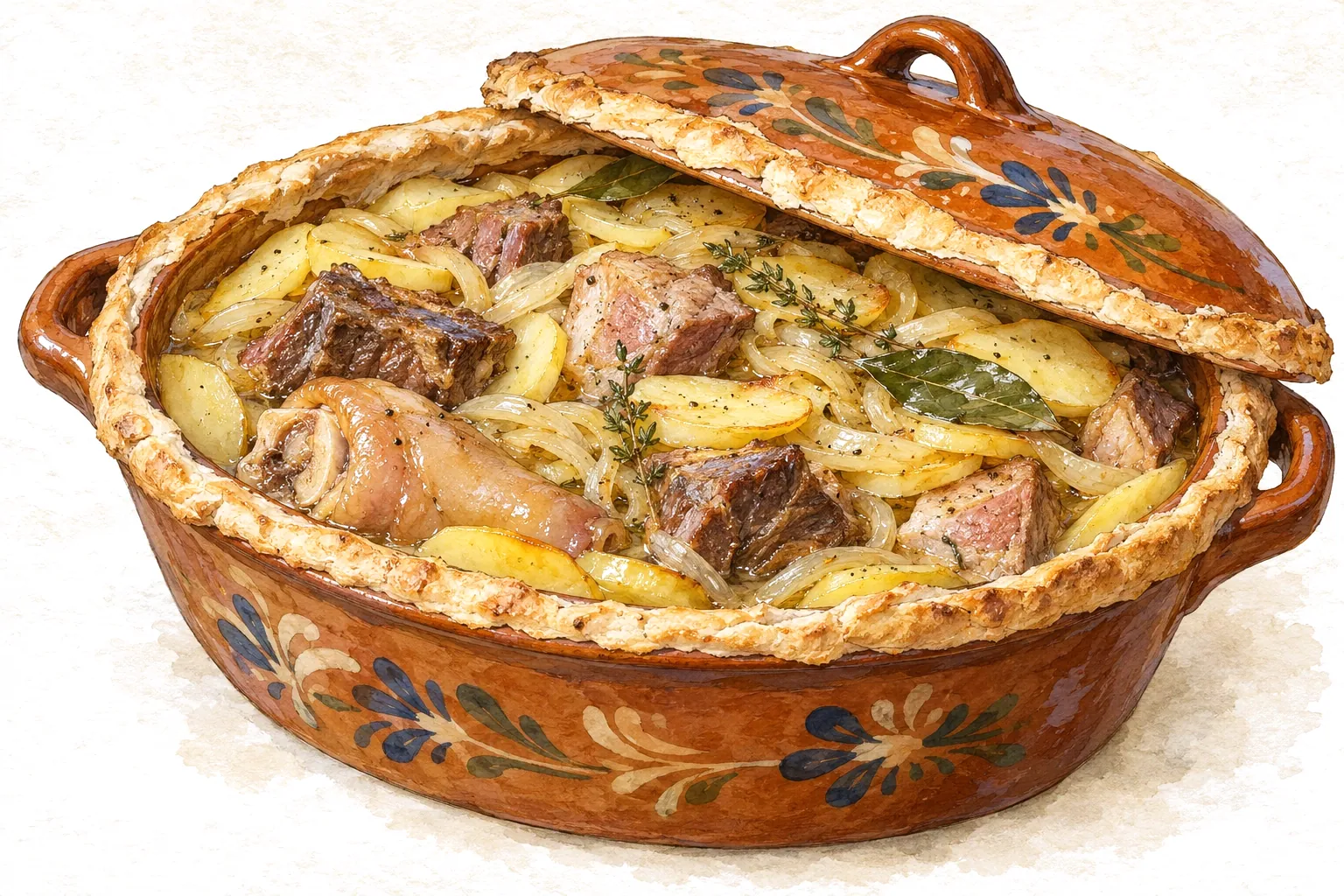
- made with Baeckeoffe
Breed
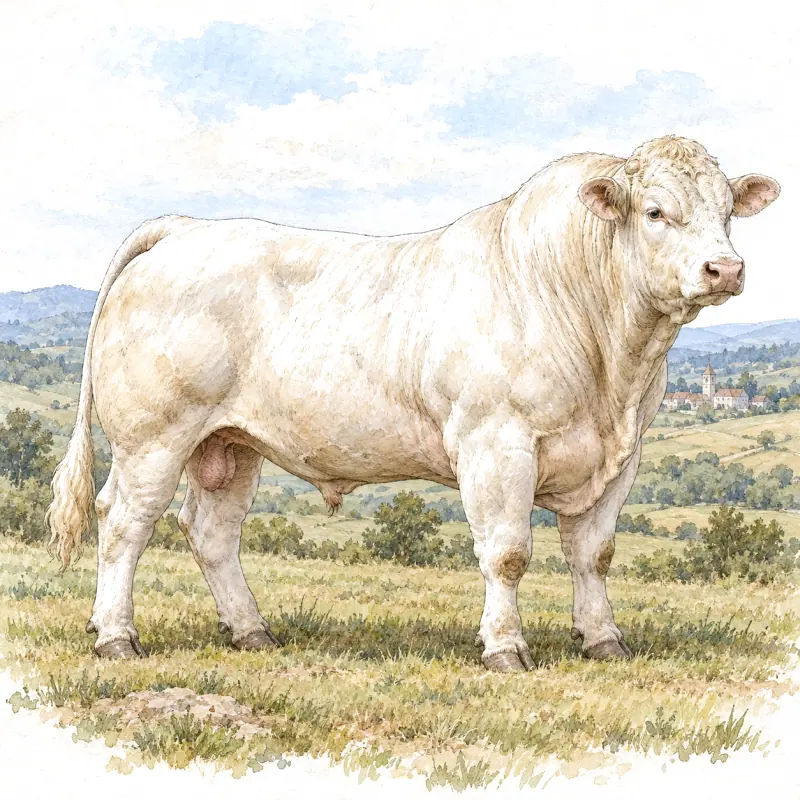
- related Charolais