Rice · Recipe · Val di Sole, Trentino · Reference page
Risotto ai funghi porcini
risotto ai funghi porcini
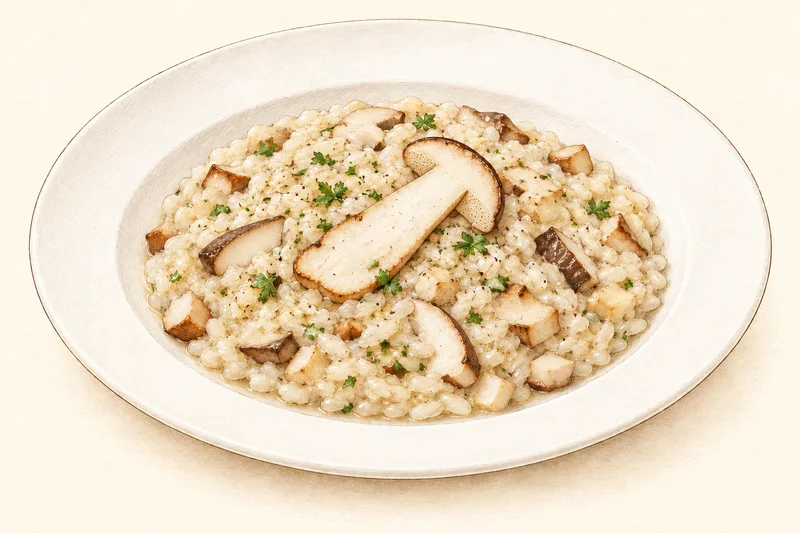
An autumn risotto from the Alpine valleys of Trentino, made with fresh porcini sautéed separately in butter and garlic and folded into the rice half-way through. The recipe is from the tourist board of the Val di Sole, which toasts the rice dry before the onion goes in.
- Servings
- 4
- Preparation
- 20 min
- Cooking
- 30 min
- Total
- 50 min
- Difficulty
- Moderate
Equipment
- Small knife, soft brush and damp cloth for the mushrooms
- Frying pan for the porcini
- Heavy-based pan for the risotto; saucepan to keep the stock boiling; ladle
Ingredients
Porcini
Risotto
To finish
Method
Clean the porcini without washing them: scrape the base of the stems with a small knife, brush off fine soil, then wipe them with a damp cloth.
Why Porcini soak up water like a sponge and turn watery in the pan.
Separate caps and stems. Slice the caps (cut long slices into pieces) and dice the stems. Keep a few slices from a small whole porcino for the garnish.
Sauté the garlic in 20 g butter, add the mushrooms and cook for about 5 minutes without adding anything else. Take off the heat and set aside.
Why Cooking the porcini apart gives them toasted, more fragrant notes.
Timer · 5 min5:00In the risotto pan, toast the rice dry, stirring all the time, until it is very hot. Tip it out of the pan.
Why Toasting the rice dry, before the onion, means the onion cannot burn and the grain's aroma comes out more.
In the same pan, melt another 20 g butter and soften the onion. Return the rice, add a pinch of salt and pour in the wine.
When the smell of alcohol has gone, add the boiling stock a little at a time, stirring fairly often so the starch comes out and binds the risotto.
Why Stirring rubs starch from the grains, which makes the risotto creamy.
Half-way through cooking add the porcini, then finish cooking until the rice is al dente.
Why The source gives no time; 16–18 minutes is usual for Carnaroli (our estimate).
Timer · 18 min18:00Off the heat, beat in the Trentingrana, the cold butter, a little freshly ground pepper and the parsley. Serve at once, each plate topped with a slice of porcino.
Why The source explains that cold butter makes the risotto swell through the change in temperature.
To drink & serve with
- Trentino-Alto Adige
Editorial suggestion: a white or a light red from Trentino.
Substitutions
- Fresh porcini → Editorial suggestion: 30–40 g dried porcini soaked in warm water, with the strained soaking water added to the stock, plus some cultivated mushrooms.
- Trentingrana → Grana Padano or Parmigiano Reggiano.
Common mistakes
- Washing the porcini under the tap: they turn watery.
- Adding the porcini at the start: they break up and lose their texture.
- Cooking past al dente: the risotto turns to paste.
Storage & reheating
Best eaten at once. Cool leftovers within an hour, refrigerate, eat within a day and reheat once, until steaming hot (UK FSA).
Safety
Only eat wild mushrooms that an expert has identified with certainty. Contains milk (butter, cheese) and sulphites (wine); many stocks contain celery: check the label.
Allergens
Milk · Sulphites · Celery
Check labels: stock, bacon and sauces can contain further allergens.
Dietary
gluten-free
A taste of the woods
The tourist board of the Val di Sole, an Alpine valley in western Trentino, publishes this recipe for anyone who finds "a few good porcini" on a walk, and calls it an autumn first course that brings "the scents of the woods" to the mouth. It finishes the risotto with Trentingrana, the grana cheese of Trentino.
Dry-toasted rice and mushrooms on the side
Two choices set this version apart. The porcini are cleaned without water and sautéed apart with garlic and butter for five minutes, so they colour and keep their bite; they go into the risotto only half-way through. And the Carnaroli is toasted dry in the empty pan until hot, then lifted out while the onion softens in butter. The board's reason: the onion cannot burn during the toasting, and the grain's aroma comes through more.
The finish, the mantecatura, is done off the heat with grated cheese and cold butter, which the source says makes the risotto swell.
How it connects
Place
- origin Val di Sole, Trentino In preparation
Rice
- made with Carnaroli
Wine region
- pairs with Trentino-Alto Adige
Recipe
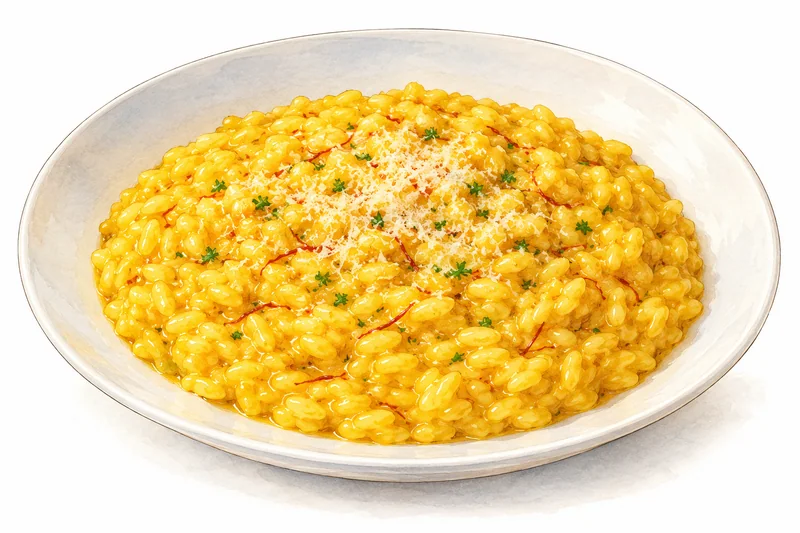
- similar Risotto alla milanese
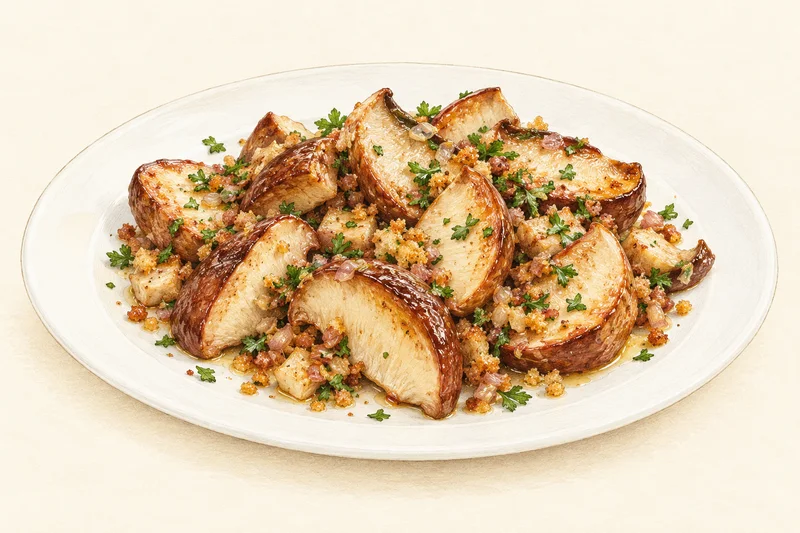
- related Cèpes à la bordelaise
Continue exploring
- CountryItaly107 entries in the atlas so far
- Wine regionTrentino-Alto AdigeSan Michele all'Adige, Italy
 RecipeCèpes à la bordelaiseBordeaux, France
 RecipeRisotto alla milaneseMilan, Italy
 RecipeOssobuco alla milaneseMilan, Italy
 RiceCarnaroli
 Grape varietyPinot Noir
- Wine regionAlto AdigeBolzano, Italy
- Wine regionBordeauxBordeaux, France
- Wine regionTrentoTrento, Italy