Explore the world · Recipe · Burgundy · Reference page
Gougères
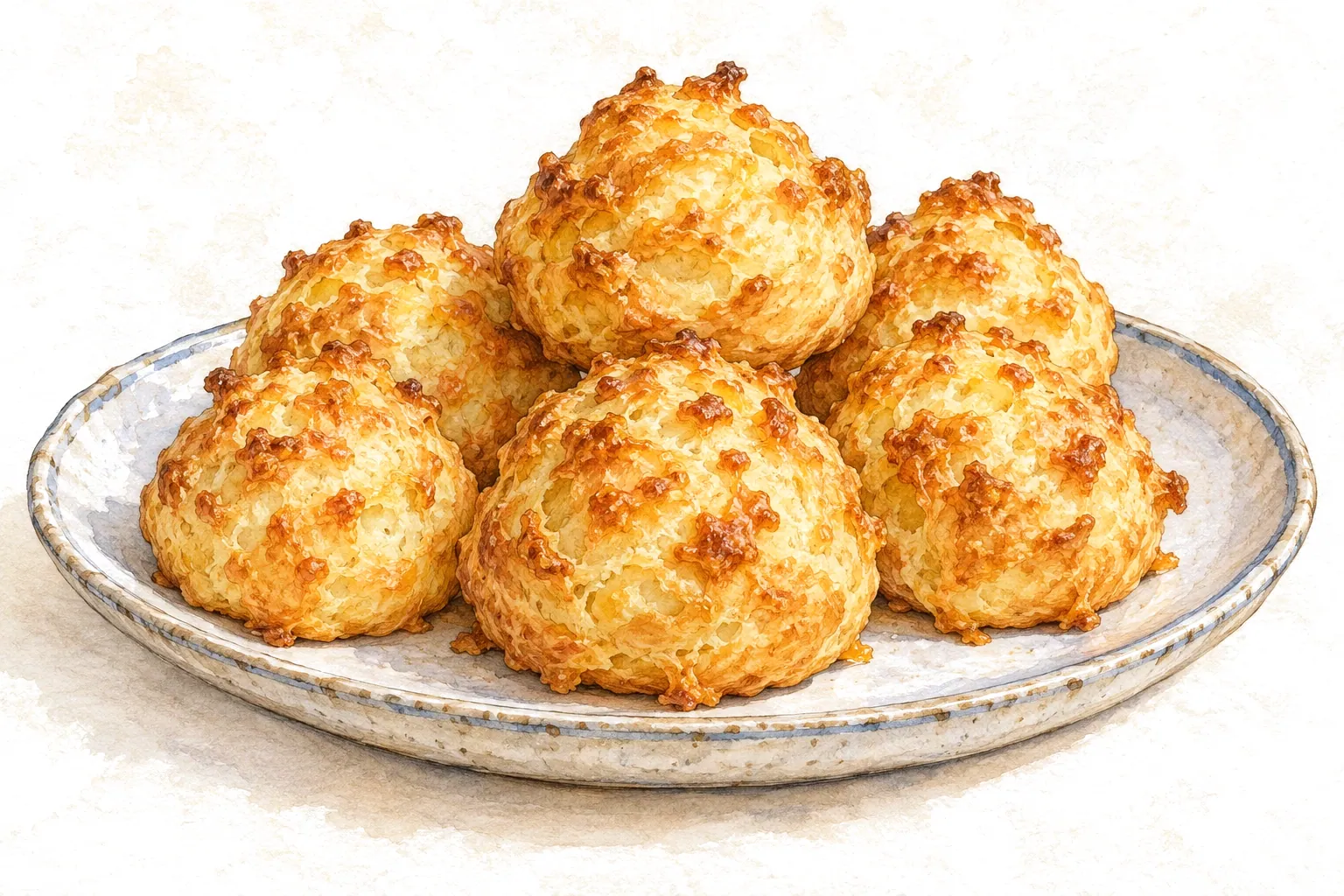
Choux paste made with milk instead of water and studded with Gruyère-type cheese, baked into small puffs or a single crown. Escoffier calls the crown the gougère bourguignonne and the small puffs ramequins.
- Servings
- 6
- Preparation
- 25 min
- Cooking
- 25 min
- Total
- 50 min
- Difficulty
- Moderate
Equipment
- Heavy saucepan and wooden spoon
- Piping bag with a 1 cm plain nozzle, or two spoons
- Two baking sheets lined with baking paper
Ingredients
Method
Heat the oven to 190 °C. Put the milk, butter and salt in the saucepan and bring to the boil, so the butter is fully melted when the milk boils.
Take the pan off the heat, tip in all the flour at once and stir hard. Return to a high heat and keep stirring for 1–2 minutes, until the paste comes away from the spoon and the pan and looks slightly oily.
Why Escoffier's 'dessécher': drying the paste cooks the flour and drives off water so it can absorb the eggs and puff.
Timer · 2 min2:00Off the heat, beat in the eggs two at a time, mixing each addition in completely before adding more. The paste should be smooth and fall from the spoon in a thick ribbon.
Why Escoffier adds the eggs 'completely off the heat' and two by two; added hot or all at once, they curdle or leave a loose paste.
Stir in the diced cheese. Pipe or spoon walnut-sized mounds onto the sheets, 4 cm apart, or pipe one ring about 20 cm across. Brush with beaten egg if you like and scatter the reserved cheese on top.
Bake small gougères 20–25 minutes, a ring 30–35 minutes, until deep golden, puffed and firm to the touch. Do not open the oven for the first 15 minutes. Serve warm.
Why Escoffier bakes small ones in a 'moderate oven' for 12–15 minutes; in a domestic oven at 190 °C, walnut-sized puffs usually need longer to dry inside. Steam from the paste puffs them; opening the oven early lets them collapse.
Timer · 22 min22:00
To drink & serve with
- Chardonnay
A glass of white Burgundy from Chardonnay.
- Chablis
A Chablis or Petit Chablis: crisp enough for the cheese and butter.
Substitutions
- Comté or Gruyère → Beaufort or an aged Emmental. Avoid soft cheeses, which make the puffs heavy.
- Milk → Water, or half water and half milk, for crisper but paler puffs. Escoffier's choux paste uses water; the cheese version uses milk.
Common mistakes
- Not drying the paste enough: the gougères spread and stay flat.
- Adding all the eggs at once: the paste turns runny and cannot be piped.
- Taking them out pale: they collapse as they cool. Bake until deep golden.
Storage & reheating
Best warm from the oven. Baked gougères keep 1 day in a tin and can be crisped for 5 minutes at 180 °C. Unbaked piped mounds freeze well; bake from frozen, adding a few minutes.
Safety
Allergens: gluten (flour), egg and milk (milk, butter, cheese). Traditional cheeses are made with animal rennet; check the label if this matters to you.
Allergens
Gluten · Egg · Milk
Check labels: stock, bacon and sauces can contain further allergens.
Dietary
vegetarian
The Burgundian gougère
Escoffier lists the gougère with the hot hors d'œuvre. He describes ramequins, "commonly served in the past", as small versions of the gougère bourguignonne: the ramequins are piped like small choux buns, while the gougère is piped in a crown. Both use the same paste, the pâte à ramequins et à gougère.
The cheese he names is Gruyère, which in French kitchens of his time covered the large cooked-curd cheeses of the Jura and the Alps. Comté, from neighbouring Franche-Comté, is the cheese of that family most often used today.
Choux paste with milk and cheese
The base is Escoffier's ordinary choux paste: 750 ml water, 375 g butter, 15 g salt, 25 g sugar, 500 g flour and 16 eggs. For gougère he changes three things: milk replaces the water, sugar and flavouring are left out, and 250 g of fresh Gruyère cut in tiny dice goes in once the eggs are absorbed. The recipe here is a quarter of that batch.
Choux rises by steam. The paste is first cooked on the heat until it leaves the pan, which gelatinises the starch and drives off water; the eggs, beaten in off the heat, add more water and the proteins that set the shell. In the oven the water turns to steam inside a skin that stretches and then sets, leaving the puff hollow. Milk sugars and cheese make the crust brown faster than plain choux, so watch the colour.
How it connects
Grape variety
- pairs with Chardonnay
Recipe
- related Fondue au Comté
Continue exploring
- CountryFrance162 entries in the atlas so far
- Wine regionBurgundyBeaune, France
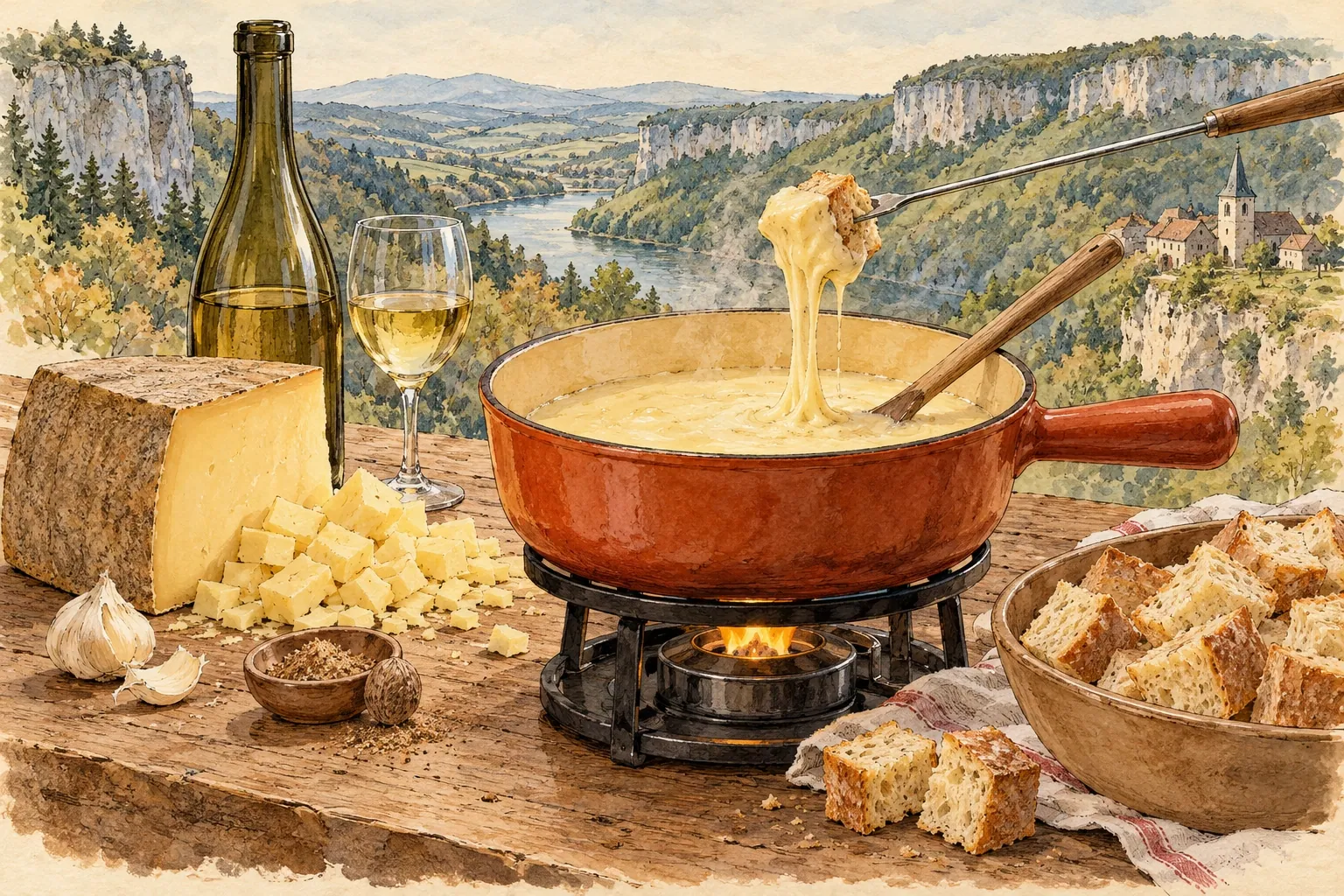 RecipeFondue au ComtéJura massif, Franche-Comté, France
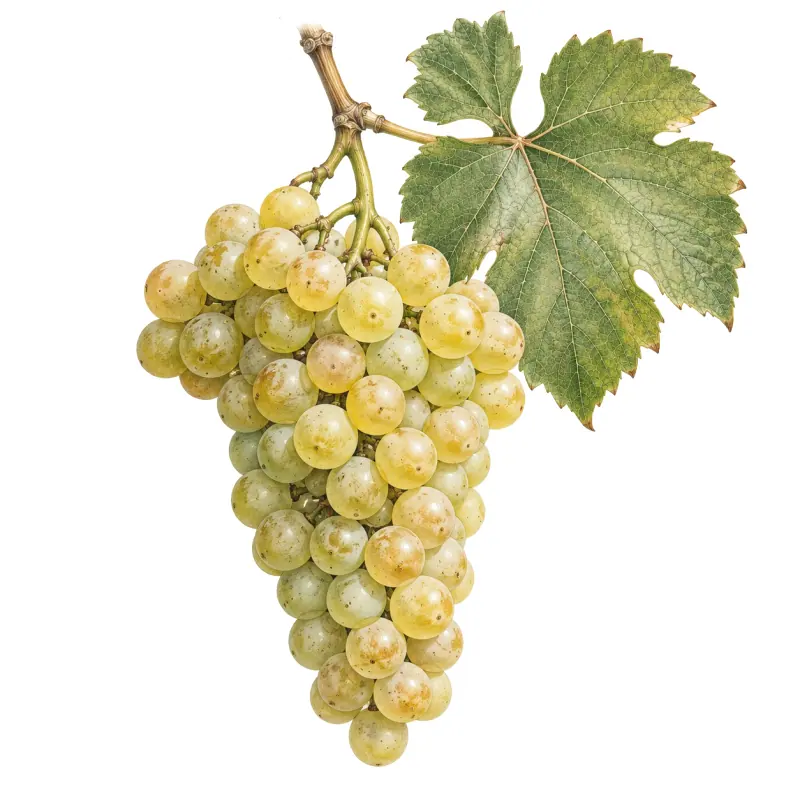 Grape varietyChardonnay
- Wine regionChablisChablis, France
 RecipeBœuf bourguignonDijon, France
 RecipeCoq au vinBurgundy, France
 StoryThe Cistercians and the Clos de VougeotVougeot, France
 StoryDid Dom Pérignon invent Champagne?Hautvillers, France
 StoryThe Judgment of Paris, 1976Paris, France