Pasta · Pasta shape · Short entry
Pizzoccheri della Valtellina
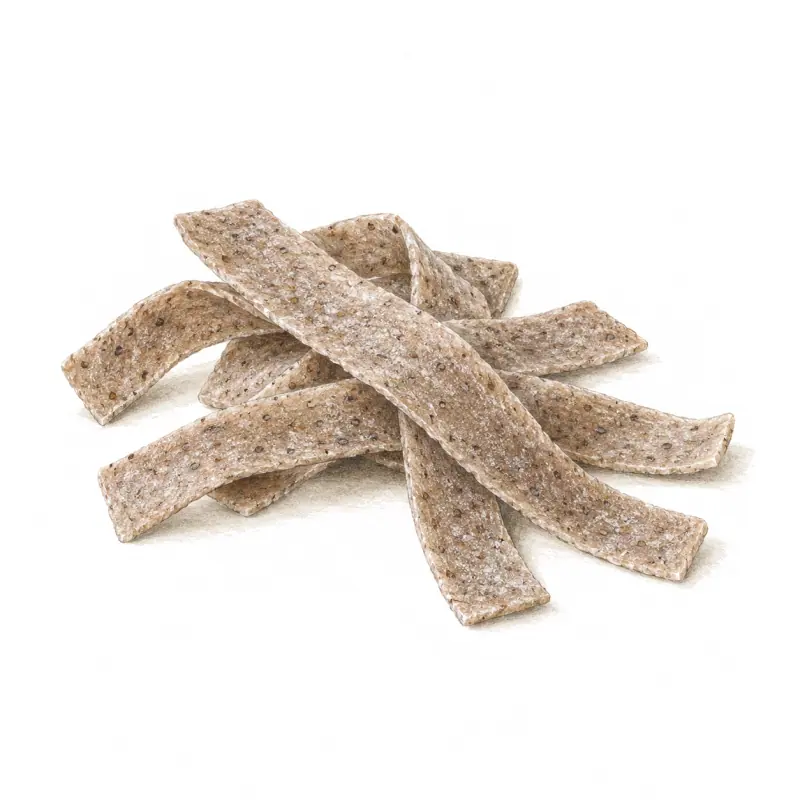
Short, grey-brown ribbons of buckwheat pasta from the province of Sondrio, protected as an EU geographical indication (PGI) since 2016. The rules require at least 20% buckwheat flour. In the classic dish of Teglio they are cooked with potatoes and Savoy cabbage and layered with Valtellina Casera cheese, butter and sage.
What the PGI rules say
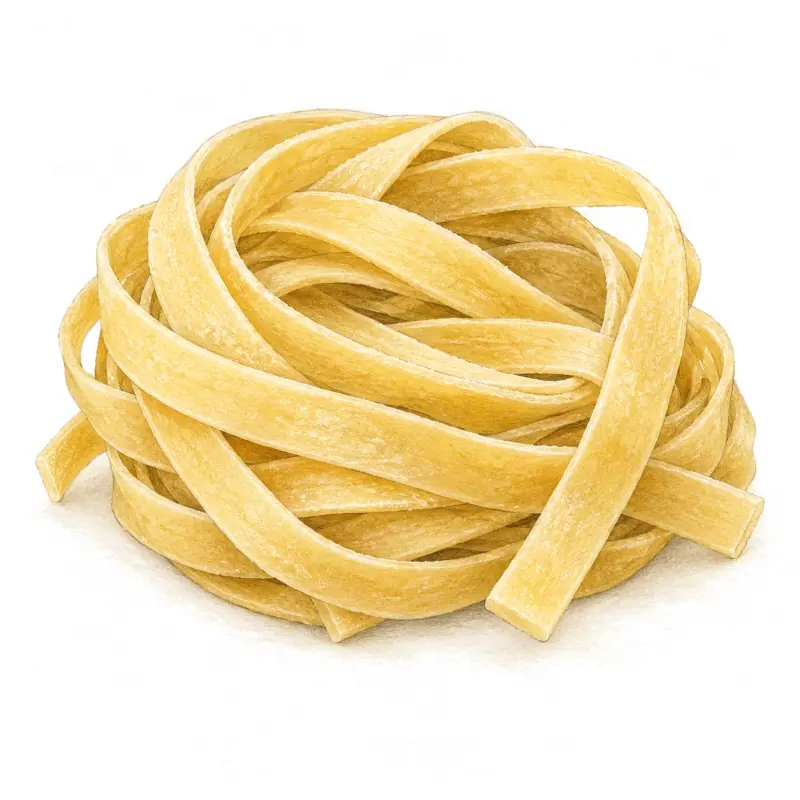
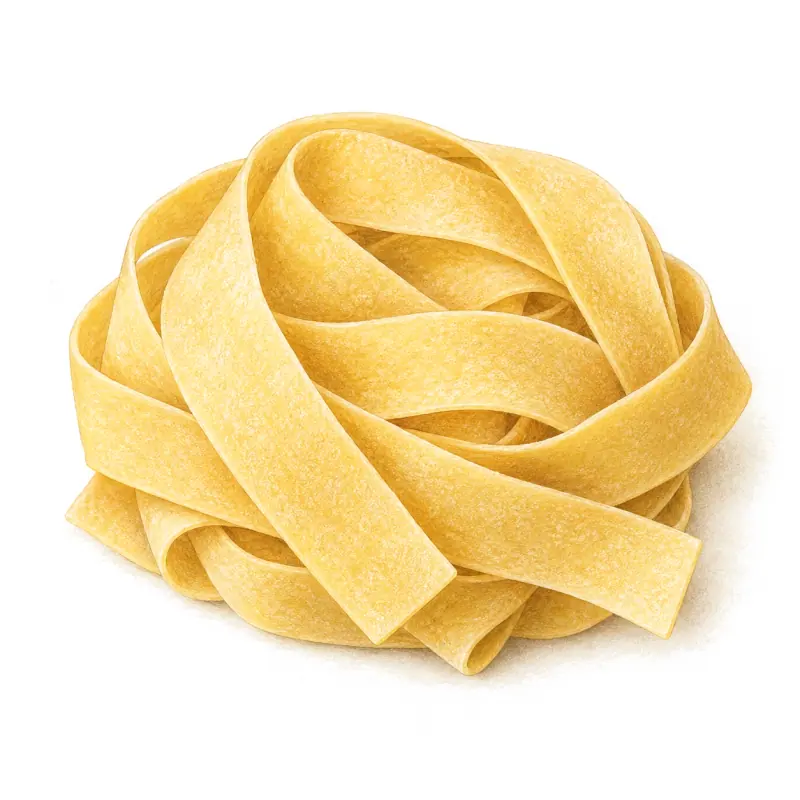
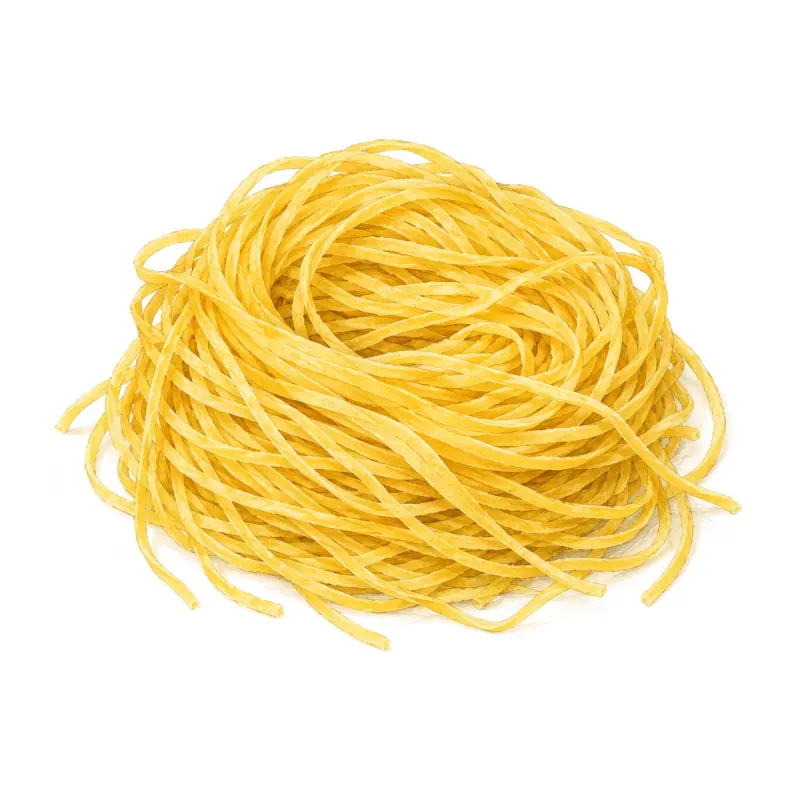
The production rules allow three shapes: the flat ribbon (tagliatello steso), the ribbon wound into nests (tagliatello avvolto) and a small concave gnocchetto. Dried pizzoccheri are at least 20% buckwheat flour (Fagopyrum esculentum) with up to 80% durum semolina; fresh ones replace the semolina with soft-wheat flour. Dried pasta may hold no more than 12.5% water. Everything must be made within the administrative borders of the province of Sondrio.
The cooked pasta is brown with hazel-grey flecks of buckwheat husk. Home recipes carry much more buckwheat: the Lombardy Region's version uses about two parts buckwheat to one of white flour.
Buckwheat in the Valtellina
The PGI file cites a document of 1616 by the governor of the Adda valley, then ruled by the Swiss Grisons, recording buckwheat grown on the sunny Rhaetian side of the valley, especially around Teglio. Probate inventories of 1750 and 1775 list tools "per li Pizzoccheri", the earliest written traces of the pasta. Buckwheat growing spread until the nineteenth century and then declined; the file counts about 20 ha still grown in the province.
Teglio is called the home of the dish and holds the "Pizzocchero d'Oro" festival. The pasta was registered as a PGI by Commission Implementing Regulation (EU) 2016/1730.
How it connects
Pasta shape
- similar Tagliatelle