
Pasta · Recipe · Bologna · Reference page
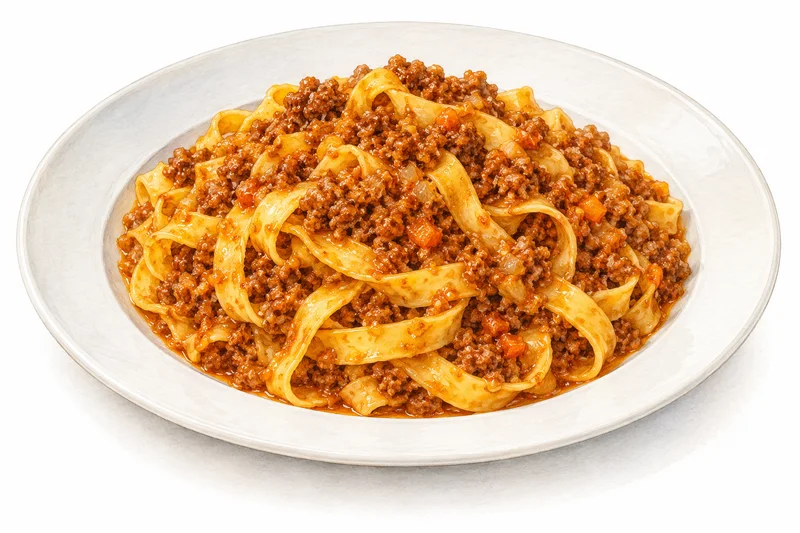
Ragù alla bolognese
Coarsely minced beef and fresh pork belly cooked down with a soffritto, wine, tomato and a little milk for two to three hours. The quantities follow the Accademia Italiana della Cucina's updated recipe, deposited at the Bologna Chamber of Commerce on 20 April 2023.
- Servings
- 6
- Preparation
- 20 min
- Cooking
- 2 h 30
- Total
- 2 h 50
- Difficulty
- Moderate
Equipment
- Heavy casserole, 24–26 cm across (non-stick, aluminium or enamelled cast iron)
- Chopping board and knife (the Accademia says not to use a food processor for the vegetables)
- Wooden spoon; small pan to keep the stock hot
Ingredients
Ragù
To serve
Method
In the casserole, melt the minced pancetta in the 3 tablespoons of oil. Add the finely chopped onion, carrot and celery and soften slowly over medium-low heat, stirring all the time with a wooden spoon. The onion must not catch.
Why The Accademia insists the soffritto is chopped by hand and softened slowly; burnt onion spoils the ragù.
Raise the heat, add the beef and cook about 10 minutes, stirring well, until it sizzles.
Timer · 10 min10:00Pour in the wine and let it evaporate completely, until you can no longer smell it. Add the tomato paste and passata and stir well.
Add a cup of boiling stock (or water), cover and cook gently for about 2 hours, or up to 3 hours depending on taste and the meat used, adding hot stock as needed.
Why Long, gentle cooking turns the meat tender and the sauce creamy.
Timer · 2 h120:00Halfway through, if you like, add the milk, following what the Accademia calls an advisable old tradition, and let it be fully absorbed.
At the end, season with salt and pepper. The ragù should be a deep orange colour, coating and creamy.
Substitutions
- Minced beef and pork belly → Permitted variants: mixed meat (about 60% beef, 40% pork loin or capocollo); meat chopped by knife; flat or rolled cured pancetta instead of fresh; a hint of nutmeg.
- Additions → The deposit allows enriching the ragù with chicken livers, hearts and gizzards; skinned, crumbled pork sausage; blanched peas added at the end; or soaked dried porcini.
Common mistakes
- Variants the Accademia does not allow: veal, smoked pancetta, pork only, garlic, rosemary, parsley or other herbs and spices, brandy in place of wine, and flour to thicken.
- Hurrying the soffritto over high heat: it browns and turns bitter.
Storage & reheating
Keeps 3 days in the fridge and freezes well for 3 months.
Safety
Allergens: celery, sulphites (wine), milk (optional), gluten (the tagliatelle, and some stock cubes). Cool leftover ragù quickly and reheat until it boils.
Allergens
Celery · Sulphites · Milk · Gluten
Check labels: stock, bacon and sauces can contain further allergens.
A recipe deposited with a notary
The Accademia Italiana della Cucina, founded in 1953 and recognised as a cultural institution of the Italian Republic, deposits reference versions of traditional dishes. Its updated recipe for ragù alla bolognese was deposited at the Bologna Chamber of Commerce on 20 April 2023, replacing an earlier deposit.
The note to the 2023 recipe says Bologna traditionally used the cartella, the beef diaphragm, which is now hard to find; in its place, or as well, collagen-rich forequarter cuts are preferred: shin, shoulder, chuck, belly and brisket.
What is in and what is out
The deposit is unusually explicit. It lists permitted variants (mixed beef and pork, knife-chopped meat, cured pancetta, nutmeg), variants it does not admit (veal, smoked pancetta, pork alone, garlic, rosemary, parsley and other herbs or spices, brandy instead of wine, flour) and allowed enrichments (chicken livers, sausage, peas, dried porcini).
It also records a modern technique: browning the meat separately and then combining it with the already softened soffritto. The milk, added halfway, is optional but called an advisable old tradition.
How it connects
Place
- origin Bologna In preparation
Pasta shape
- pairs with Tagliatelle
Recipe
- made with Lasagne verdi alla bolognese
- similar Pappardelle al cinghiale
- similar Zhajiangmian
Continue exploring
- CountryItaly107 entries in the atlas so far
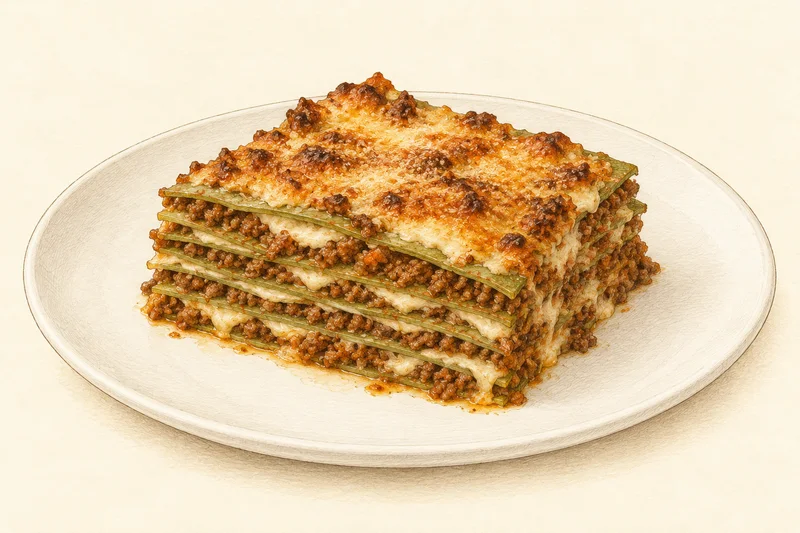 RecipeLasagne verdi alla bologneseBologna, Italy
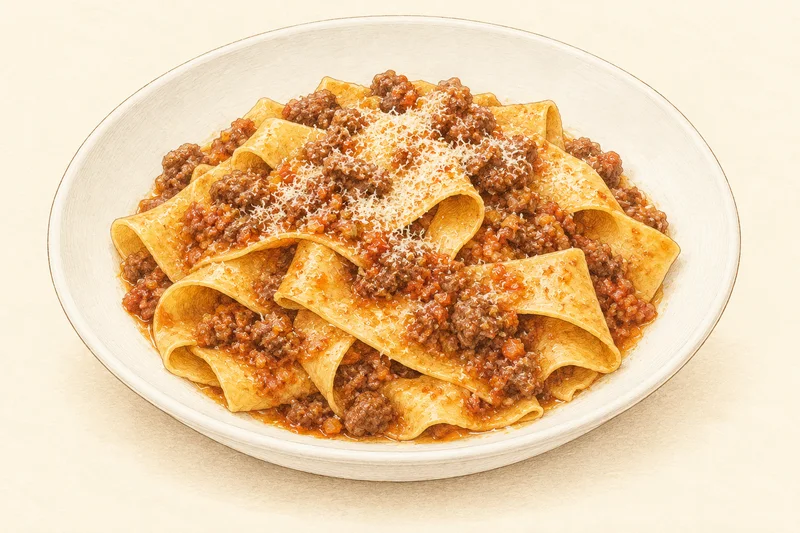 RecipePappardelle al cinghialeMaremma, Italy
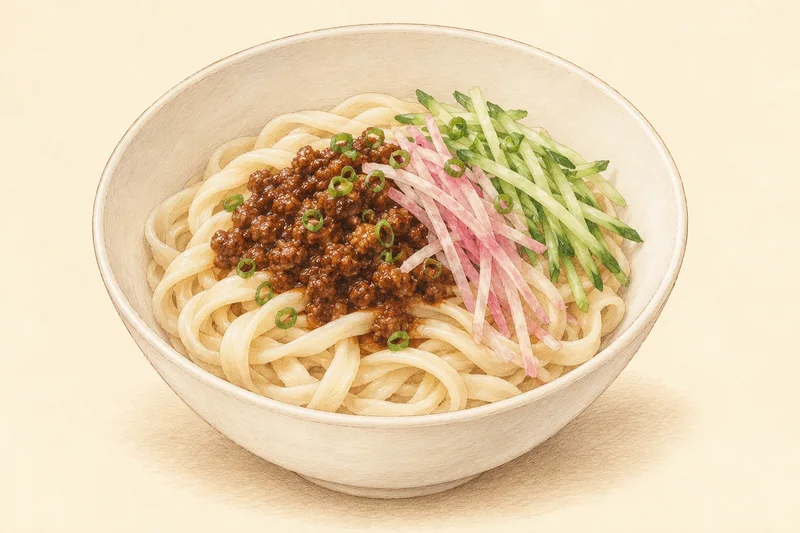 RecipeZhajiangmianBeijing, People's Republic of China
 RecipeBœuf bourguignonDijon, France
 Pasta shapeTagliatelle
- Wine regionEmilia-RomagnaBologna, Italy
 RecipeCantonese soy sauce chow meinHong Kong
 RecipeDan dan noodlesSichuan, People's Republic of China
 RecipeTortellini in brodoBologna, Italy