
Pasta · Recipe · Bologna · Reference page
Lasagne verdi alla bolognese
lasagne verdi al forno alla bolognese
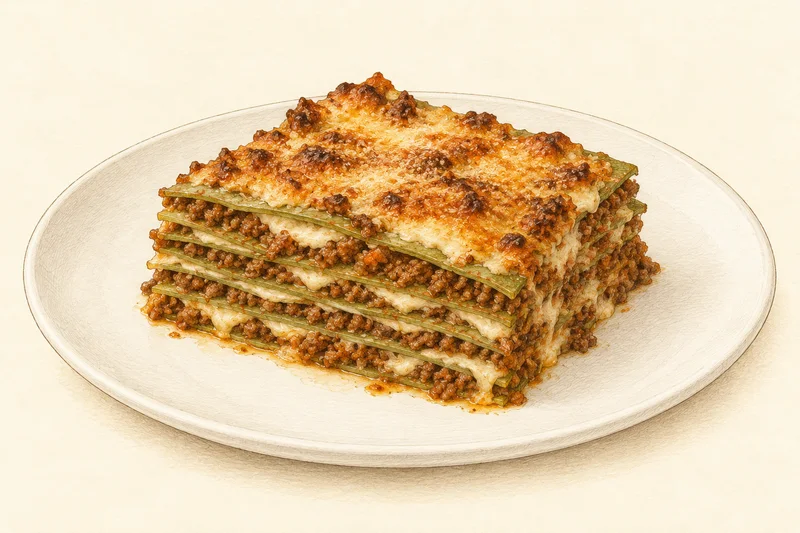
At least six layers of spinach pasta with ragù, a thin béchamel, butter and Parmigiano Reggiano, baked for half an hour. The quantities are the recipe decreed by the Bologna San Luca delegation of the Accademia Italiana della Cucina in 2003, as published by the city's tourist foundation.
- Servings
- 8
- Preparation
- 1 h 30
- Cooking
- 30 min
- Resting
- 5 min
- Total
- 2 h 5
- Difficulty
- Involved
Equipment
- Rectangular baking tin about 25 x 35 cm and at least 6 cm deep
- Pastry board and long rolling pin (or pasta machine)
- Large pot of salted water; clean cotton or linen cloth
- Saucepan and wooden spoon for the béchamel
Ingredients
Green pasta (about 1 kg)
Béchamel
Assembly
Method
Make the green pasta: heap the flour, break the eggs into a well in the centre, add the chopped spinach and work it with a fork and then the hands into a smooth, elastic dough. Rest it 15–20 minutes covered, then roll it out from the centre towards the edges. For lasagne the sheet stays thicker than for tagliatelle.
Why Bologna's pasta makers never add water: the spinach brings the moisture.
Timer · 20 min20:00Make the béchamel: melt some of the butter with the flour, let it turn hazelnut-coloured, then pour in the milk a little at a time, stirring all the time, until it is creamy. Season with salt and nutmeg. It should stay creamy and spreadable.
Why Artusi's balsamella method: thin it with milk if too thick, cook it longer if too thin.
Cut the pasta into rectangles of about 15 x 10 cm, or a little smaller than the tin. Drop them into a pot three-quarters full of boiling salted water and lift them out as soon as they float. Cool them briefly in cold water and dry them on a clean cloth.
Butter the tin and spread a few spoonfuls of ragù and béchamel over the bottom. Cover with pasta, then a thin veil of béchamel, plenty of ragù, flakes of butter and a lot of Parmigiano, as evenly as possible. Prick the pasta three or four times with a toothpick so no air bubbles form.
Repeat for at least six layers in all. Finish with a sheet of pasta covered with a little ragù mixed with béchamel, a few flakes of butter and a dusting of Parmigiano, and put a flake of butter in each corner of the tin.
Bake for 25–30 minutes at about 180 °C in a preheated oven. Let it rest 5 minutes before serving.
Timer · 30 min30:00
To drink & serve with
- Lambrusco di Sorbara
Editorial suggestion: a dry, sparkling Lambrusco from the same region to refresh the palate.
Substitutions
- Home-made green pasta → Fresh plain egg pasta sheets: not green, so not the deposited recipe, but the same assembly.
Common mistakes
- Drowning the layers: the source asks for abundant but not excessive ragù and a light, creamy béchamel.
- Skipping the pricking: trapped air lifts the sheets.
Storage & reheating
Cool within 2 hours; keeps 2 days in the fridge (UK FSA; USDA allows 3–4 days). Reheat once, until steaming hot in the centre.
Safety
Contains gluten, egg, milk, and celery and sulphites (wine) in the ragù. Cool leftovers within 2 hours and reheat only once.
Allergens
Gluten · Egg · Milk · Celery · Sulphites
Check labels: stock, bacon and sauces can contain further allergens.
A recipe decreed in 2003
Bologna's tourist foundation publishes the green lasagne as decreed by the Bologna San Luca delegation of the Accademia Italiana della Cucina at a ceremony on 28 May 2003 and deposited at the Chamber of Commerce in the Palazzo della Mercanzia on 4 July 2003. It sits alongside the Accademia's ragù, which it uses, and the city's other deposited pasta recipes.
Thin layers, many of them
The pasta is boiled only until it floats, cooled and dried on a cloth, so that it does not go on cooking in the oven. The béchamel is a thin veil under each sheet of ragù, the butter is in flakes and the Parmigiano goes on generously. At least six layers fill a deep tin, and the bake is short, 25 to 30 minutes, because everything is already cooked.
The deposit gives the béchamel's ingredients but not its method; the atlas uses Pellegrino Artusi's 1891 balsamella, flour and butter cooked to a hazelnut colour before the milk goes in.
How it connects
Place
- origin Bologna In preparation
Pasta shape
- made with Lasagne
Recipe
- made with Ragù alla bolognese
- related Tortellini in brodo
Wine region
- pairs with Lambrusco di Sorbara
- related Emilia-Romagna
Continue exploring
- CountryItaly107 entries in the atlas so far
- Wine regionEmilia-RomagnaBologna, Italy
 RecipeRagù alla bologneseBologna, Italy
 RecipeTortellini in brodoBologna, Italy
- Wine regionLambrusco di SorbaraSorbara, Italy
 Pasta shapeLasagne
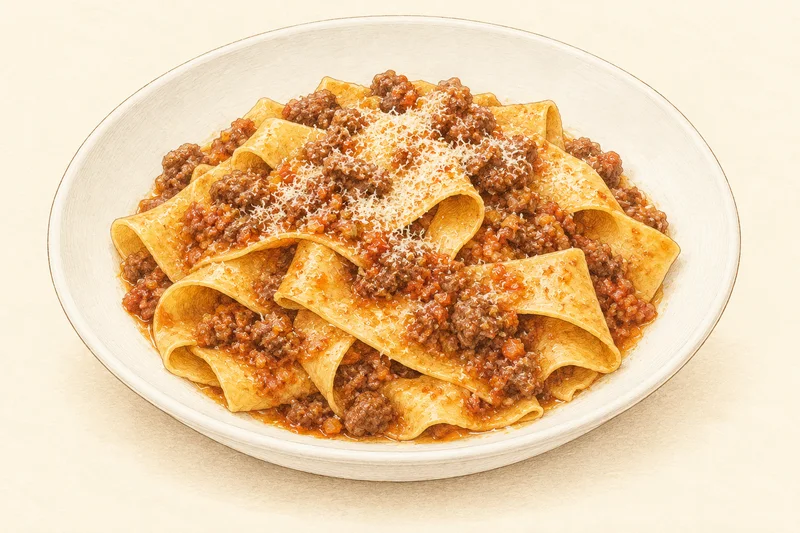 RecipePappardelle al cinghialeMaremma, Italy
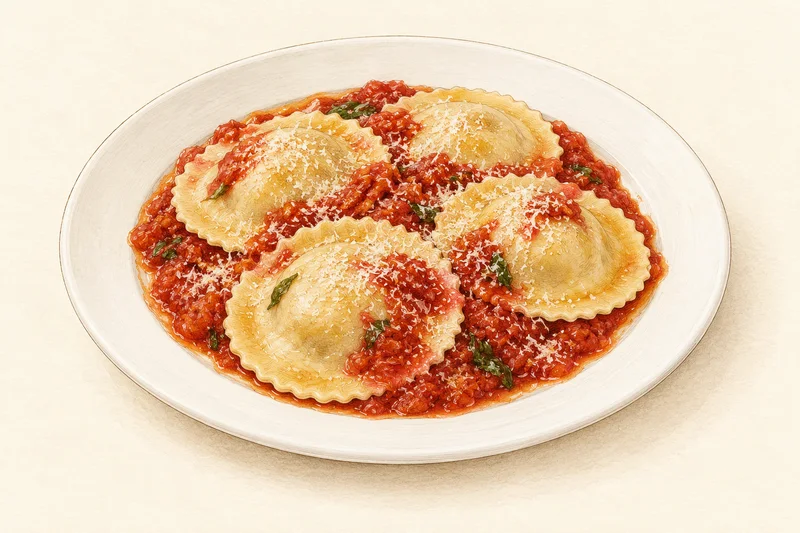 RecipeRavioli di ricotta e spinaciItaly
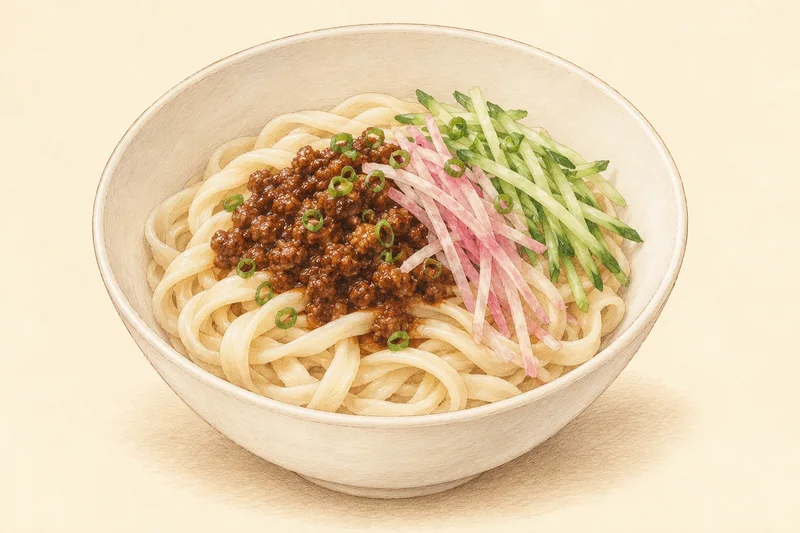 RecipeZhajiangmianBeijing, People's Republic of China
- Grape varietyAlbana