
Explore the world · Recipe · Belgium · Reference page
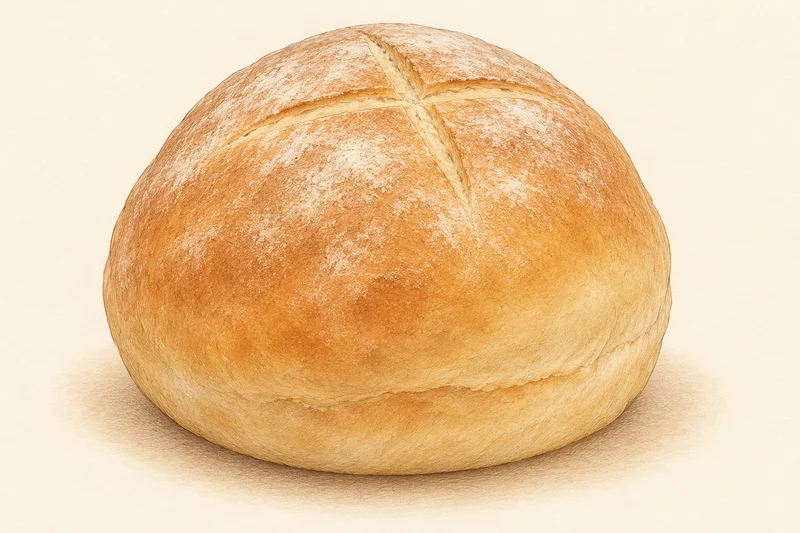
Flemish white loaf (wit brood)
wit brood / pain blanc
The everyday Belgian white loaf: flour, water, fresh yeast, a little butter and salt, kneaded long, risen twice, slashed in a cross and baked with steam for a crisp crust. Jeroen Meus's recipe from Dagelijkse kost. It replaces pistolets, for which no usable source was found.
- Servings
- 4
- Preparation
- 25 min
- Cooking
- 45 min
- Resting
- 1 h
- Total
- 2 h 10
- Difficulty
- Moderate
Equipment
- Stand mixer with dough hook (or strong arms)
- Baking sheet with baking paper
- Small ovenproof dish for water, for steam
- Sharp knife or blade
Ingredients
Method
Take the butter out of the fridge an hour ahead. Weigh everything carefully.
Why In baking, exact weights matter more than in cooking.
Pour some of the water into the mixer bowl and crumble in the yeast; stir to dissolve. Add the rest of the water, the flour, the butter and the salt.
Knead with the dough hook for 15 minutes, until smooth and supple.
Timer · 15 min15:00Turn the dough out, cover with a damp cloth and rest 5 minutes. Knead briefly by hand into a smooth ball, dust with flour, cover and leave for 15 minutes in a draught-free place.
Timer · 20 min20:00Knead again for a couple of minutes to press out the gas, and shape a tight round. Put it on a lined baking sheet and make a few shallow crosswise cuts on top. Cover and leave to rise for 40 minutes.
Why The slashes let the loaf expand on top rather than tearing at the base.
Timer · 40 min40:00Heat the oven to 220 °C with a small dish on the oven floor. Put the bread in and pour water into the hot dish. Bake 45 minutes; after 30 minutes wedge the oven door slightly open for the last 15.
Why Steam keeps the crust supple at first so the loaf can rise, then letting it escape crisps the crust.
Timer · 45 min45:00Cool on a rack before slicing with a bread knife.
To drink & serve with
- Tomato with grey shrimps (tomate-crevettes)
Editorial suggestion: sliced with butter alongside a Belgian starter.
Substitutions
- Fresh yeast → About a third of the weight in dried instant yeast (editorial conversion, about 5 g).
Common mistakes
- Too short a knead: the loaf is dense.
- Rising in a draught: the dough cools and rises unevenly.
- No steam: the crust sets too early and cracks.
Storage & reheating
Keep at room temperature in a bread bag or cloth for 2–3 days; slice and freeze for longer.
Safety
Contains gluten and milk (butter). Steam from water poured into a hot oven can scald: keep your face back.
Allergens
Gluten · Milk
Check labels: stock, bacon and sauces can contain further allergens.
Dietary
vegetarian
The everyday Belgian loaf
Jeroen Meus's wit brood for Dagelijkse kost is the plain white loaf of Flemish breakfasts and sandwiches: 750 g of bread flour, 4.5 dl of water, fresh yeast, a little butter and salt. His method is the one a home baker needs to get a bakery crust: a 15-minute knead, two rises in a draught-free place, a cross slashed on top, and a dish of water on the oven floor for steam, with the door wedged open for the last 15 minutes to dry the crust.
The brief for this batch asked for Belgian pistolets, the crusty rolls of the Sunday breakfast table. No authoritative recipe with quantities could be found, so this loaf, made from the same kind of lean dough, takes their place.
How it connects
Region
- origin Belgium
Continue exploring
- CountryBelgium46 entries in the atlas so far
- RegionBelgiumBelgium
 RecipeBelgian fritesBelgium
 RecipeBoulets à la liégeoiseLiège, Belgium
 RecipePoulet à la bièreBelgium
 RecipeStoofvleesBelgium
- StoryA history of beer
- StyleGueuze (Oude Geuze)Recognised style
- StyleLambicRecognised style
- StyleTrappist beer (Authentic Trappist Product)Certification label