Pasta · Recipe · Iya, Tokushima · Reference page
Iya soba
祖谷そば
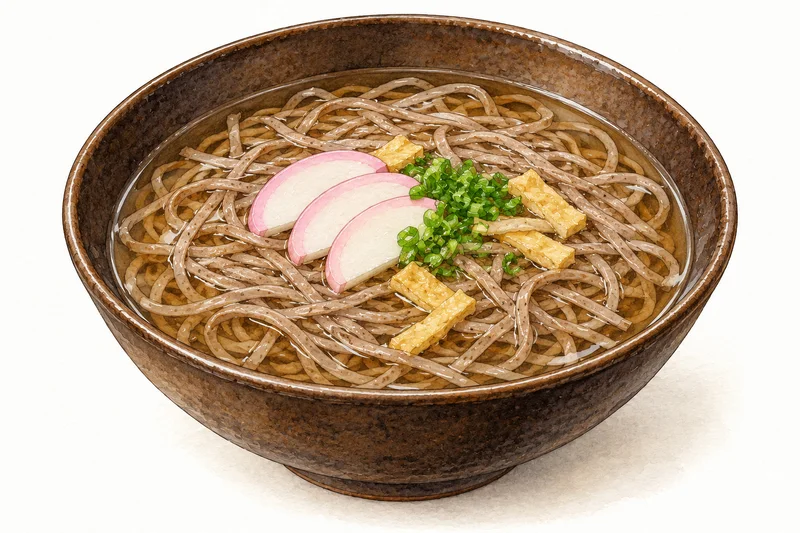
Short, thick noodles of pure local buckwheat, rolled and cut by hand and served in a dashi of kombu, dried sardines and bonito with kamaboko, fried tofu and spring onion. Japan's Ministry of Agriculture records it as the soul food of the Iya valley in Tokushima; the recipe serves four.
- Servings
- 4
- Preparation
- 40 min
- Cooking
- 20 min
- Resting
- 2 h 30
- Total
- 3 h 30
- Difficulty
- Involved
Equipment
- Large bowl and sieve for the flour
- Noodle board and rolling pin; large knife
- Large pot for noodles; second pot for the broth; fine strainer
Ingredients
Noodles
Broth (tsuyu)
Toppings
Method
Put the kombu and dried sardines in the 1.4 litres of water and soak for 2–3 hours.
Why A cold soak draws flavour from kombu and sardines gently, without bitterness.
Timer · 2 h 30150:00Sift the buckwheat flour. Add the 160 ml water gradually, mixing it in, then knead into a firm ball and keep kneading to build strength.
Why Pure buckwheat has no gluten; thorough kneading is all that holds the dough together.
Dust the board with flour and roll the dough out to about 2 mm thick. Fold it in half and cut into strips 2 mm wide. Dust the noodles with flour and separate them.
Heat the soaking pot. Take out the kombu just as it starts to foam. When the liquid boils, add the bonito flakes, simmer 2–3 minutes, turn off the heat and strain.
Timer · 3 min3:00Add the soy sauce and mirin to the strained broth and bring to a simmer to make the tsuyu.
Slice the kamaboko thinly, cut the fried tofu into 2 cm strips and chop the green onion.
Boil the noodles 2–3 minutes, drain, rinse under cold water, drain well and put in bowls. Pour over the hot tsuyu and top with kamaboko, tofu and onion.
Why Rinsing removes surface starch so the noodles stay distinct in the broth.
Timer · 3 min3:00
Substitutions
- Hand-made noodles → Dried soba noodles, cooked as the packet says; most contain wheat.
- Dried sardines → More kombu and bonito for a lighter dashi.
Common mistakes
- Adding all the water at once: the dough turns sticky and cannot be rolled.
- Boiling the kombu: it turns the dashi slimy and bitter. Take it out as it starts to foam.
Storage & reheating
Fresh noodles are best cooked the day they are made. The tsuyu keeps 3 days in the fridge.
Safety
Buckwheat is a serious allergen in Japan and elsewhere, though not one of the EU's 14 listed allergens. Allergens: fish (sardines, bonito, kamaboko), soy, gluten (soy sauce usually contains wheat).
Allergens
Fish · Soy · Gluten
Check labels: stock, bacon and sauces can contain further allergens.
Dietary
dairy-free
Soul food of the Iya valley
The Ministry of Agriculture, Forestry and Fisheries' regional cuisine database describes Iya soba as the soul food of the Iya area of Miyoshi City, Tokushima. Rice is hard to grow in the steep valley, so buckwheat became a staple. Legend says the Heike clan, defeated in the Genpei War, fled to Iya and began growing it there.
The noodles are made with 100% local buckwheat flour; they are short and break easily, which MAFF links to the name soba-kiri. Once served at festivals and gatherings, they are now found in local restaurants, inns and souvenir shops. The recipe is credited to Kumiko Nagao of Tokushima Bunri University Junior College.
Pure buckwheat dough
Without wheat flour the dough has no gluten to hold it. The flour is sifted, the water added little by little, and the dough kneaded firmly and repeatedly before rolling to 2 mm and cutting into 2 mm strips. The noodles boil only 2 to 3 minutes and are rinsed in cold water.
The broth is a double dashi: kombu and dried sardines soaked for hours, then bonito flakes simmered briefly, seasoned with soy sauce and mirin.
How it connects
Place
- origin Iya, Tokushima In preparation
Recipe
- related Kensan-yaki (miso-grilled rice balls)
- related Shoyu ramen
- related Kake udon