Explore the world · Recipe · Burgundy · Reference page
Escargots à la bourguignonne
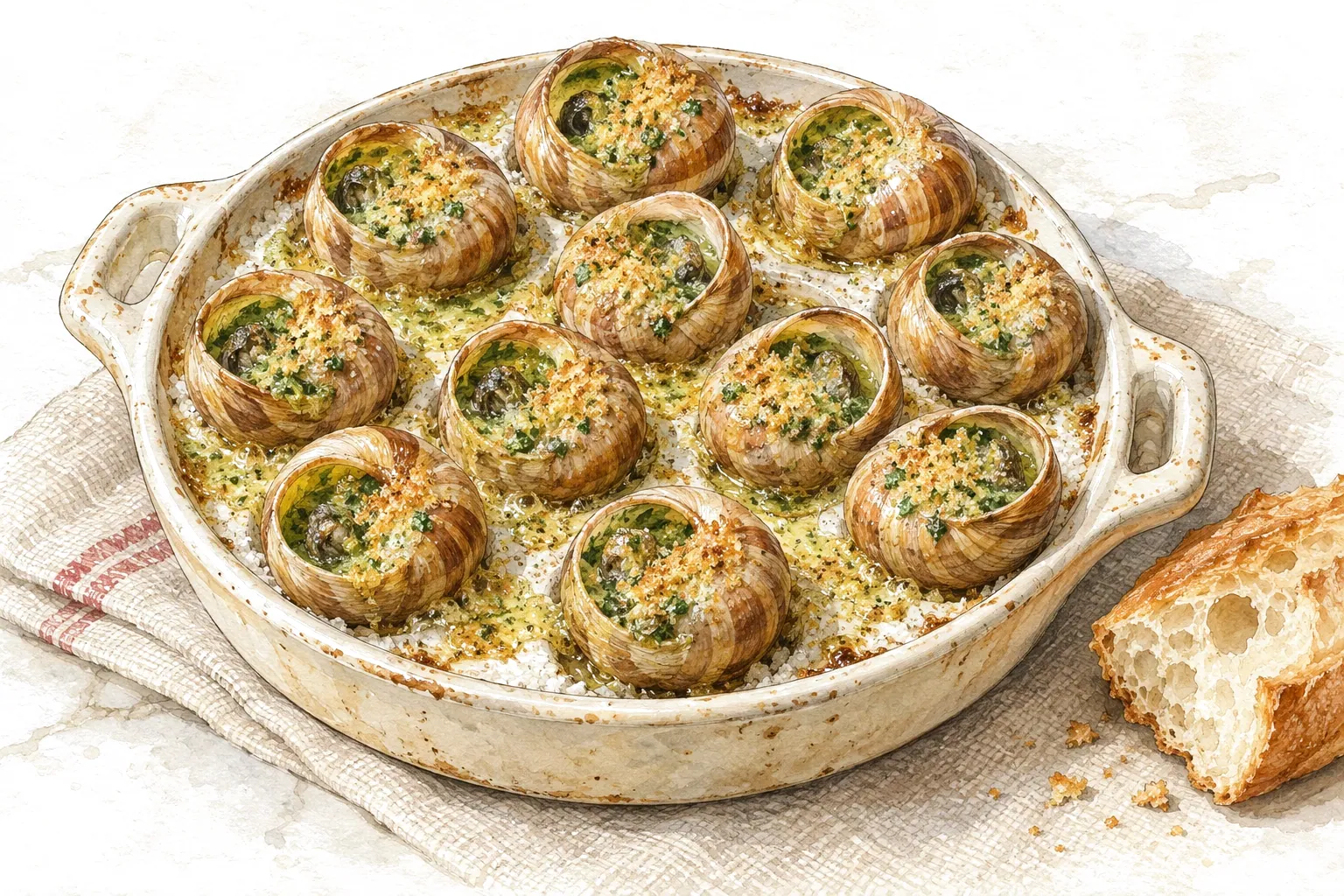
Cooked snails returned to their shells, sealed with butter beaten with shallot, garlic and parsley, and baked until the butter sizzles. Escoffier gives the butter by weight: 350 g for 50 snails.
- Servings
- 4
- Preparation
- 30 min
- Cooking
- 8 min
- Total
- 38 min
- Difficulty
- Easy
Equipment
- Snail dishes (escargotières) or a baking dish with coarse salt to hold the shells upright
- Snail tongs and forks
- Small bowl and fork for the butter
Ingredients
Snails
Snail butter (beurre pour les escargots)
To finish
Method
Beat the softened butter with the shallots, garlic, parsley, salt and pepper until evenly mixed. Keep it cool but soft enough to spread.
Why Escoffier kneads the butter with the aromatics and keeps it cool; well mixed, it melts evenly in the oven instead of leaving pockets of raw garlic.
Heat the oven to 230 °C. Put a piece of butter the size of a bean into the bottom of each shell, push in a snail, then fill the opening with more butter, pressing it flat.
Stand the shells, butter upwards, in snail dishes or on a bed of coarse salt. Pour a little water into the bottom of the dish. Sprinkle the butter in each shell with a pinch of breadcrumbs.
Why Escoffier adds a little water to the dish so the butter that runs out does not burn on the hot metal.
Bake in the very hot oven for 7–8 minutes, until the butter is bubbling and the crumbs are lightly coloured. Serve at once with bread for the butter.
Why Escoffier says 'four vif', a very hot oven; 230 °C is our reading of it. The snails are already cooked: they only need heating through.
Timer · 8 min8:00
To drink & serve with
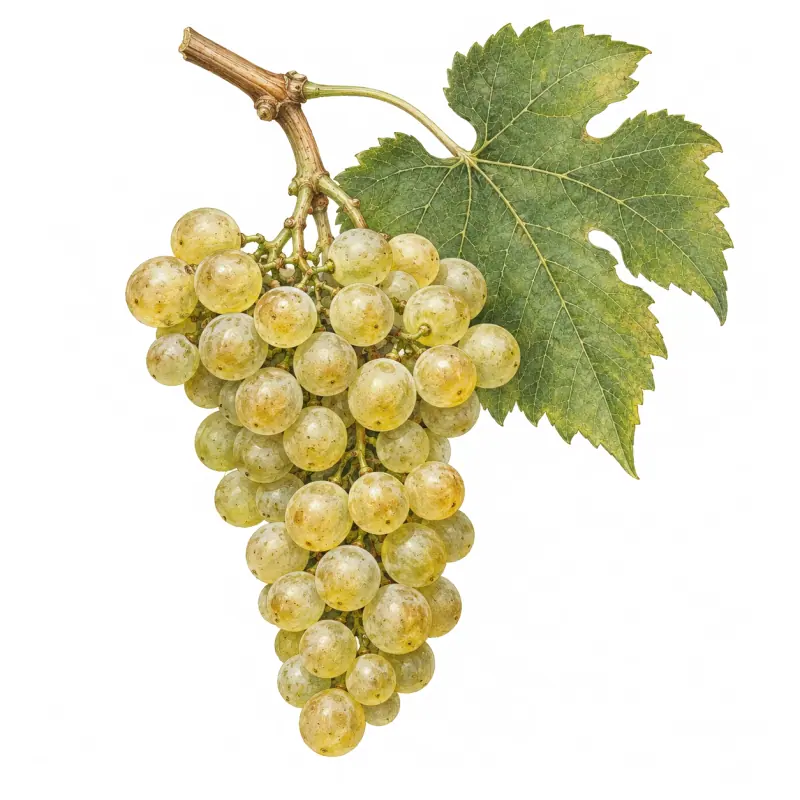
- Aligoté
A crisp Bourgogne Aligoté: its acidity cuts the butter.
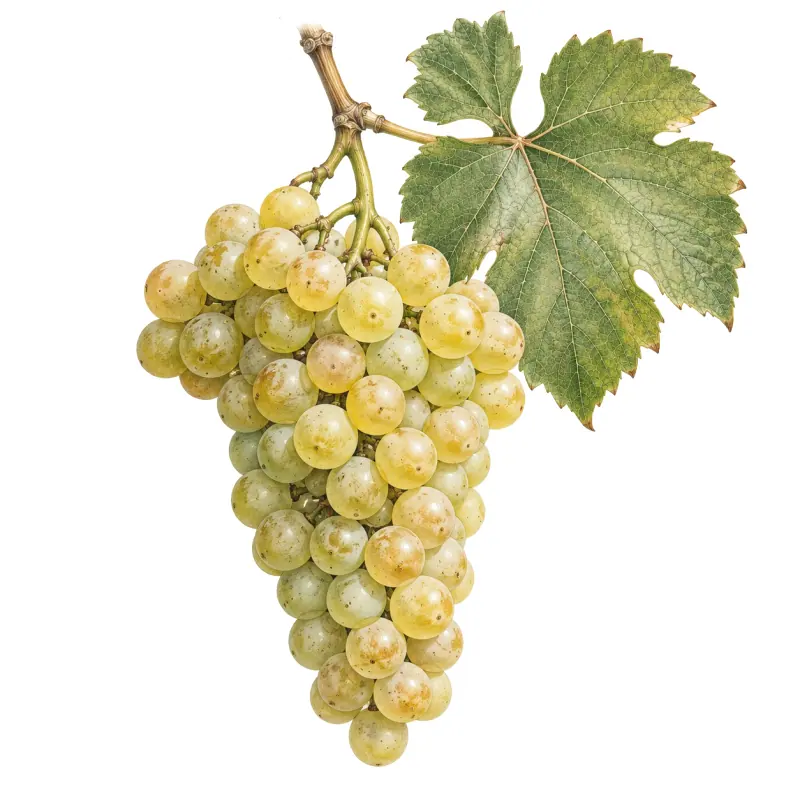
- Chardonnay
Or an unoaked Chardonnay such as a Petit Chablis or Chablis.
- Chablis
Escoffier also gives a Chablis version: a reduction of white wine and shallot in the bottom of each shell.
Substitutions
- Snail shells → Ceramic snail dishes with hollows, or small mushroom caps, hold the snails and butter without shells.
- Breadcrumbs (gluten-free) → Leave them out; the dish is traditional without a crust in many homes.
Common mistakes
- Using cold, hard butter: it will not seal the shell and the snail falls out when the butter melts.
- Overbaking: the butter separates and the snails turn rubbery. Stop as soon as it bubbles.
- Laying the shells on their side: the butter runs out.
Storage & reheating
The filled, unbaked shells can be frozen for up to 3 months and baked from frozen (allow 2–3 minutes more). Leftover snail butter keeps a week in the fridge.
Safety
Snails are molluscs, one of the 14 EU allergens. Use commercially prepared snails; wild snails need purging and long cooking (Escoffier: blanching, then at least 3 hours' simmering). Serve at once, piping hot.
Allergens
Molluscs · Milk · Gluten
Check labels: stock, bacon and sauces can contain further allergens.
Snails in the professional canon
Escoffier's Guide culinaire places snails in its fish chapter. He starts from closed-up snails (escargots bouchés): the chalky seal is removed, the snails are soaked with salt, vinegar and a little flour, washed, blanched for 5–6 minutes, taken out of the shell and the dark end removed, then cooked very gently for at least 3 hours in half white wine, half consommé with carrot, onion, shallot and a bouquet garni. The shells are boiled with soda crystals, rinsed and dried.
The Burgundian dish is the simplest of his four snail recipes. The à la chablisienne version adds a reduction of white wine and shallot to each shell; the à la dijonnaise one replaces half the butter with beef marrow.
A butter that seals
The whole dish is a compound butter. Escoffier's formula for 50 snails is 350 g butter, 35 g finely chopped shallot, 10 g garlic crushed to a paste, 25 g (one spoonful) chopped parsley, 12 g salt and 2 g pepper, kneaded together and kept cool. A small piece goes in first, then the snail, then more butter pressed in to close the opening.
Baking is short. In a very hot oven the butter melts around the snail and boils for a few minutes; breadcrumbs on the surface colour lightly and soak up some of it. Water in the dish catches the butter that escapes and keeps it from burning.
How it connects
Grape variety
- pairs with Aligoté
- pairs with Chardonnay
Continue exploring
- CountryFrance162 entries in the atlas so far
- Wine regionBurgundyBeaune, France
 Grape varietyAligoté
 Grape varietyChardonnay
- Wine regionChablisChablis, France
 RecipeBœuf bourguignonDijon, France
 RecipeCoq au vinBurgundy, France
 StoryThe Cistercians and the Clos de VougeotVougeot, France
 StoryDid Dom Pérignon invent Champagne?Hautvillers, France
 StoryThe Judgment of Paris, 1976Paris, France