Meat · Recipe · Philippines · Reference page
Chicken adobo
adobong manok
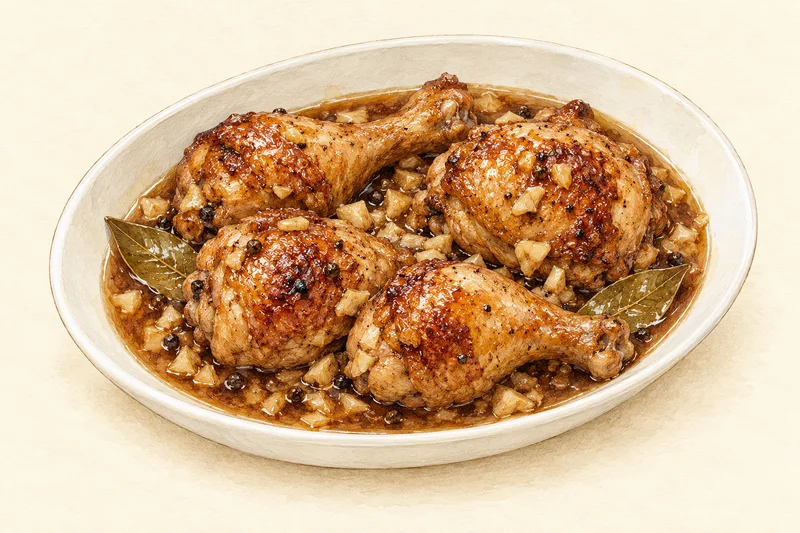
Chicken browned with plenty of garlic, then simmered in vinegar and soy sauce with bay and black pepper until the liquid has reduced by half. This is Ricky Ocampo's recipe from SBS's Filipino Food Safari, one of countless household versions.
- Servings
- 4
- Preparation
- 15 min
- Cooking
- 40 min
- Total
- 55 min
- Difficulty
- Easy
Equipment
- Large frying pan or sauté pan with a lid
Ingredients
To serve
Method
Heat the oil in the pan over a medium-high heat and brown the chicken on all sides, 6–8 minutes.
Timer · 7 min7:00Add the garlic and cook 1–2 minutes until lightly browned. Season with salt and plenty of pepper.
Add the bay leaves and soy sauce and simmer for 2 minutes.
Timer · 2 min2:00Pour in the vinegar and bring to the boil, then lower the heat, cover and cook for 30 minutes, until the chicken is tender and the liquid has reduced by half.
Why Half the liquid cooks away under the lid, concentrating the vinegar, soy and garlic into a sauce.
Timer · 30 min30:00Check the chicken is cooked through and serve with steamed rice.
To drink & serve with
Steamed white rice to take up the sauce. Leftover adobo can be shredded and fried with garlic rice.
Substitutions
- Cane vinegar → Coconut vinegar, apple-cider vinegar or white wine vinegar.
- Soy sauce → Leave it out and add salt for adobong puti (white adobo), a regional version.
- Chicken alone → Half chicken and half pork belly, the other common pairing.
Common mistakes
- Uncovering too early: the chicken dries before it is tender.
Storage & reheating
Adobo keeps well and many think it improves. Cool quickly, refrigerate within 2 hours and eat within 2 days; reheat until steaming hot.
Safety
Poultry must be cooked through: juices clear, no pink meat. Most soy sauces contain wheat (gluten); use tamari for a gluten-free dish.
Allergens
Soy · Gluten
Check labels: stock, bacon and sauces can contain further allergens.
Dietary
dairy-free
A method more than a recipe
The word adobo comes from the Spanish for a sauce or marinade, but the Filipino dish is defined by its method: meat simmered in vinegar, with soy sauce, garlic, bay leaves and peppercorns. SBS writer Nikki Alfonso-Gregorio notes that every household and province claims the best version, and that some think there are more adobos than the Philippines' roughly 7,640 islands.
Regional versions include adobong puti (white, with no soy sauce), red adobo coloured with annatto, adobo cooked in coconut milk (sa gata) and a dried adobo, simmered until all the liquid has gone, that was carried on long journeys.
Brown, then braise in vinegar
Ocampo browns the chicken and garlic first, then adds soy and lets it bubble before the vinegar goes in. A full cup of vinegar to a small chicken sounds a lot, but half of it cooks away in thirty minutes, leaving a tart, salty, garlicky sauce. Cane vinegar is traditional; apple-cider or white balsamic vinegar are suggested in its place.
How it connects
Place
- origin Philippines In preparation
Recipe
- related Arroz caldo