Explore the world · Recipe · South Korea · Reference page
Napa cabbage kimchi
배추김치 (baechu-kimchi)
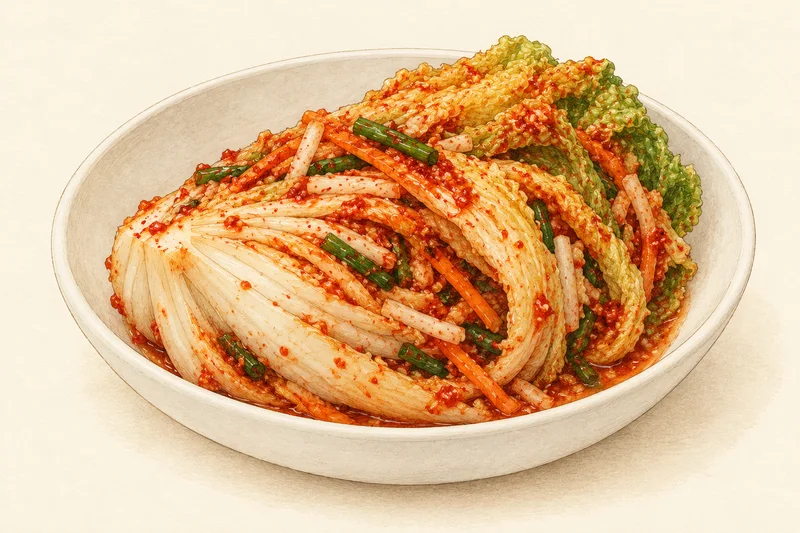
Quartered napa cabbage salted, rinsed and spread leaf by leaf with a paste of Korean chilli flakes, garlic, ginger, fish sauce and a sticky rice-flour porridge with radish, carrot, scallions and chives, then left to ferment until sour. The king of kimchis, in Maangchi's recipe from Maangchi's Real Korean Cooking.
- Servings
- 24
- Preparation
- 1 h
- Cooking
- 10 min
- Resting
- 25 h 30
- Total
- 26 h 40
- Difficulty
- Involved
Equipment
- Very large bowl or basin
- Small saucepan
- Rubber gloves (recommended)
- Glass jars or food-safe airtight containers that fit in the fridge
Ingredients
The cabbage
Rice porridge
Kimchi paste
Method
Cut each cabbage in half through the core, then cut a slit through the core about 5 cm above the stem so the leaves loosen but stay attached. Dunk the halves in a large bowl of water to wet every leaf.
Sprinkle the salt between the leaves, concentrating on the thick stems, and put the cabbage in a large bowl. Leave for 1½ hours, turning the halves every 30 minutes.
Why Salt draws water out of the leaves so they turn pliable and the finished kimchi stays crunchy and keeps.
Timer · 1 h 3090:00Meanwhile cook the rice flour and water in a saucepan over a medium heat, stirring, until it bubbles, about 10 minutes. Add the sugar and stir for a few minutes more, until the porridge is slightly translucent and thinner. Let it cool to room temperature.
Why Maangchi: the rice porridge 'acts like a glue', so the chilli flakes cling to the cabbage instead of falling off.
Timer · 10 min10:00Rinse the cabbage halves under cold running water, ruffling the leaves to remove grit and excess salt. Split each half lengthwise into quarters and drain well.
In a large bowl mix the cooled porridge, garlic, ginger, onion, fish sauce, chilli flakes, radish, carrot, scallions and chives into a paste. Wear gloves if chilli irritates your skin.
Keeping the quarters whole, spread paste over every leaf. Pack the quarters tightly into clean glass jars or containers, pressing out air, and leave headroom. Cover.
Why NC State Extension advises filling containers only about two-thirds, because fermentation releases gas, and using clean glass or food-safe plastic, not metal.
Leave at cool room temperature until the surface bubbles and the kimchi smells and tastes sour, 1–2 days depending on the warmth of the kitchen. Then refrigerate.
Why Lactic acid bacteria already present on the vegetables do the fermenting; the fridge slows them once the taste is right.
To drink & serve with
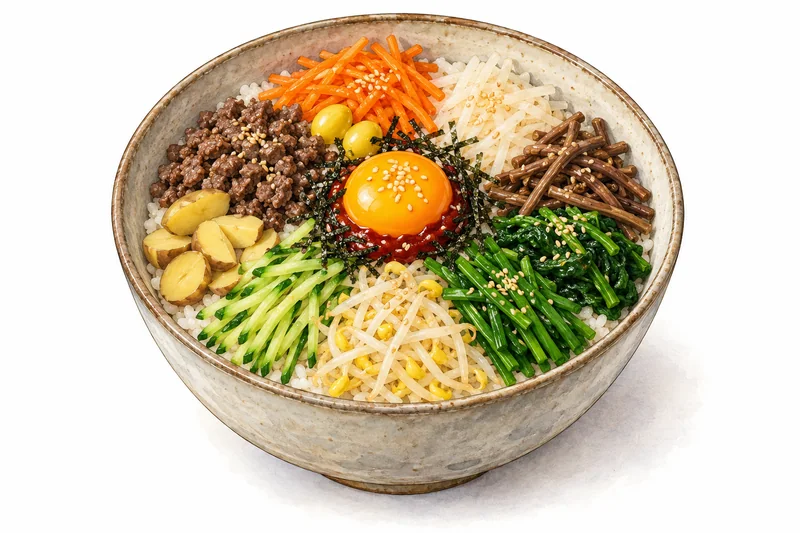
- Jeonju bibimbap
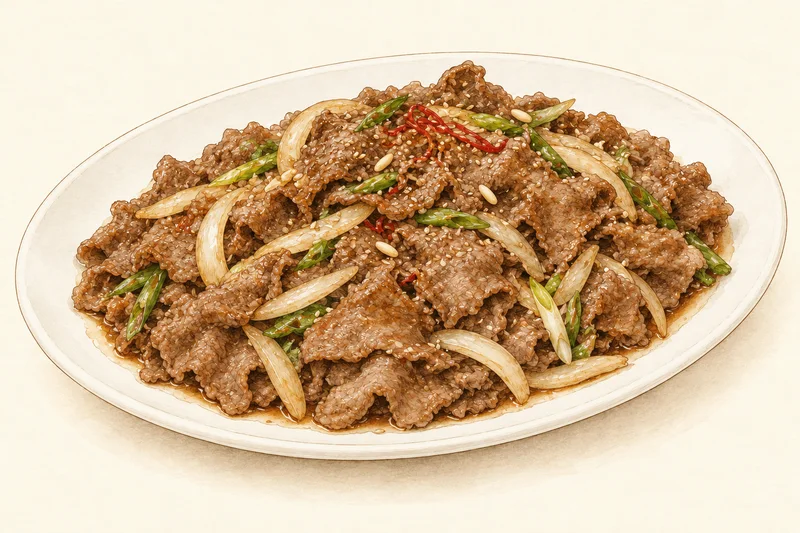
Kimchi goes with almost every Korean meal; editorial suggestion: beside bibimbap or bulgogi.
- Bulgogi
Editorial suggestion: the classic side for grilled meat.
Substitutions
- Fish sauce (vegetarian) → Soy sauce or salt to taste; the flavour is less deep.
- Korean radish → Daikon, as the source allows.
- Asian chives → Extra scallions.
Common mistakes
- Under-salting: the cabbage stays stiff and the kimchi turns watery and spoils sooner.
- Not rinsing after salting: the kimchi is far too salty.
- Filling jars to the brim: the bubbling brine overflows.
Storage & reheating
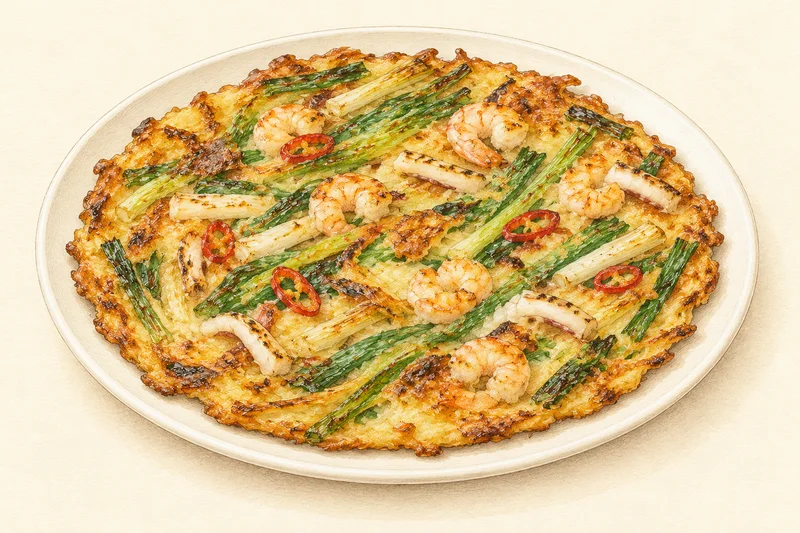
Keep covered in the refrigerator, pressed down under its brine. It grows more sour with time and is then used for stews, pancakes and fried rice. Discard it if mould appears on the surface (NC State Extension).
Safety
Contains fish (fish sauce). Wash hands and use clean equipment and containers; ferment in glass or food-safe plastic, not metal; refrigerate once sour; discard if mould appears (NC State Extension). Gochugaru can irritate skin and eyes: wear gloves.
Allergens
Fish
Check labels: stock, bacon and sauces can contain further allergens.
Kimjang: a whole community's winter work
UNESCO describes kimchi as the Korean name for preserved vegetables seasoned with spices and fermented seafood, an essential part of Korean meals across classes and regions. Making it is organised over the year: seafood is salted in spring, sea salt bought in summer, red chillies dried and ground in late summer. Late autumn is kimjang season, when communities make and share large quantities of kimchi so that every household has enough for the winter. Kimjang, making and sharing kimchi in the Republic of Korea was inscribed on UNESCO's Representative List of the Intangible Cultural Heritage of Humanity in 2013.
Of the hundreds of kimchis, Maangchi calls cabbage kimchi 'king of them all'. She will not say how many servings it makes: Koreans make a lot and use it for soups, stews, dumplings, pancakes and fried rice until it runs out.
Salt, paste, time
The cabbage is halved but not separated, salted between the leaves for an hour and a half, then rinsed. The paste is bound with a cooked porridge of glutinous rice flour, which works like glue for the chilli flakes. After every leaf is coated, the kimchi ferments at cool room temperature for one or two days, until it bubbles and tastes sour.
NC State Extension explains that the lactic acid bacteria needed are already present on the raw vegetables, and that summer cabbage ferments faster than winter cabbage.
How it connects
Place
- origin South Korea In preparation
Recipe
- pairs with Jeonju bibimbap
- pairs with Bulgogi