
Meat · Breed · Short entry
Bayeux pig
A white Normandy pig with large black marks, from the Bessin in Calvados, descended from crosses between the Normandy pig and the Berkshire in the mid-nineteenth century. It almost disappeared after the Normandy landings. Recovery has run since the 1980s; in 2022 there were 155 pigs with 50 breeders.
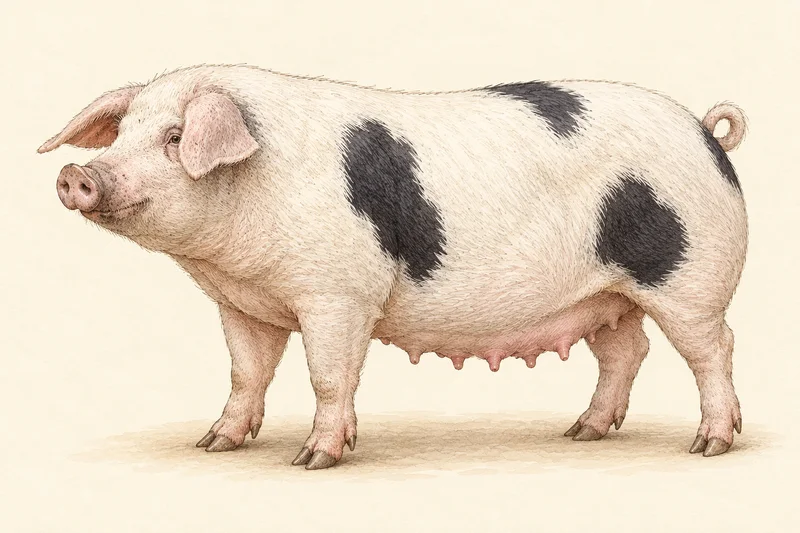
Normandy's spotted pig
Slow Food's Ark of Taste says the Bayeux pig comes from crosses between the Normandy pig and the black English Berkshire around the middle of the nineteenth century, in the Bessin. Before the Second World War nearly every farm in Normandy kept one. Races de France dates the breed syndicate to 1928 and says the breed almost disappeared after the Normandy landings.
Relaunch programmes began in the 1960s. The breed entered the national conservation programme for local pig breeds in 1984, LIGERAL (the collective herd-book association for French local pig breeds, hosted by the pig institute IFIP) was created in 1996, and the breed was officially recognised in 1999. Slow Food reports that three Berkshire boars were imported in 1996, creating six new family lines. In 2022 Races de France counted 155 pigs and 50 breeders.
How it connects
Breed
- related Berkshire
- related Porc Blanc de l'Ouest
Continue exploring
- CountryFrance162 entries in the atlas so far
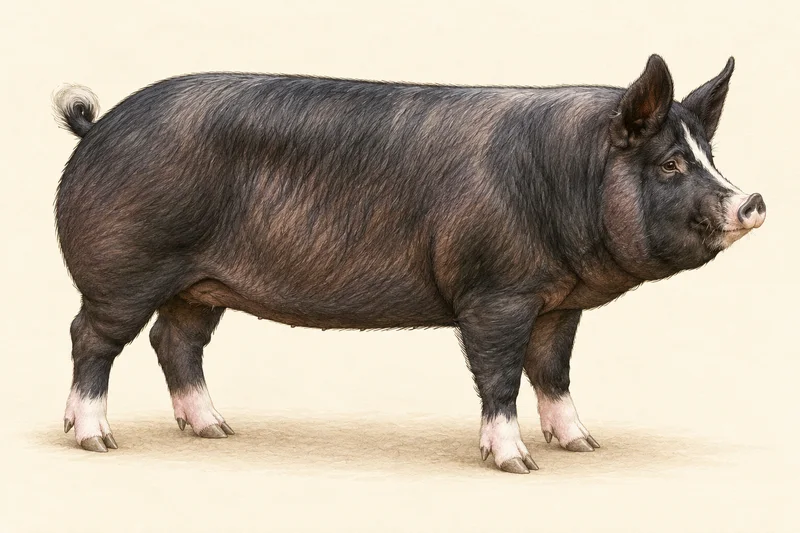 BreedBerkshireThames Valley, Berkshire, United Kingdom
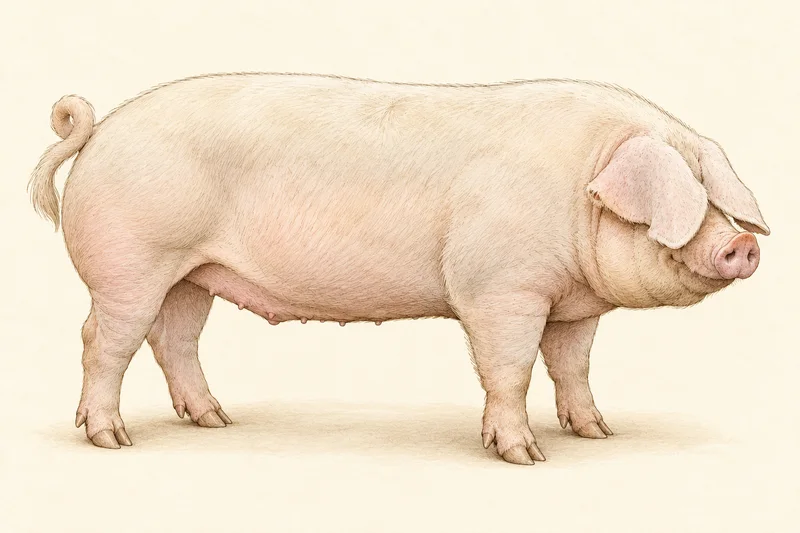 BreedPorc Blanc de l'OuestBrittany and Pays de la Loire, France
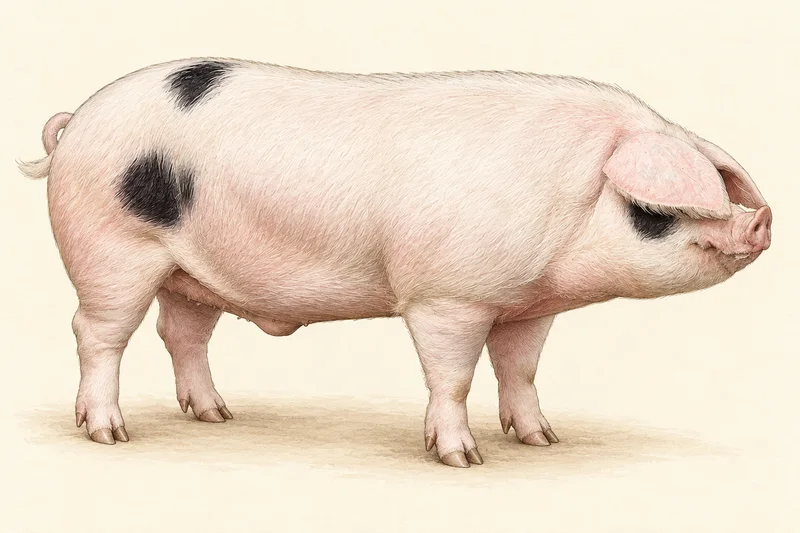 BreedGloucestershire Old SpotsVale of Berkeley, Gloucestershire, United Kingdom
 BreedLarge BlackCornwall and Devon, south-west England, United Kingdom