Meat · Breed · Short entry
Gloucestershire Old Spots
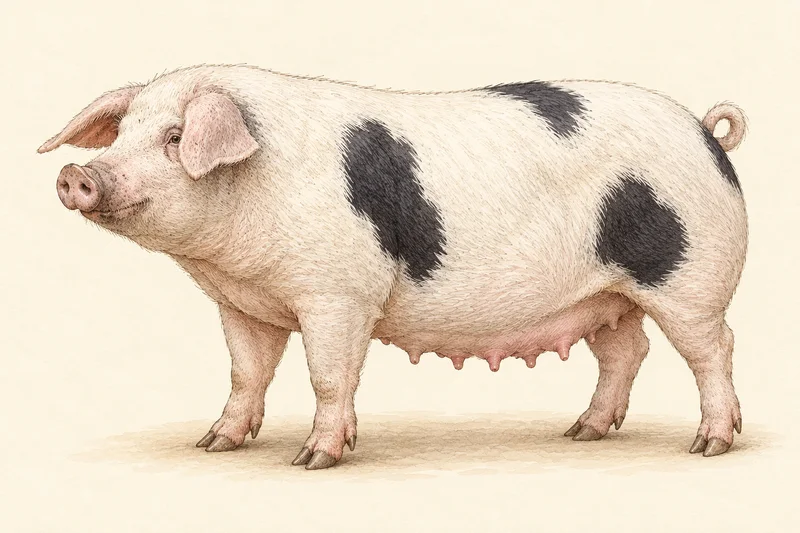
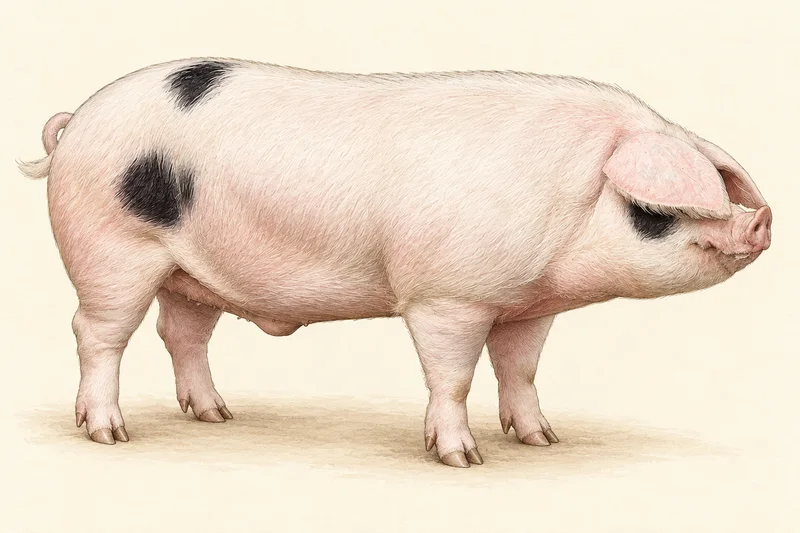
A large, docile white pig with black spots and big lop ears, thought to have been developed in the Vale of Berkeley in Gloucestershire. It lived on small farms on whey, windfall fruit and cider pressings, hence its nickname 'orchard pig'. Breeders formed a society and herd book in 1913; the breed later neared extinction and is still endangered.
The orchard pig
According to The Livestock Conservancy, the exact ancestry of the breed is unknown. It is first mentioned in English writing around 1790, and the most likely origin is a cross between the old Gloucestershire pig, a large off-white pig with floppy ears and wattles, and the unimproved Berkshire, a sandy pig with prick ears and black spots; both are now extinct. Folklore says the spots are bruises left by apples falling on the pigs as they foraged in orchards.
In 1913 the Board of Agriculture began licensing breeding boars, and in November that year Berkeley Vale farmers formed the Gloucestershire Old Spots Breed Society and compiled a herd book. The breed was at its most popular just after the First World War, when its lean meat suited the streaky bacon of the time. It declined with intensive production after the Second World War and was close to extinction in Britain by 1977.
How it connects
Breed
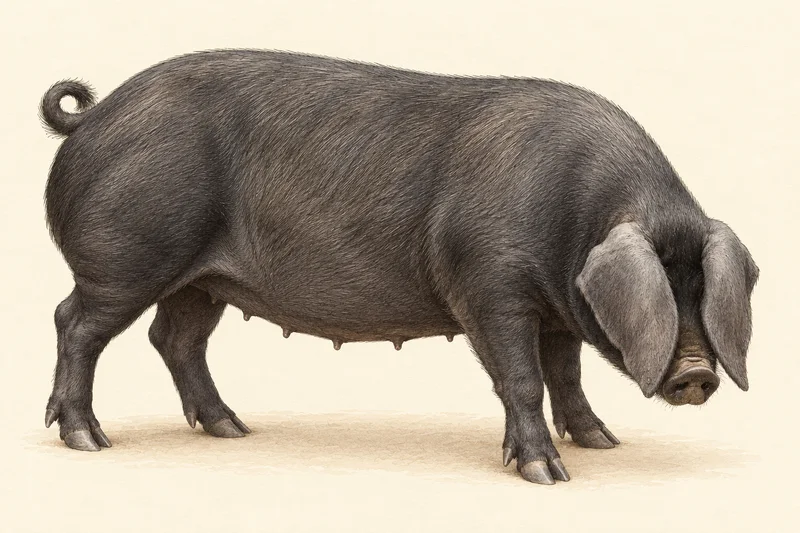
- similar Large Black
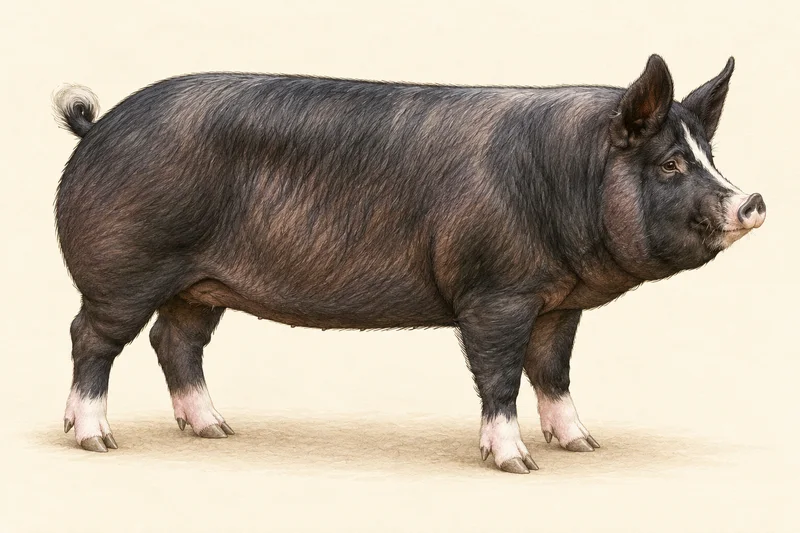
- related Berkshire