
Whisky · Whisky & Whiskey: the story · Reference page
A history of whisky
Whisky grew out of medieval aqua vitae, appears in Irish and Scottish records from the fifteenth century, and was reshaped by excise law, the continuous still, a royal commission, Prohibition and modern legal definitions. No single inventor or first place can be named.
From aqua vitae to uisce beatha
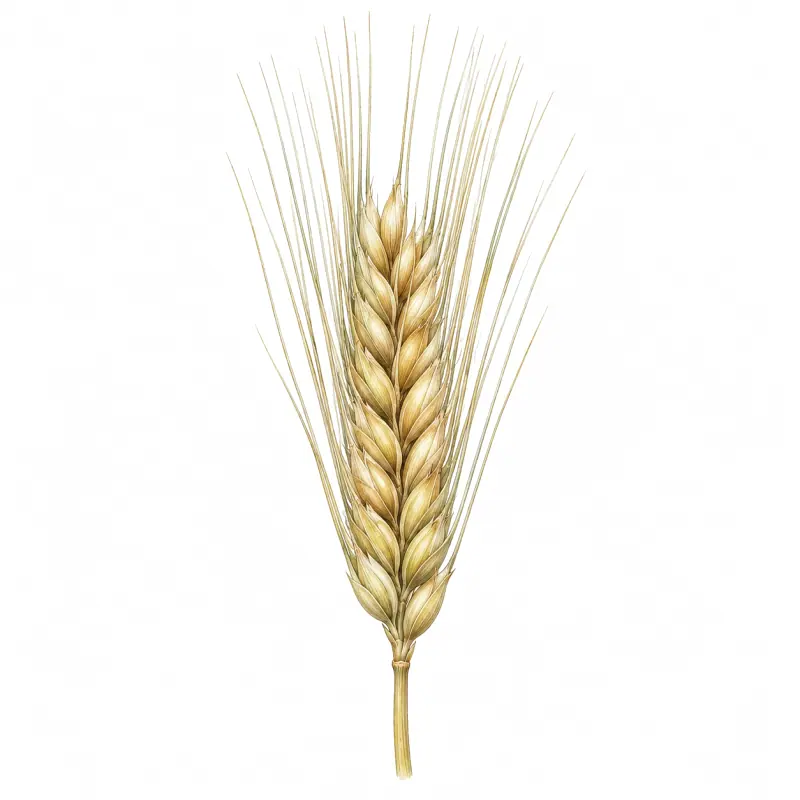
Whisky begins with distillation, not with a nation. The Latin term aqua vitae, "water of life", is first documented in the 1270s, in a group of treatises on distilling wine that are, in the words of The Oxford Companion to Spirits and Cocktails, "variously, and loosely" attributed to two Bologna physicians, Taddeo Alderotti and Teodorico Borgognoni. Aqua vitae was a medicine and a chemical preparation before it was a drink. The English word whisky comes through the Gaelic uisce beatha, a translation of aqua vitae.
The apparatus was the pot still: a vessel in which a fermented liquid is heated and a cover that catches and condenses the vapour. Copper became the usual material for commercial pot stills in the seventeenth century.
The first records in Ireland and Scotland
The earliest records are short and incidental. The Annals of Connacht, under the year 1405, say that Risderd Mag Ragnaill, eligible for the chieftainship of the Muinter Eolais, "entered into rest after drinking 'water of life' to excess; it was deathly water to him." The entry shows that a spirit called water of life was drunk in Ireland by then; it says nothing about how or from what it was made.
In Scotland, the Exchequer Rolls for 1494-5 record, in the account of the chamberlain of Fife, a payment to Friar John Cor of eight bolls of malt "for making aqua vite" (see the 1494-5 entry). Other Scottish records follow within a few years: in 1497 a barber was paid for bringing aqua vite to the King at Dundee; in 1505 an Aberdeen inquest found a still for aquavite and rose water; and on 1 July 1505 Edinburgh's barbers and surgeons were granted a monopoly on making and selling aquavite in the burgh. These are records of a costly, partly medicinal product at court and among surgeons and apothecaries. They are evidence that aqua vitae was being made from malt in Scotland by the 1490s, not evidence of who first made it.
Later traditions push the story further back. The Irish Whiskey technical file, the legal specification registered for Irish whiskey, says distilling in Ireland "probably began in the 6th century" with monks. That is a statement of tradition by the applicant, not a documented fact.
Excise, smugglers and the 1823 Act
Once spirits were taxed, much whisky was made out of sight of the exciseman. In the eighteenth and nineteenth centuries small-scale distillers in the Scottish Highlands worked in hidden bothies beside burns; National Trust for Scotland archaeologists have identified about 40 such sites since 2020 and excavated nine. Illicit distilling was common in early nineteenth-century Ireland as well, and to a lesser degree in Scotland.
The Excise Act of 1823 set one rate of duty for Scotland and Ireland, charged duty on the spirit actually produced, allowed spirit to be stored in bond without paying duty until it was sold or exported, halved the duty to two shillings per proof gallon and introduced an annual licence of £10. In Ireland the number of distilleries rose from 40 in 1823 to 79 in 1830. Detections of illicit distilling fell: in Scotland from 692 in 1834 to 6 in 1874, in Ireland from 8,192 to 796.
The continuous still and blended whisky
In 1830 Aeneas Coffey, a former inspector-general of excise in Ireland who had become a Dublin distiller, patented a continuous still adapted to grain. Robert Stein, at Kilbagie in Scotland, had taken the first steps two years earlier with a single steam-heated column. Coffey's column still used two copper columns, an analyser and a rectifier, and made a stronger, lighter spirit more cheaply than the pot still. Grange became the first Scottish distillery to install one, in 1834. In Scotland patent-still output had overtaken pot-still output by 1857. Leading Dublin distillers rejected the new spirit as not being whiskey at all, though thirteen Irish distilleries adopted the still within ten years of the patent.
Light grain whisky from continuous stills became the base of blended whisky, to which malt whiskies from pot stills are added. The Scotch Whisky Association still describes grain whisky as "the heart" of Blended Scotch Whisky.
"What is whisky?"
The quarrel between pot-still and patent-still distillers reached the courts in the early twentieth century, when Islington Borough Council prosecuted merchants for selling whisky "not of the nature, substance and quality demanded"; the magistrate held that Irish or Scotch whisky meant pot-still spirit, and the appeal was inconclusive. In February 1908 the government announced a Royal Commission on Whiskey and Other Potable Spirits. Its report of July 1909 concluded that "'Whiskey' is a spirit obtained by distillation from a wash saccharified by the diastase of malt" and that Scotch whiskey is whiskey so defined, distilled in Scotland. It set no minimum maturation and no minimum share of malt in a blend: grain whisky was whisky (see the Royal Commission).
Prohibition and the Irish decline
National Prohibition in the United States took effect on 17 January 1920 and ended when the Twenty-first Amendment was ratified on 5 December 1933. According to the Irish Whiskey technical file, the United States had been the largest export market for Irish pot still whiskey; distilling in Ireland had stopped in 1917 because barley was needed for the war, and Prohibition, the War of Independence, the Civil War and the 1932 trade war with Britain followed. By 1953 there were six distilleries on the island. In Ireland the number of distilleries had already fallen from 86 in 1840 to 30 in 1900.
In 1964 the US Congress declared bourbon a distinctive product of the United States (see the 1964 resolution).
Definitions in law, and whisky beyond the British Isles
Today the names are defined in law. The Scotch Whisky Regulations 2009 fix what Scotch Whisky is, its five categories and its protected regional names. Irish whiskey is defined by a registered technical file. US federal rules define bourbon and rye, Tennessee law defines Tennessee whiskey, and Canadian food law defines Canadian whisky. In Japan an industry standard of 2021 defines Japanese whisky, enforced by the producers' association rather than by statute.
The common thread is the same: spirit distilled from a cereal mash, kept in wood, and sold at not less than 40% alcohol by volume. The details (which grains, which stills, what wood, how long, where) are what make each name distinct.
How it connects
History
- related Friar John Cor's malt, Exchequer Rolls 1494-5
- related Excise Act 1823
- related Coffey's continuous still patent
- related Royal Commission on Whiskey: "What is whisky?"
- related US Prohibition
- related Congress declares bourbon a distinctive product of the United States
- related Scotch Whisky Regulations 2009
Method
- related Pot still distillation
- related Column still (Coffey still)
- related Cask maturation
- related Malting
Ingredient
- related Barley
Story
- related From juniper water to London gin
Continue exploring
- CountryUnited Kingdom97 entries in the atlas so far
- StoryFrom juniper water to London ginSchiedam, the Dutch genever town, Netherlands
- IngredientBarleyHordeum vulgare
- MethodMaltingMalting
- HistoryFriar John Cor's malt, Exchequer Rolls 1494-51494-5
- MethodCask maturationMaturation
- MethodColumn still (Coffey still)Distillation
- MethodPot still distillationDistillation
- RegionIrelandRepublic of Ireland, Ireland
- RegionScotlandScotland (United Kingdom), United Kingdom