Rice · Rice · Short entry
Yamada Nishiki
山田錦
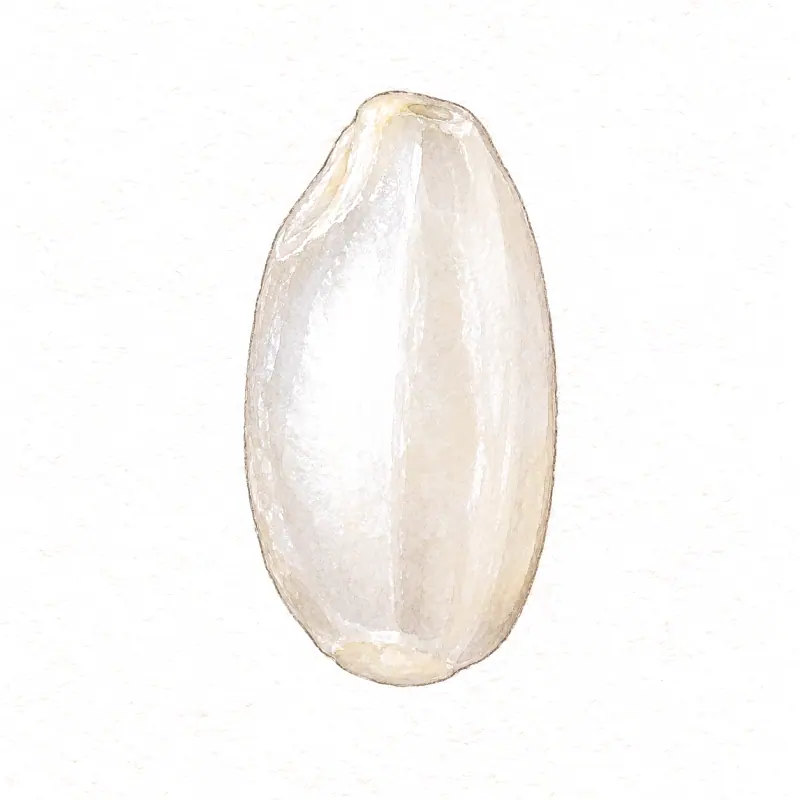
Japan's leading sake-brewing rice, bred in Hyogo in 1936. In 2021 it made up 37.6 % of inspected sake rice, 57 % of it from Hyogo; its large grains carry the white starchy core (shinpaku) that brewers prize.
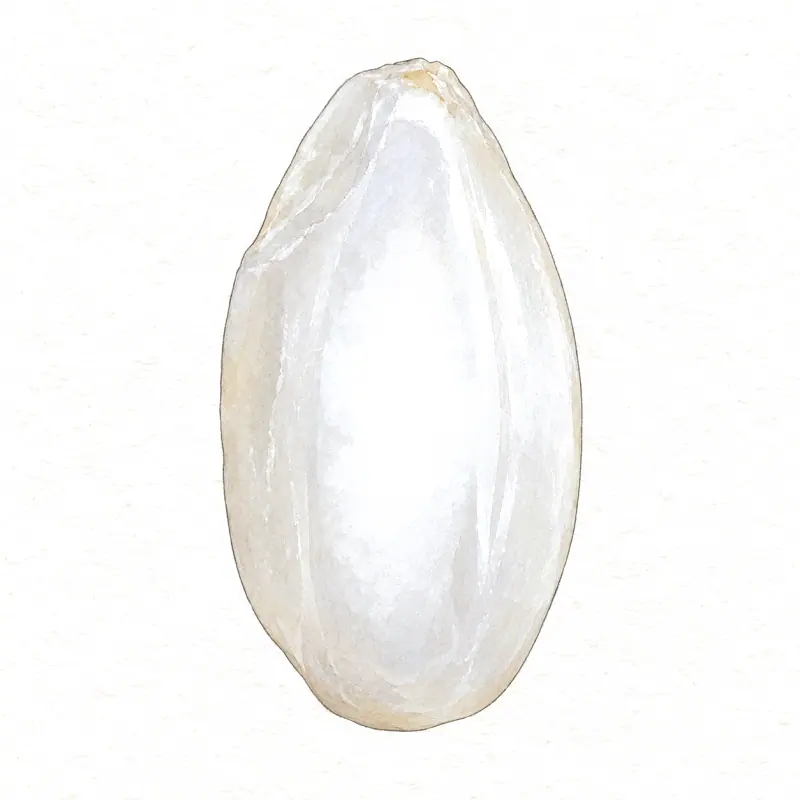
Shinpaku — the white heart of sake rice
Sake rice (sakamai or shuzō kōtekimai) is a separate class from table rice: of roughly 900 Japanese rice strains in 2020, 126 were sake rices. Their grains are generally larger than table rice, low in protein, and most carry shinpaku, an opaque white starchy core visible in the centre of the polished grain. Proteins and fats are concentrated near the surface of a rice grain, which is why sake rice is polished heavily before brewing.
The core matters for koji, the steamed rice on which Aspergillus oryzae mould is grown to break starch into sugar. Brewers judge koji by how far the mould grows into the grain. In a study by the National Research Institute of Brewing and university partners, mould hyphae penetrated about 1.4–1.6 times deeper into Yamada Nishiki polished to 50 % than into the same rice, or a table rice, polished to 90 %.
A Hyogo rice, kept in Hyogo
Yamada Nishiki was bred in 1936 in Hyogo specifically as a sake-brewing rice, following the opening in 1928 of the prefecture's sake-rice test site. The Hyogo Prefectural Technology Center for Agriculture, Forestry and Fisheries still holds its breeder seed, and seed production is controlled by prefectural ordinance. Sake sold under Japan's Harima geographical indication must be made only with rice and koji from qualified Yamada Nishiki seed.
How it connects
Rice
- related Omachi