Rice · Rice · Short entry
Omachi
雄町
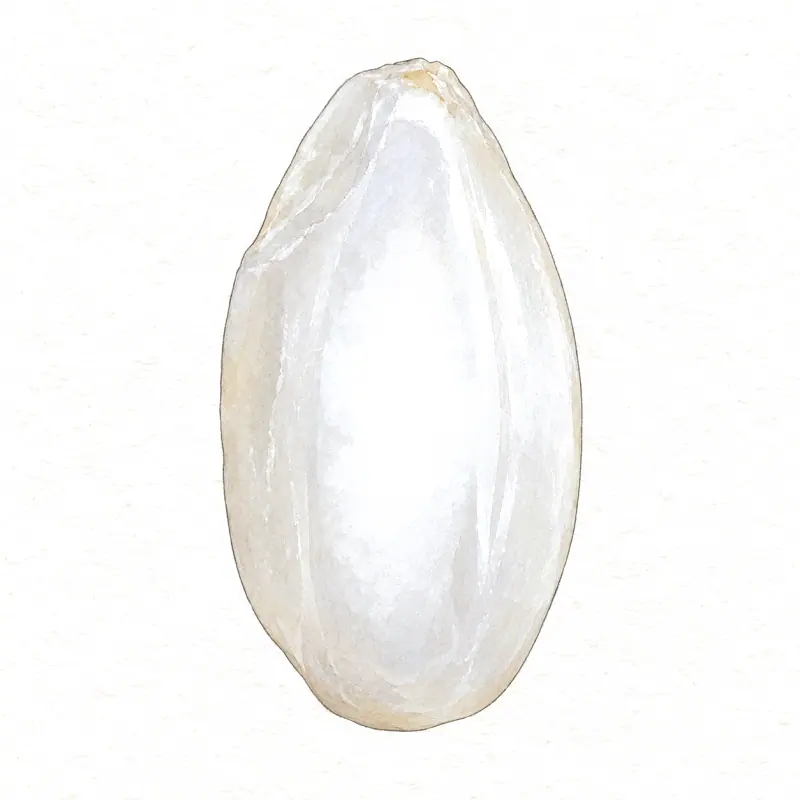
A sake rice found in 1859 by a farmer in Omachi, now part of Okayama City, and named after the place. Tall, hard to grow and large-grained, it nearly vanished after the war; Okayama now grows about 95 % of it.
The mythical rice of Okayama
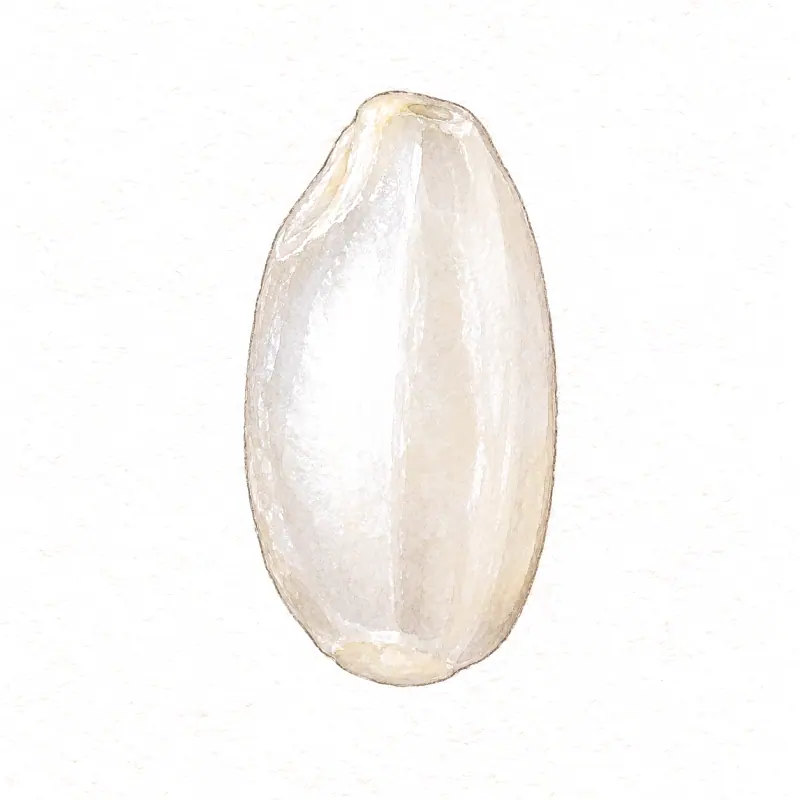
Omachi was discovered in 1859 by a farmer in Omachi, now in Naka Ward of Okayama City, and takes its name from that place. It became a top sake rice used across Japan; in the first half of the twentieth century it was said that no sake could win awards without it.
It is a difficult plant. Table rice grows to about 120 cm and most sake rice to about 150 cm, but Omachi averages about 160 cm, so it falls over easily, and it is vulnerable to pests and diseases. From the Second World War to the early 1970s its harvest dropped so far that it was called a “mythical rice”. Local brewers and farmers revived it, and it is now used by breweries nationwide. Its grains are large — about 27.0 g per 1,000 grains against 22.2 g for table rice — and, like other sake rices, carry a white starchy core (shinpaku); see Yamada Nishiki for why that matters.
How it connects
Rice
- related Yamada Nishiki