
Explore the world · Recipe · Greece · Reference page
Gemista
γεμιστά (gemistá)
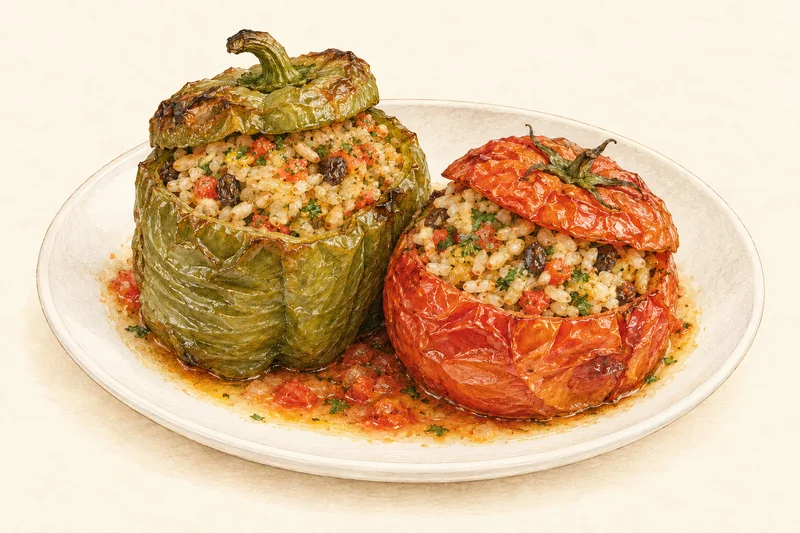
Tomatoes and peppers hollowed out and filled with rice cooked with grated courgette and aubergine, pine nuts, raisins, parsley and mint, then baked slowly in olive oil and grated tomato. A Greek summer dish, here in Argiro Barbarigou's vegetarian version.
- Servings
- 5
- Preparation
- 20 min
- Cooking
- 1 h 30
- Total
- 1 h 50
- Difficulty
- Moderate
Equipment
- Sharp knife and spoon for hollowing
- Food processor or blender
- Deep frying pan
- Baking dish that holds the vegetables snugly; aluminium foil
Ingredients
The vegetables
The stuffing
The sauce
Method
Heat the oven to 180 °C. Cut a slice off the top of each tomato and keep it as a lid. Spoon out the flesh into a bowl, leaving enough on the sides that the tomato does not split in the oven. Pulse the flesh in a food processor.
Cut the top off each pepper (keep it as a lid) and remove the seeds and white fibres.
Heat ½ cup (120 ml) of olive oil in a deep frying pan and soften the onion over a medium heat for a few minutes, until transparent. Stir in the grated courgette and aubergine and let them bubble for a few minutes until they begin to soften.
Timer · 6 min6:00Add the rice and the pulsed tomato flesh and season. Pour in the water, bring to the boil and cook for 5 minutes. The stuffing should stay quite juicy, almost runny.
Why The rice is only part-cooked: it finishes in the oven, absorbing the juices inside the vegetables.
Timer · 5 min5:00Stir in the pine nuts, raisins, parsley and mint.
Fill the tomatoes and peppers about three-quarters full, put their lids on and stand them close together in the baking dish.
Why The rice swells as it bakes; overfilled vegetables burst. Packed close, they hold each other upright.
Mix the grated tomatoes with the remaining olive oil, season and pour over the vegetables. Cover with foil and bake for 1 hour 15 minutes, removing the foil after the first 30 minutes.
Why Covered, the rice cooks in steam; uncovered, the tops brown and the sauce reduces.
Timer · 1 h 1575:00
To drink & serve with
Editorial suggestion: with feta and crusty bread, as is common in Greece.
Substitutions
- Aubergine or courgette → Use more of the other; both are there for moisture and body.
- Pine nuts and raisins → Leave them out; many Greek families use minced meat in the filling instead (then cook it through).
Common mistakes
- Scooping the tomatoes too thin: they collapse in the oven.
- Making the stuffing dry: the rice needs juice to cook in the oven.
- Leaving the foil on for the whole time: the tops stay pale and the sauce watery.
Storage & reheating
Barbarigou notes that some say it tastes even better the next day. Because it contains rice, cool it quickly (within an hour if you can), refrigerate, eat within a day and reheat only once, until steaming hot (UK FSA).
Safety
Contains none of the 14 EU major allergens as written; pine nuts are seeds and are not on the EU list, but some people with tree-nut allergies react to them. Cooked rice can carry Bacillus cereus spores: cool and reheat with care.
Allergens
None
Check labels: stock, bacon and sauces can contain further allergens.
Dietary
vegan
Filled with summer
Gemista (also written yemista) means 'filled' in Greek, and the dish is exactly that: the vegetables of a Greek summer, tomatoes and peppers, emptied and refilled with rice. Argiro Barbarigou's version in the newspaper To Vima is vegetarian, sweetened with raisins, enriched with pine nuts and scented with parsley and spearmint. Her recipe also carries the familiar remark that some say gemista taste even better the next day.
Nothing wasted
The tomato flesh that comes out of the shells goes back in: pulsed, it cooks with the rice and grated vegetables into a loose, juicy stuffing that is only part-cooked when the vegetables are filled. More grated tomato and a large amount of olive oil are poured over before baking, and the dish spends half an hour under foil and three-quarters of an hour uncovered.
How it connects
Wine region
- origin Greece
Recipe
- similar Imam bayıldı
Continue exploring
- CountryGreece6 entries in the atlas so far
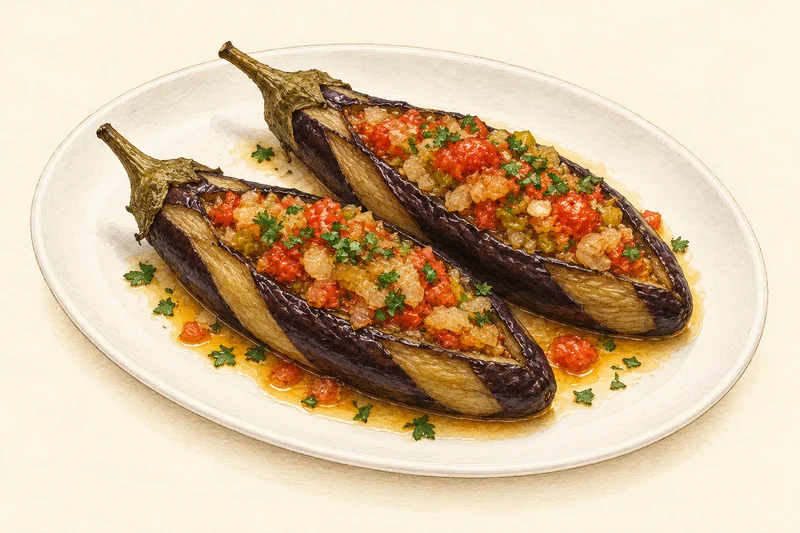 RecipeImam bayıldıTurkey
- Wine regionGreeceGreece (national overview), Greece
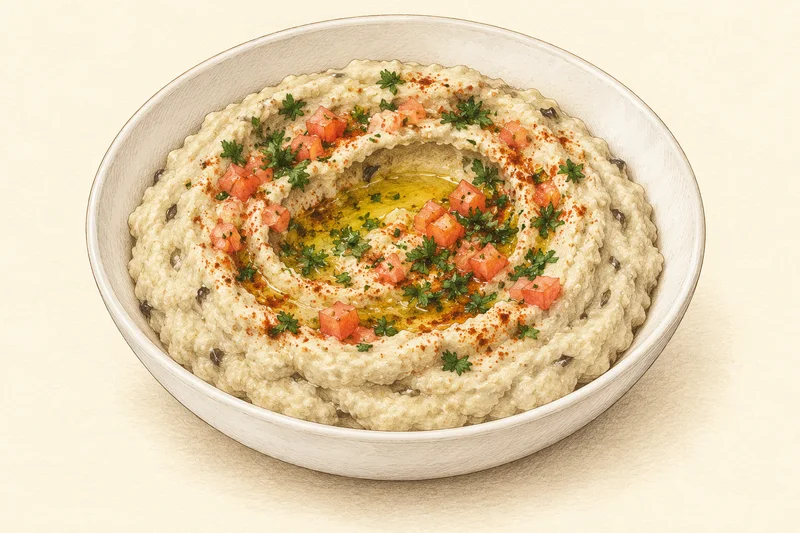 RecipeBaba ghanoujLebanon
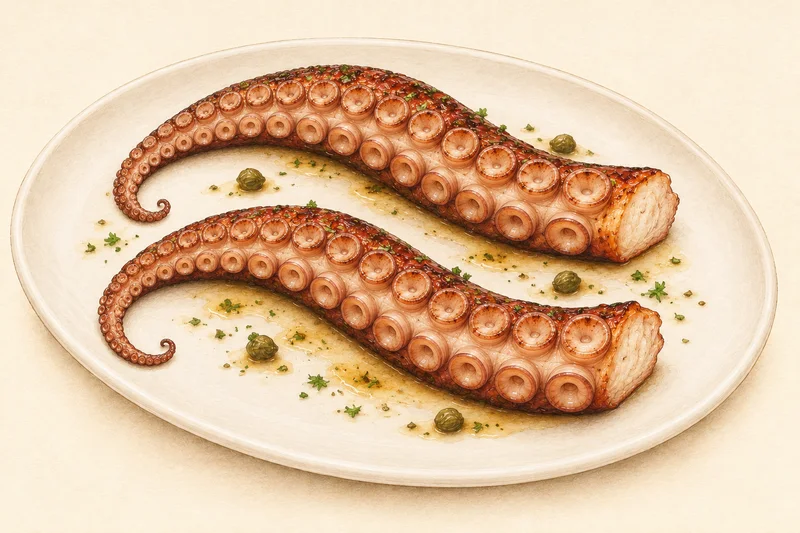 RecipeGreek grilled octopus (ktapodi sti skara)Greece
 RecipeSpanakopitaGreece
- Wine regionSantoriniFira (Thira), Santorini, Greece
- Wine regionTürkiyeTürkiye (national overview), Turkey