
Explore the world · Recipe · Veneto · Reference page
Ciabatta
ciabatta / ciabatta polesana
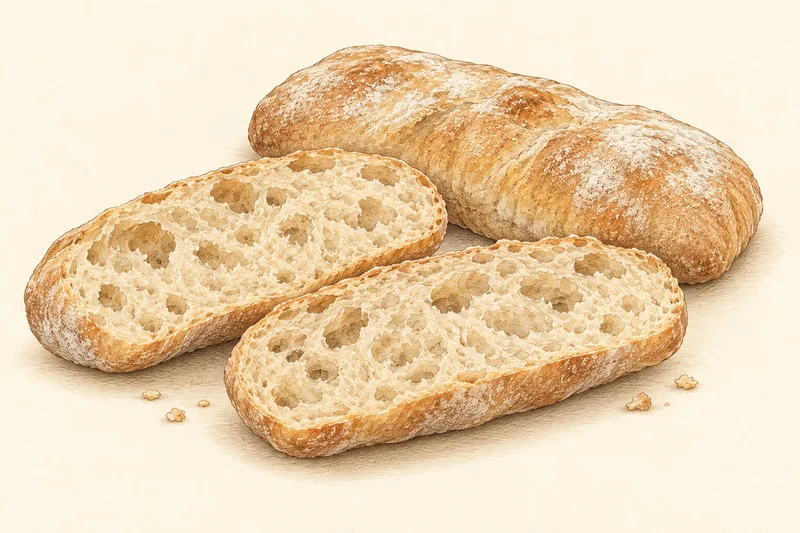
A flat, open-crumbed Italian loaf made from a very wet dough built on a poolish pre-ferment, folded, stretched and baked hot with steam. Created in 1982 in Adria, Veneto, by Arnaldo Cavallari; the recipe for ten small loaves is GialloZafferano's.
- Servings
- 10
- Preparation
- 50 min
- Cooking
- 20 min
- Resting
- 5 h 30
- Total
- 6 h 40
- Difficulty
- Involved
Equipment
- Stand mixer with paddle and dough hook
- Baking tray and baking paper; spray bottle of water
- Bench scraper
Ingredients
Poolish
Dough
Method
Poolish: dissolve the yeast in the water. Mix the two flours in a bowl and pour in the liquid slowly, stirring with a wooden spoon to a smooth, very soft batter. Cover and leave 3 hours at room temperature, until swollen, bubbly and slightly darker.
Why The pre-ferment builds flavour and strength before the main dough.
Timer · 3 h180:00Dough: dissolve the yeast and malt in the water. Put the poolish in the mixer with the paddle and, at medium speed, add the liquid and the mixed flours alternately until all is in.
Change to the dough hook and knead 5 minutes, add the salt and knead 5–7 minutes more, until the dough wraps round the hook.
Timer · 12 min12:00Cover and rest 1 hour at room temperature, ideally 24–25 °C.
Timer · 1 h60:00Turn the dough out onto a surface dusted generously with semolina and dust the top. Fold it: bring the dough forward, fold the bottom over the top, then fold in each side. Flatten slightly and cut into 10 pieces of about 150 g.
Lay the pieces cut side up on the semolina, dust, cover with cling film and prove 1–1½ hours in a warm place (about 27 °C) until doubled.
Timer · 1 h 1575:00Heat the oven and a baking tray lined with paper to 240–250 °C (220–230 °C fan). Flip each piece onto the hot tray and stretch it gently so as not to knock out the gas.
Spray the oven 5–6 times with water, close and bake 8 minutes at 240–250 °C, then 8 minutes at 200 °C (180 °C fan), then 3–4 minutes with the door wedged ajar with a wooden spoon. Cool on a rack.
Why Steam delays the crust so the crumb can expand; letting it out at the end crisps the crust.
Timer · 20 min20:00
To drink & serve with
GialloZafferano: from Veneto ciabatta spread across the world as the base for rich sandwiches.
Substitutions
- Manitoba flour → A strong bread flour of similar protein.
- Malt → The same weight of sugar (GialloZafferano).
Common mistakes
- Adding extra flour to make the wet dough easier to handle: the open crumb is lost. Use semolina on the bench instead.
- Pressing the gas out when shaping or transferring.
- Baking without steam: a thick crust forms before the loaf can rise.
Storage & reheating
Keeps 2–3 days in a food bag; freeze baked ciabatta and refresh for a few minutes in the oven (GialloZafferano).
Safety
Contains gluten (wheat, durum semolina, barley malt). Very hot oven and steam: protect hands and face when spraying.
Allergens
Gluten
Check labels: stock, bacon and sauces can contain further allergens.
Dietary
vegetarian · vegan · dairy-free
A modern Italian loaf
Ciabatta is younger than it looks. GialloZafferano dates it to 1982, in Adria in the province of Rovigo, Veneto: the baker Arnaldo Cavallari created it in his bakery on Via Cà Cima after a series of experiments that began with a meeting with Raymond Calvel, an expert on bread-making. On Calvel's advice Cavallari raised the hydration of a traditional dough, which produced a flat loaf. With the baker Francesco Favaron, he named it after its shape, a savata, dialect for slipper.
From Veneto ciabatta spread around the world, above all as sandwich bread.
Wet dough, gentle hands
The dough is built on a poolish, a very wet pre-ferment of equal weights of flour and water left for three hours, and the final dough is soft too. It is folded rather than kneaded into shape, cut into pieces on a bench dusted with semolina, and handled gently so that the gas stays in. Baking starts very hot and steamy, then the heat is lowered and the door opened to dry the crust.
How it connects
Wine region
- origin Veneto
Recipe
- related Focaccia genovese (fügassa)
Continue exploring
- CountryItaly107 entries in the atlas so far
- Wine regionVenetoVerona, Italy
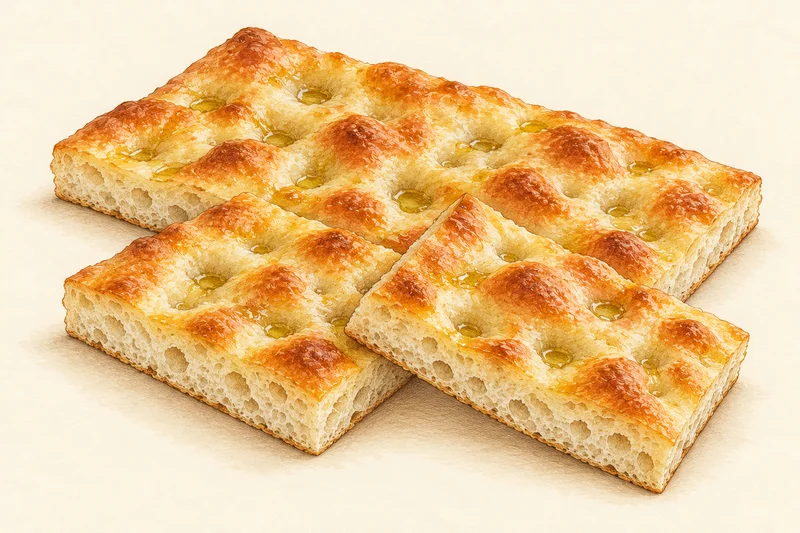 RecipeFocaccia genovese (fügassa)Genoa, Italy
- Wine regionConegliano ValdobbiadeneValdobbiadene, Italy
- Wine regionValpolicellaSan Pietro in Cariano, Italy
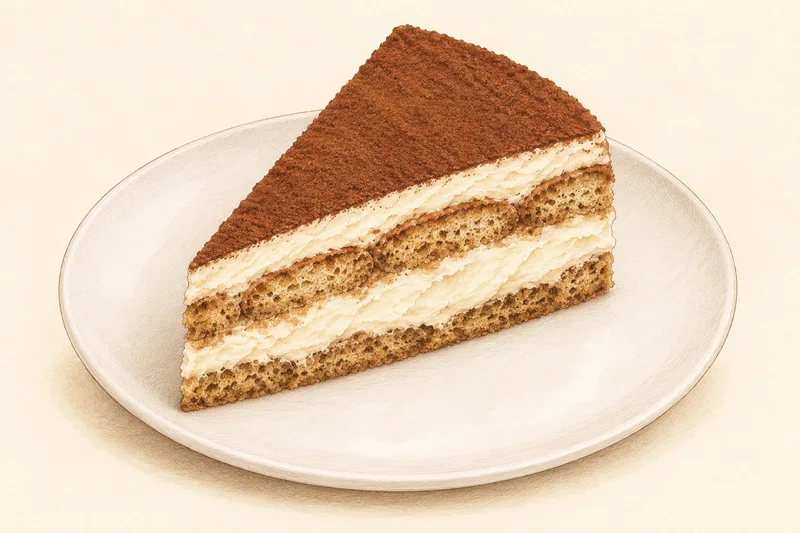 RecipeTiramisùTreviso, Italy
- Grape varietyCorvina
- Grape varietyCorvinone
- Grape varietyGarganega
- Grape varietyGlera