Pasta · Pasta shape · Short entry
Cjalzòns
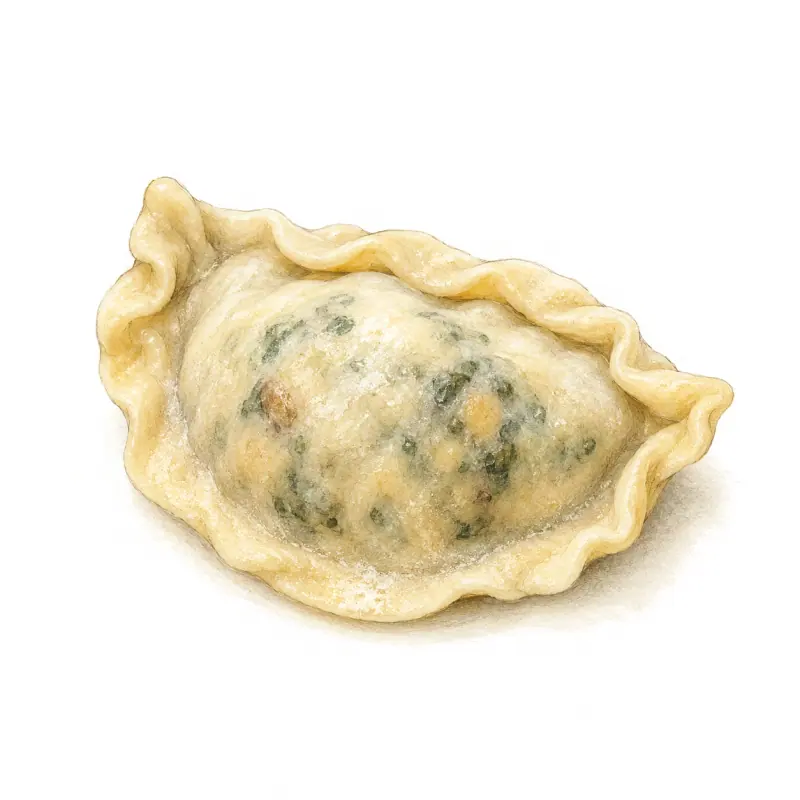
Filled pasta of Carnia, the mountains of northern Friuli, with a filling based on ricotta. Herbs, spinach and raisins often lean towards sweet, with additions such as cocoa, biscuits or plum jam. No two villages make them alike. They are dressed with melted butter, smoked ricotta and cinnamon.
Shape and filling
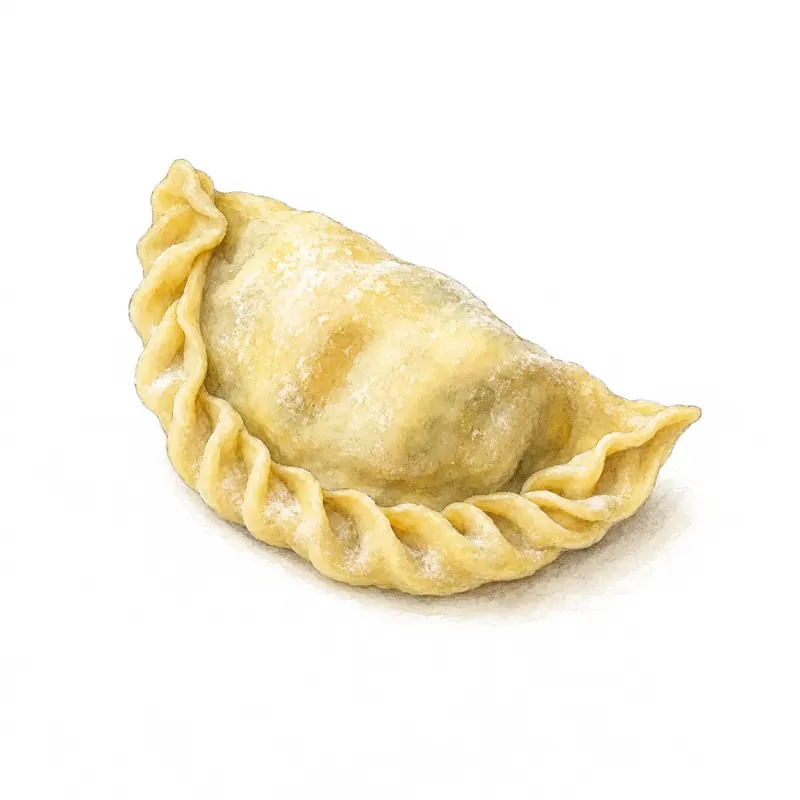
ERSA's atlas of Friulian traditional products describes rounds of thin flour-and-water pasta, each holding a spoonful of filling. They are closed into a half-moon, and a fold in the middle of the edge makes them almost triangular. Some versions make the dough with potato, or only potato. The ricotta filling is bound with boiled field herbs and spinach sautéed in butter, sultanas and grated cheese. Sweet versions may add biscuits, cocoa, sugar, dried figs, rum, candied citron or plum jam. Savoury ones add roast onion, boiled potato and smoked ricotta; mint and lemon balm are common herbs.
The filling, the pistùm or pastùm, was traditionally pounded in a mortar carved from a single piece of wood. In the Friulian plain a different version mixes spinach with minced meat, almonds, raisins, mostarda and pine nuts.
A dish for feast days
The atlas calls them a dish "to make a feast" in a poor mountain region. Some ingredients, such as chocolate, raisins and almonds, came home in the bundles of emigrant relatives. They were a meatless dish for Christmas Eve, eaten before the vigil service. In the Canale d'Incarojo they were made for the last Thursday of January, and they were so tied to Easter that it was called la Pasche dai cjalsons.
How it connects
Pasta shape
- related Cjalcune