
Rice · Rice · Short entry
Jumli Marshi
जुम्ली मार्सी
A cold-tolerant red japonica rice of the Jumla district in Nepal's Karnali region, grown on the Tila river at up to about 3,050 m, among the highest rice fields in the world. It survives chilling that kills tropical indica rice. Until improved varieties arrived it was the only rice grown in the valley.
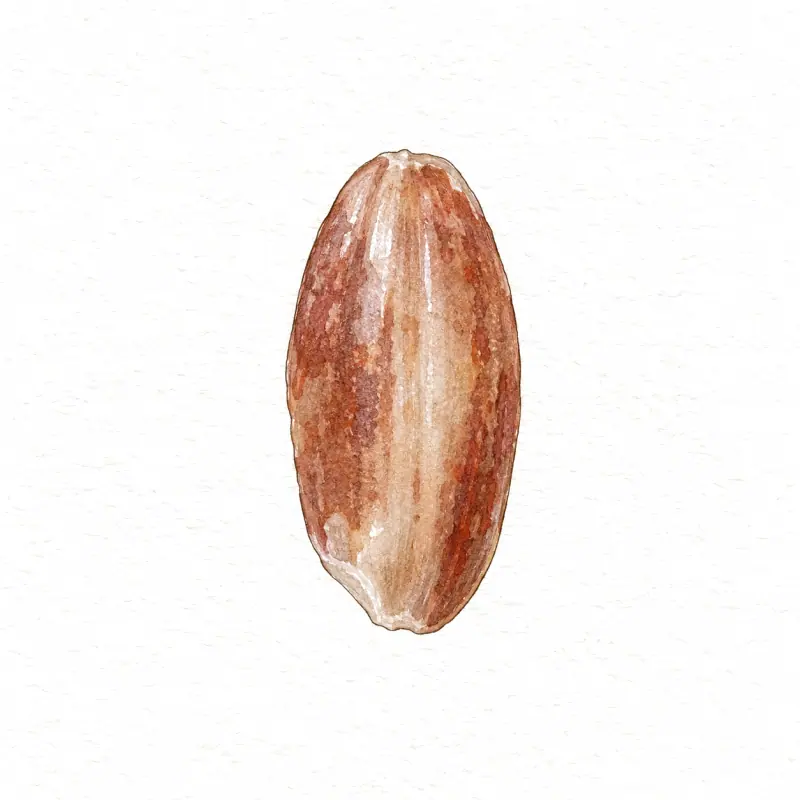
Rice at 3,000 m
Rice in Jumla is grown between about 2,400 and 3,050 m, the highest fields at Chhumchaur, on irrigated terraces along the Tila river and its tributaries during a March to October season. Jumli Marshi is the indigenous red rice of these fields. A laboratory study found it recovered after three days at +4 °C, the region's average minimum temperature, while the indica cultivar IR64 died. More than 4,600 genes changed their expression within 24 hours of the cold.
Its yield in Jumla is about 1.7 t/ha. In 2002 the Nepal Agricultural Research Council released two cold-tolerant japonica varieties of Chinese origin for the region, Chandannath-1 (also red) and Chandannath-3 (white), which give roughly twice as much in farmers' fields.