
Rice · Rice · Short entry
Jethobudho
जेठोबुढो
An aromatic rice landrace of the Pokhara valley in central Nepal, valued for softness, taste, aroma and volume expansion. Local buyers pay more for it than for Basmati. A farmer-selected population was released by Nepal's National Seed Board in 2006 as Pokhareli Jethobudho, the first landrace improved by participatory breeding to be formally released in Nepal.
Improving a landrace with its growers
Rice in the Pokhara valley is grown from below 600 m on the valley floor to terraces at 2,200 m. Jethobudho, its best-known aromatic landrace, sold at a high price but varied from field to field. From 1998, farmers, millers and researchers from LI-BIRD, the Nepal Agricultural Research Council and Bioversity International collected 338 accessions and screened them for neck blast, lodging and plant height. They then selected for grain quality, using micro-milling and tasting panels in which farmers ranked softness and taste ahead of flakiness and aroma.
The best material came from the Biruwa and Fewa areas of the valley. The enhanced bulk population had fewer awns, better blast and lodging tolerance and about 72 % milling recovery. The National Seed Board released it in 2006 as Pokhareli Jethobudho for general cultivation under the seed certification scheme.
Short, not Basmati
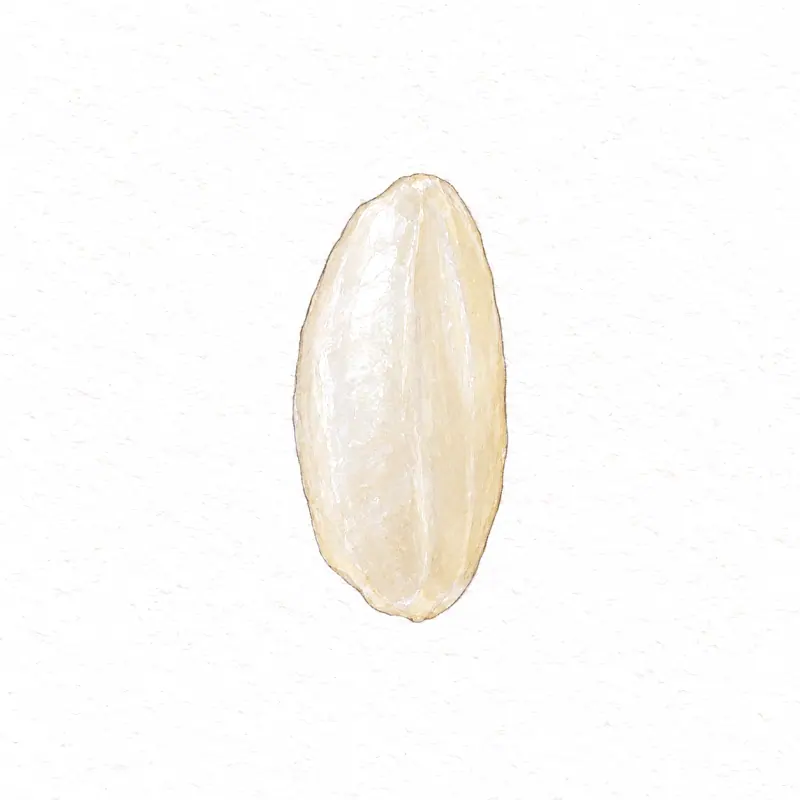
Milled Jethobudho is short: the 143 selected accessions averaged 5.2 mm by 2.4 mm (length-to-width ratio about 2.2), with no chalkiness and a translucent, ghee-coloured grain. Amylose was 23 to 24 %. The breeders contrast it with Basmati, which is longer and more slender, and point to its kernel elongation and volume expansion as the reason it suits pulao and biryani.