
Rice · Rice · Short entry
Adan rice
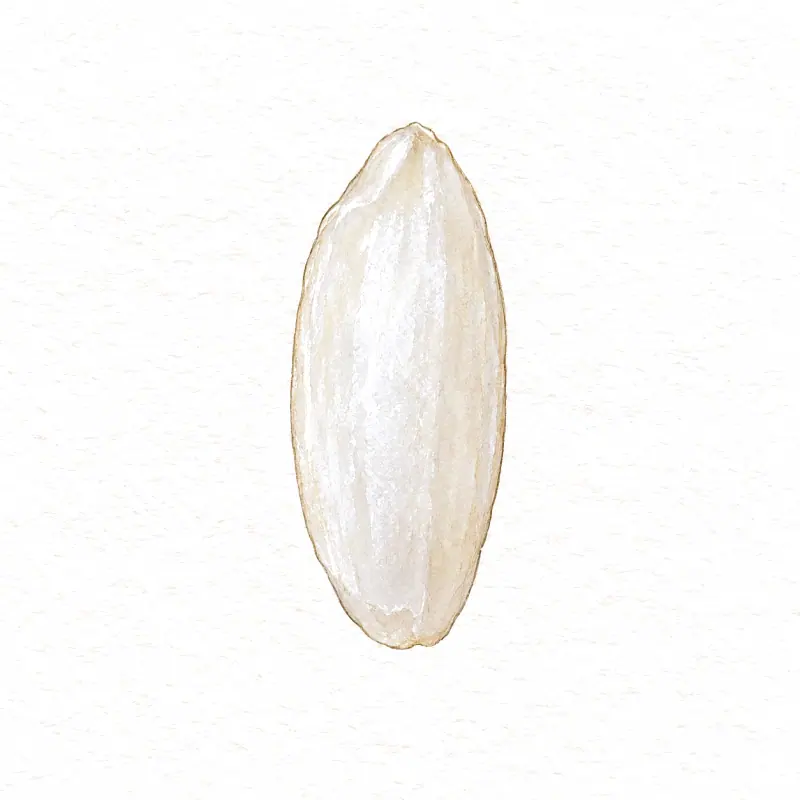
The traditional paddy rice of the highlands on both sides of the Malaysia–Indonesia border in central Borneo, grown in white, red and black forms in valley-bottom fields worked with water buffalo. It is protected twice: as Bario Rice, a Malaysian geographical indication registered by a Sarawak state agency, and as Beras Adan Krayan, an Indonesian geographical indication granted in 2012 for the white rice of Krayan in North Kalimantan.
One rice, two registrations
In the Krayan highlands of North Kalimantan, indigenous farmers grow Adan rice in valley-bottom paddies in a cycle that integrates water buffalo husbandry, and the rice is described as traditionally organic. It comes in white, red and black forms; surplus is sold across the border into Sarawak. In 2012 Indonesia secured a geographical indication certificate for the white rice as Beras Adan Krayan.
On the Malaysian side the same highland rice is sold as Bario rice, after the main settlement of the Kelabit Highlands. A Sarawak state government agency registered Bario Rice under Malaysia's Geographical Indications Act 2000, registration GI08-00001. The registration became one of several disputes between Malaysia and Indonesia over shared products: Indonesia claimed that the rice was originally known as Beras Adan and came from the Malinau area of East Kalimantan.
A one-crop-a-year rice
Adan has a long growing period, so it can be planted only once a year. Indonesian researchers irradiated the variety Adan Kelabit with gamma rays and selected eight earlier mutants; on average they headed 11.5 % earlier than the original and most were shorter. Two lines, A25 and A28, combined higher yield potential with amylose at the same level as Adan.