Explore the world · Recipe · Friesland · Reference page
Frisian sugar bread (suikerbrood)
Fryske sûkerbôle / Fries suikerbrood
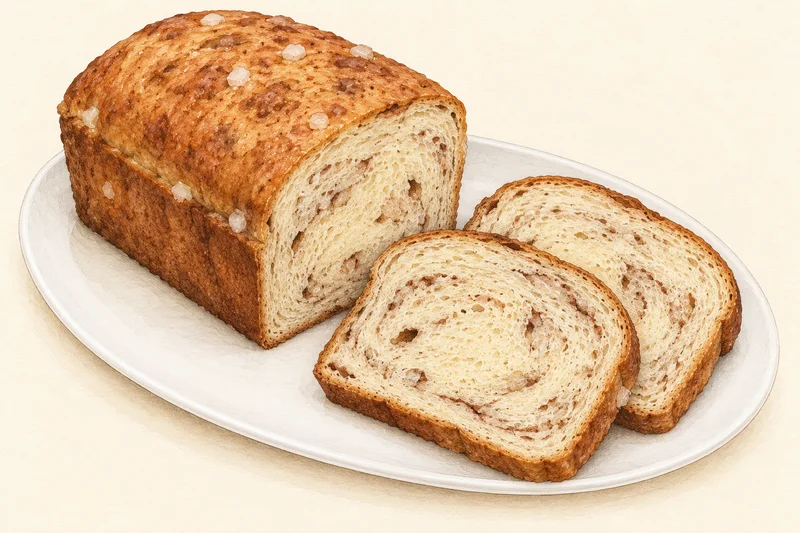
A soft, buttery milk loaf rolled around cinnamon and pearl sugar that melts into sticky pockets as it bakes. The Frisian version, with about twice the sugar of other Dutch and Flemish sugar loaves, by Nicole Holten of The Dutch Table.
- Servings
- 10
- Preparation
- 25 min
- Cooking
- 30 min
- Resting
- 1 h 15
- Total
- 2 h 10
- Difficulty
- Easy
Equipment
- Mixing bowl
- Loaf tin 23 × 13 cm
- Rolling pin
- Probe thermometer (optional)
Ingredients
The dough
The filling
For the tin
Method
Stir the yeast into the warm milk. Mix the flour and salt in a bowl, pour in the milk and mix.
Knead in the ginger syrup (if using), the egg and the melted butter until the dough is soft and supple, a good 10 minutes; it looks ragged at first.
Timer · 10 min10:00Cover and leave to rise until doubled.
Timer · 1 h60:00Roll the dough on a lightly floured surface into a rectangle about the length of the tin. Sprinkle with the cinnamon and then the pearl sugar. Fold the sides in to cover the filling, then roll it up into a loaf; roll it over any sugar that falls out so it sticks to the outside.
Why Pearl sugar does not dissolve in the dough; it melts into sticky pockets in the oven.
Butter the tin, sprinkle in the tablespoon of sugar and tilt so it coats the inside. Put in the loaf, seam down. Cover and leave to rise about 15 minutes, until it peeks over the tin. Heat the oven to 190 °C.
Timer · 15 min15:00Bake 30 minutes, until done (87 °C in the centre). Cover with foil if the top browns too fast.
Timer · 30 min30:00Brush the top with the remaining butter at once. Cool 5 minutes, loosen carefully where sugar has stuck, then turn out onto a rack. For an extra-sticky loaf, put it in a plastic bag while still lukewarm.
To drink & serve with
Holten: 'awesome with a curl of real butter'.
Substitutions
- Pearl sugar → Sugar cubes wrapped in a towel and tapped into lumps with a rolling pin, not ground fine (Holten).
- Ginger syrup → Leave it out, or soak 10 g chopped candied ginger and 1 tbsp sugar in 2 tbsp hot water for an hour and use the syrup (Holten).
Common mistakes
- Crushing the sugar to powder: it dissolves and the pockets disappear.
- Leaving the loaf in the tin: the melted sugar sets and glues it in.
Storage & reheating
Keeps 2–3 days wrapped at room temperature; freezes well in slices.
Safety
Contains gluten, milk and egg. Melted sugar from the tin is very hot: let the loaf stand 5 minutes before turning it out.
Allergens
Gluten · Milk · Egg
Check labels: stock, bacon and sauces can contain further allergens.
Dietary
vegetarian
Twice the sugar
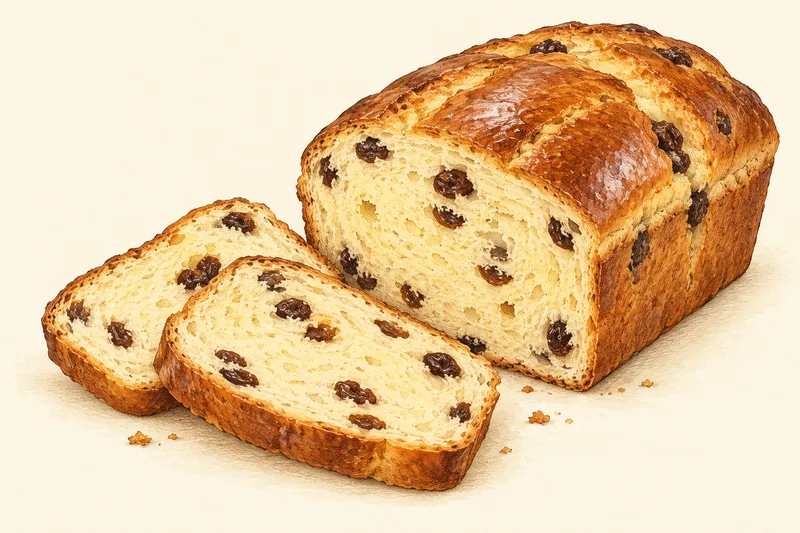
Nicole Holten of The Dutch Table describes sûkerbôle as a traditional bread from Friesland. Limburg and Brabant, and Flanders across the border, have similar sugar loaves, but the Frisian one stands out for using about twice as much sugar, which makes it a sticky, rich loaf. She writes that it was often given to a new mother to celebrate a baby girl, while a boy was welcomed with a raisin cake.
The sugar is pearl sugar, which keeps its shape in the dough and melts into pockets in the oven; crushed sugar cubes do the same job.
How it connects
Place
- origin Friesland In preparation
Recipe
- related Cramique (kramiek)