
Explore the world · Recipe · Tunisia · Reference page
Shakshuka
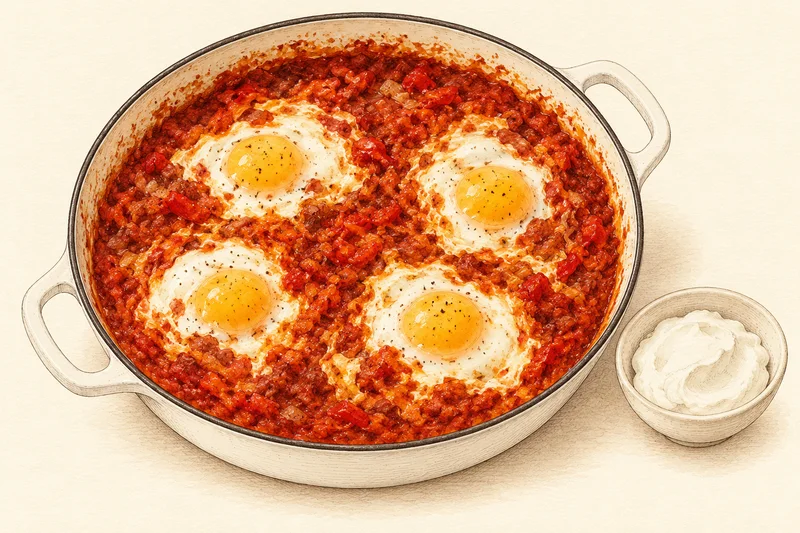
Eggs poached in a thick sauce of tomatoes, red peppers, garlic, harissa and cumin, served from the pan with labneh or yoghurt. The recipe is Yotam Ottolenghi's as given by SBS. The dish's origin is North African, with a strong Tunisian Jewish tradition, and is contested.
- Servings
- 4
- Preparation
- 15 min
- Cooking
- 30 min
- Resting
- 2 min
- Total
- 47 min
- Difficulty
- Easy
Equipment
- Large frying pan with a lid
Ingredients
Method
Heat the oil in the pan over a medium heat and add the peppers, garlic, harissa, tomato paste, cumin and salt. Cook, stirring, for 8 minutes until the peppers soften.
Timer · 8 min8:00Add the tomatoes, bring to a gentle simmer and cook 10 minutes more, until thick. Season.
Why The sauce must be thick enough to hold the eggs in their hollows.
Timer · 10 min10:00Make 4 hollows in the sauce and break an egg into each. Swirl the whites a little into the sauce with a fork, without breaking the yolks. Simmer gently for 8–10 minutes, until the whites are set and the yolks still runny.
Timer · 10 min10:00Take off the heat, rest 2 minutes, and serve with the labneh or yoghurt.
Timer · 2 min2:00
Substitutions
- Harissa → Chilli flakes and a little smoked paprika.
- Labneh (dairy-free) → Leave it out; serve with bread.
Common mistakes
- Adding the eggs to a thin sauce: they spread and overcook.
Storage & reheating
Eat at once. The sauce without eggs keeps 3 days in the fridge; reheat and add fresh eggs.
Safety
The yolks are left runny. People advised to avoid lightly cooked eggs should cover the pan and cook until the yolks are firm.
Allergens
Egg · Milk
Check labels: stock, bacon and sauces can contain further allergens.
Dietary
vegetarian · gluten-free
Ottoman stew, North African eggs
Writing in Moment Magazine, Sala Levin follows the late Gil Marks's Encyclopedia of Jewish Food: shakshuka goes back to an Ottoman vegetable-and-meat stew; tomatoes and peppers arrived later; North African Jews dropped the meat, and in Tunisia especially eggs became central. North African immigrants brought it to Israel, where it became a staple. Its origin is contested, and Levin records the arguments over whether it should be called Israeli. Yotam Ottolenghi's book Plenty (2011) helped make it popular abroad.
A thick bed for the eggs
The peppers cook down with harissa, tomato paste and cumin before the tomatoes go in, so the sauce is concentrated and thick. The eggs are poached in hollows, their whites dragged lightly through the sauce so they set evenly while the yolks stay soft.
How it connects
Place
- origin Tunisia In preparation