
Pasta · Recipe · Thailand · Reference page
Pad thai
ผัดไทย
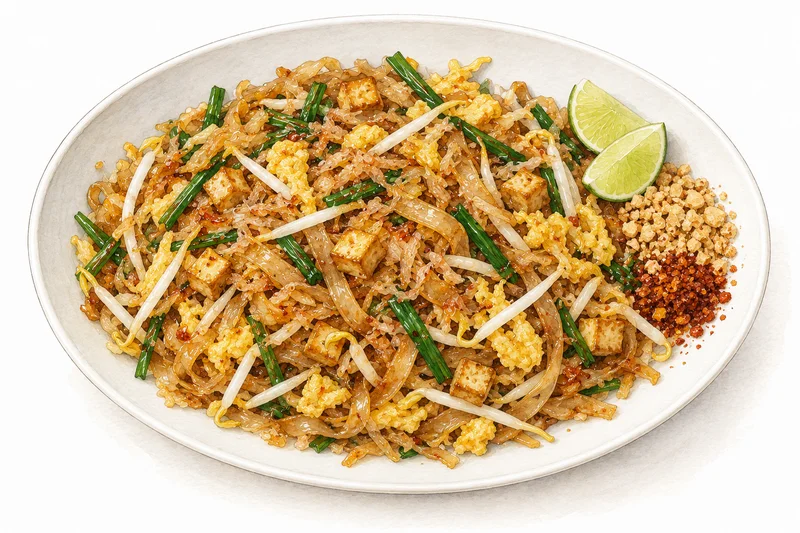
Soaked thin rice noodles stir-fried with shallot, egg, fried bean curd, dried prawns and salted radish in tamarind, palm sugar and fish sauce, finished with bean sprouts and chives. David Thompson's single-portion recipe, published by SBS Food.
- Servings
- 1
- Preparation
- 15 min
- Cooking
- 10 min
- Resting
- 1 h
- Total
- 1 h 25
- Difficulty
- Easy
Equipment
- Wok
- Bowl for soaking noodles; fine sieve for the tamarind
Ingredients
Tamarind water
Noodles
To serve
Method
Soak the noodles in water for about an hour, until soft but not mushy. Drain.
Why Soaked rather than boiled noodles stay springy in the wok; boiled ones break up.
Timer · 1 h60:00Soak the tamarind pulp in the warm water for a few minutes, work it with your fingers, then press through a fine sieve and discard the seeds and fibres. Stir the palm sugar into 2 tablespoons of the tamarind water until dissolved.
Heat the oil in the wok over medium heat and stir-fry the shallot until fragrant and just colouring.
Crack in the egg, lower the heat and stir so it does not scorch.
Add the noodles and the tamarind mixture, then the bean curd, dried prawns and radish. Season with fish sauce and a little white sugar. Toss constantly so the noodles do not catch, until hot and well mixed. They should taste sweet, sour and salty.
Why Constant tossing is the whole technique: rice noodles stick and burn in seconds.
Add the bean sprouts and chives and toss. Serve topped with peanuts, chilli powder, extra sprouts and chives, with lime wedges.
Substitutions
- Tamarind pulp → Ready-made tamarind purée (not concentrate), adjusting the sugar.
Common mistakes
- Over-soaking the noodles: they turn to mush in the wok.
- Too high a heat once the egg is in: it scorches.
Storage & reheating
Eat at once.
Safety
Allergens: egg, fish (fish sauce), crustaceans (dried prawns), soy (bean curd), peanuts. Leave out the peanuts and serve them separately for guests with allergies.
Allergens
Egg · Fish · Crustaceans · Soy · Peanuts
Check labels: stock, bacon and sauces can contain further allergens.
Dietary
gluten-free
Siamese, with Chinese roots
Chef David Thompson notes that pad thai is considered the classic Siamese dish but that its origins are firmly rooted in Chinese cooking. The atlas has not yet opened a documented history of when the dish took its name.
Sweet, sour, salty
The noodles are soaked for an hour, not boiled. Everything else is a seasoning: tamarind water and palm sugar for sour and sweet, fish sauce for salt, dried prawns and salted radish for depth. Thompson's test is taste: the noodles should be sweet, sour and salty in balance. Peanuts, roasted chilli and lime are added at the table.
How it connects
Place
- origin Thailand In preparation