Meat · Recipe · Sichuan · Reference page
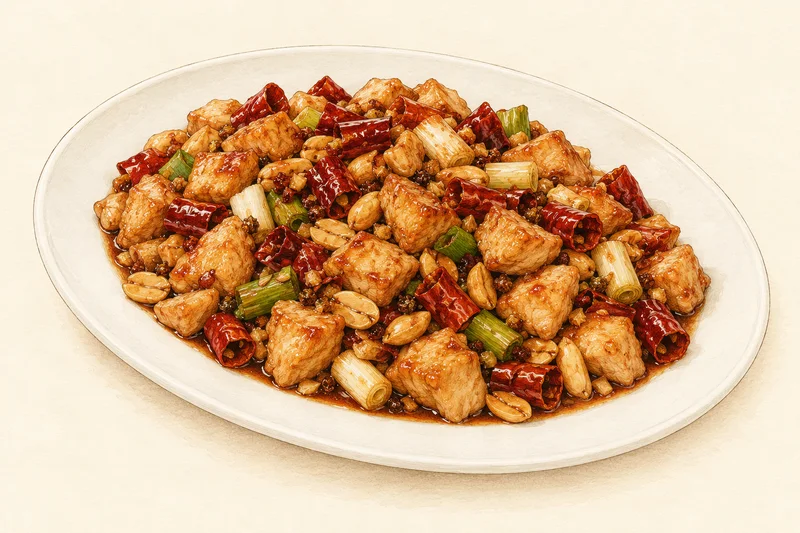
Kung pao chicken
宫保鸡丁 (gōngbǎo jīdīng)
Small cubes of marinated chicken stir-fried with dried chillies, Sichuan pepper, garlic, ginger and spring onion, coated in a sweet-sour sauce of Chinkiang vinegar and soy, and finished with fried peanuts. The recipe is Adam Liaw's, from SBS.
- Servings
- 2
- Preparation
- 5 min
- Cooking
- 10 min
- Total
- 15 min
- Difficulty
- Easy
Equipment
- Wok or large frying pan
- Slotted spoon
- Two small bowls for the marinade and sauce
Ingredients
Chicken and marinade
The stir-fry
Sauce
To finish
Method
Mix the chicken with the marinade ingredients and set aside. Combine the sauce ingredients in a small bowl.
Why Cornflour and a pinch of bicarbonate keep the chicken tender in the fierce heat of the wok.
Heat the oil in the wok over a high heat and fry the peanuts for about 1 minute, until browned. Lift them out with a slotted spoon.
Timer · 1 min1:00Stir-fry the chicken for 1–2 minutes, until lightly browned, and lift it out.
Timer · 2 min2:00Add the dried chillies and Sichuan peppercorns and toss for a few seconds until just fragrant, then add the garlic and ginger and cook for a minute more.
Why Dried chillies scorch in seconds; once they darken and smell toasted, move on, or the oil turns bitter.
Timer · 1 min1:00Return the chicken with the spring onions and the sauce and toss until the chicken is cooked through and glossy. Thicken with a little cornflour slurry if needed.
Stir through the peanuts and serve at once with a drizzle of chilli oil.
To drink & serve with
Editorial suggestion: steamed rice.
Substitutions
- Chicken breast → Boneless thigh, which stays juicier.
- Chinkiang black vinegar → Another dark rice vinegar; balsamic is sweeter, so cut the sugar.
- Peanuts → Cashews (a tree-nut allergen), or leave them out for a peanut-free dish.
Common mistakes
- Burning the chillies: the dish turns acrid.
- Adding the peanuts early: they lose their crunch.
- Overcrowding the wok.
Storage & reheating
Best eaten at once. Refrigerate leftovers within 2 hours, eat within 2 days, and reheat once until steaming hot.
Safety
Contains peanuts, soy and gluten (soy sauces, Shaoxing wine), sesame (sesame oil) and sulphites (Shaoxing wine, vinegar). Chicken must be cooked right through. The dried chillies are very hot: push them aside as you eat.
Allergens
Peanuts · Soy · Gluten · Sesame · Sulphites
Check labels: stock, bacon and sauces can contain further allergens.
A Sichuan stir-fry with a governor's title
Gong bao ji ding is a stir-fry of diced chicken from Sichuan. Adam Liaw notes that it was "rumoured to have been named after an ex-governor of Sichuan", and that it has since become one of the most popular Chinese takeaway dishes in the United States.
The Sichuan character is in the aromatics: a dozen or more dried chillies and a teaspoon of Sichuan peppercorns toasted in the oil for a few seconds, then garlic and ginger. The sauce balances sugar against black Chinkiang vinegar and soy, and the peanuts are fried first and stirred in at the end so they stay crisp.
How it connects
Place
- origin Sichuan In preparation
Recipe
- related Dan dan noodles