Explore the world · Recipe · Peru · Reference page
Ceviche
cebiche / ceviche clásico
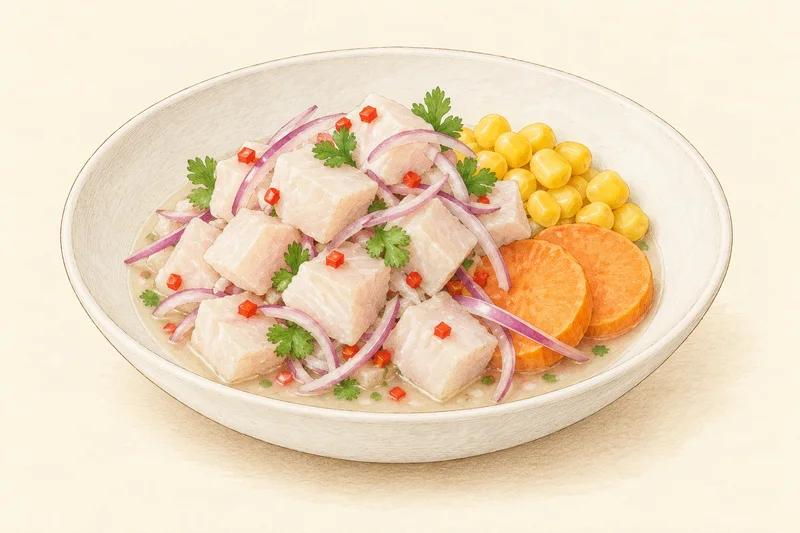
Cubes of very fresh white fish dressed at the last moment with the juice of small Peruvian lemons, garlic, limo chile, coriander and red onion, eaten with sweet potato and corn. Gastón Acurio's classic version takes only minutes. UNESCO inscribed the Peruvian practices around ceviche on its heritage list in 2023.
- Servings
- 2
- Preparation
- 20 min
- Cooking
- 0 min
- Total
- 20 min
- Difficulty
- Easy
Equipment
- Glass or ceramic bowl (not metal)
- Citrus press; very sharp knife
Ingredients
To serve
Method
Put the fish in the bowl and season with salt and pepper. After 1 minute add the garlic and chile and mix well.
Why Salt first draws a little protein to the surface, so the juice clings and the cubes firm quickly.
Pour over the lemon juice, add the coriander and ice cubes, stir and leave a few seconds.
Why The ice keeps everything cold while the acid starts to turn the outside of the fish opaque.
Add the onion, remove the ice, mix and adjust the seasoning. Serve at once in a shallow bowl with the corn and sweet potato.
Substitutions
- Limo chile → Another fresh hot chile, seeded, to taste.
- Peruvian limón → Key limes or ordinary limes.
Common mistakes
- Using fish that is not very fresh, or oily fish: Acurio's book asks for firm white fish.
- Marinating for a long time: modern Peruvian ceviche is dressed and eaten within minutes.
Storage & reheating
Do not keep. Make and eat immediately.
Safety
The fish is not cooked: lemon juice changes its texture but does not make it safe like heat does. Food Standards Scotland requires fish served raw or in marinades that do not kill parasites to be frozen first (at least –20 °C for 24 hours, or –35 °C for 15 hours), with exemptions for some farmed fish; buy fish sold for raw eating or freeze it yourself in a freezer that reaches those temperatures. The NHS advises pregnant women to avoid raw fish. Keep the fish cold until the last moment.
Allergens
Fish
Check labels: stock, bacon and sauces can contain further allergens.
Dietary
gluten-free · dairy-free
From the north coast to UNESCO
Gastón Acurio, quoted by AFAR, believes ceviche began in northern Peru with the Mochica culture (1st–8th centuries), when fishermen took salt and chile to sea and ate fish raw. AFAR adds that the Spanish brought the limes and onions of the modern dish, and that fish was once left in the juice for hours. The Mochica link is Acurio's view, not a documented fact.
In 2023 UNESCO inscribed the "practices and meanings associated with the preparation and consumption of ceviche" on its Representative List. The entry describes raw fish marinated in lemon with chile and salt, served with local produce; it ties the dish to celebrations, notably the feast of Saint Peter, patron of artisanal fishers, and to cevicherías where women cooks stand out.
Minutes, not hours
Acurio's method is quick: salt, then garlic and chile, then the juice with ice, the onion last. The acid firms and whitens the surface of the fish while the centre stays almost raw. For his restaurant ceviche, AFAR reports, Acurio also makes a separate blended marinade, leche de tigre.
How it connects
Wine region
- origin Peru
Recipe
- related Causa limeña