
Potatoes · Potato · Short entry
Opperdoezer Ronde
A protected designation of origin (PDO, since 1996) for an early, round, firm potato that may be grown only around the village of Opperdoes in North Holland. The potato was first grown there in 1860; it has a fragile skin and is mostly lifted and sorted by hand.
The protected name
The Netherlands Enterprise Agency (RVO) lists Opperdoezer Ronde as a BOB, the Dutch form of the EU protected designation of origin: a potato that may be grown only in Opperdoes, North Holland. According to a WUR study of the scheme, it was first grown in Opperdoes in 1860 and has been protected since 1996. It may be grown on about 450 ha of farmland, and only once every three years in the crop rotation. One company markets the crop, mainly to large Dutch retailers, and farmers may sell up to a third of their production directly.
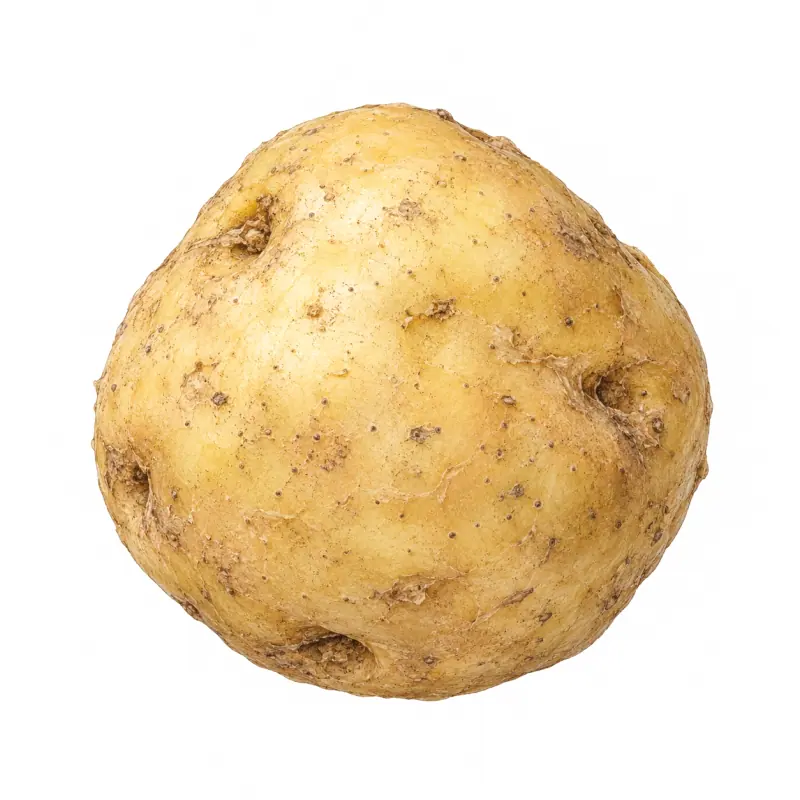
The official description, quoted by CGN, is a yellow- to white-fleshed, somewhat irregular, oval-round, deep-eyed tuber with a fairly low starch content: a fairly firm potato.
A short season, lifted by hand
CGN, drawing on the producers' website, says the young tubers are planted in the last week of March and the whole crop is out of the ground before the end of August. Because the skin is fragile, the potatoes are mostly lifted by hand and sorted by size by hand. The local name Negenwekers ("nine-weekers") refers to the time from planting to lifting, which CGN notes no longer quite holds in a changed climate. The WUR study describes the growing season as roughly 10 to 12 weeks.