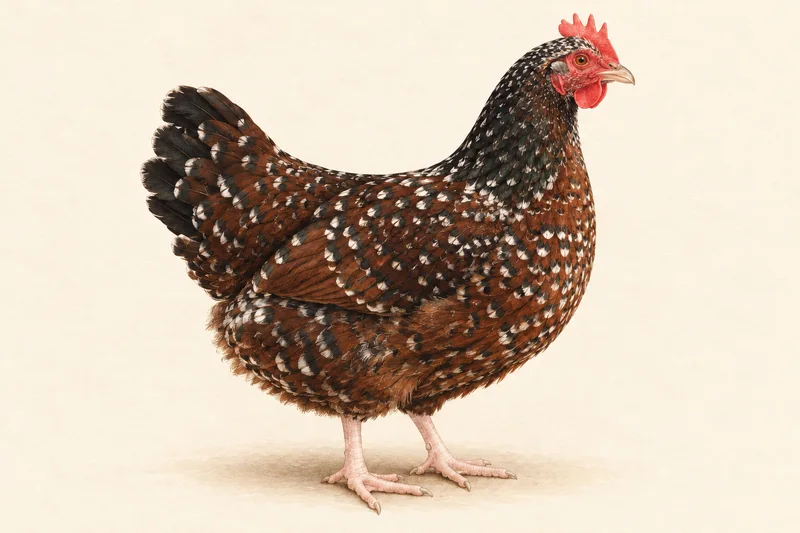
Meat · Breed · Short entry
Plymouth Rock
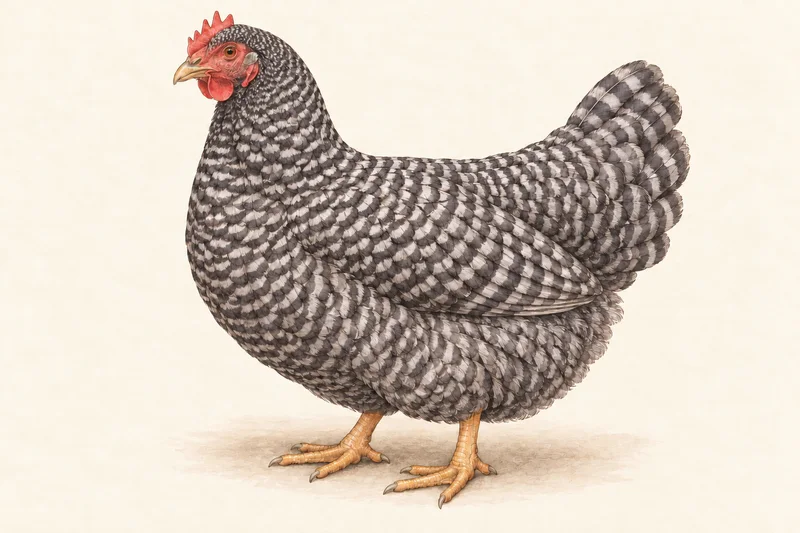
An American dual-purpose chicken first shown in Massachusetts in 1849, best known in its original barred plumage. It was accepted into the American standard in 1874 and was the most widely kept breed in the United States until the Second World War. It was one of the foundation breeds of the broiler industry in the 1920s.
America's farm chicken
The Livestock Conservancy says the Plymouth Rock was developed in America in the mid-nineteenth century and first shown as a breed in Boston in 1849. Those birds dropped from view, and the breed reappeared at Worcester, Massachusetts, in 1869; the later birds are the ancestors of today's Rocks. Several people claimed to have created it from crosses that included Spanish, Cochin, Dominique, Black Java and Brahma fowl. The barred variety came first and the American Poultry Association accepted the breed in 1874.
Its hardiness, docility, broodiness, brown eggs and juicy meat made it the most extensively kept breed until the Second World War, and it was a foundation breed of the broiler industry in the 1920s. The barring comes from a dominant sex-linked gene: males carry two copies and are usually lighter than the females.