
Meat · Breed · Short entry
Leghorn
A light, active laying chicken probably developed from small landrace hens of Tuscany and named after the port of Livorno. It was exported to America from the late 1820s and refined there and in England. Industrial strains of the White Leghorn now dominate white-egg production in America.
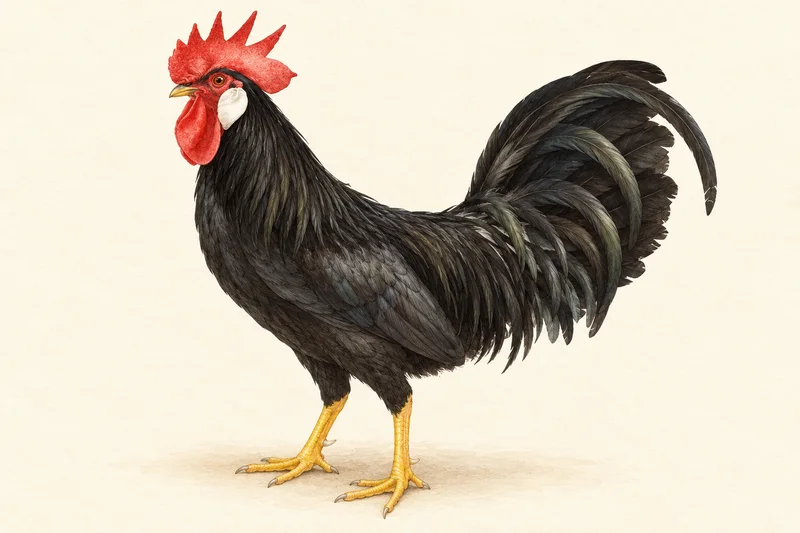
From Livorno to the egg industry
The Livestock Conservancy says the exact origins are unknown but the breed likely came from small Tuscan landrace hens that laid many eggs on little food. The name Leghorn anglicises Livorno, the port from which birds were first exported to America around 1828 and again in 1830–1831. In 1852 a Captain Gates landed at Mystic, Connecticut, with the importation regarded as ancestral to today's non-industrial flocks. White Leghorns went from America to England around 1870, and English breeders crossed them with Minorcas to add size.
From about 1910, English Leghorn hybrids returning to America helped turn farm flocks into a commercial poultry industry. Most Leghorns today are of the industrial type and dominate white-egg production in America. Smaller non-industrial flocks keep a type closer to the original Italian imports.