Meat · Breed · Short entry
Barrosã
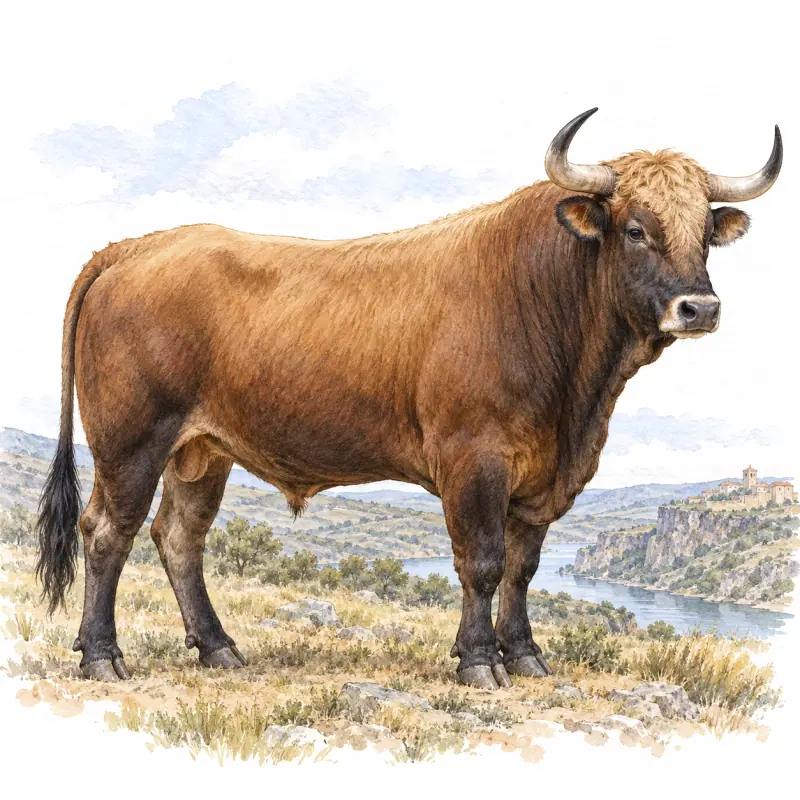
A light-chestnut breed from the Barroso uplands of northern Portugal, recognised by its huge high-lyre horns. In castrated oxen the horns can span more than two metres. A work and meat animal, it nearly disappeared through crossbreeding in the 1960s and 1970s. Its meat is protected as Carne Barrosã DOP.
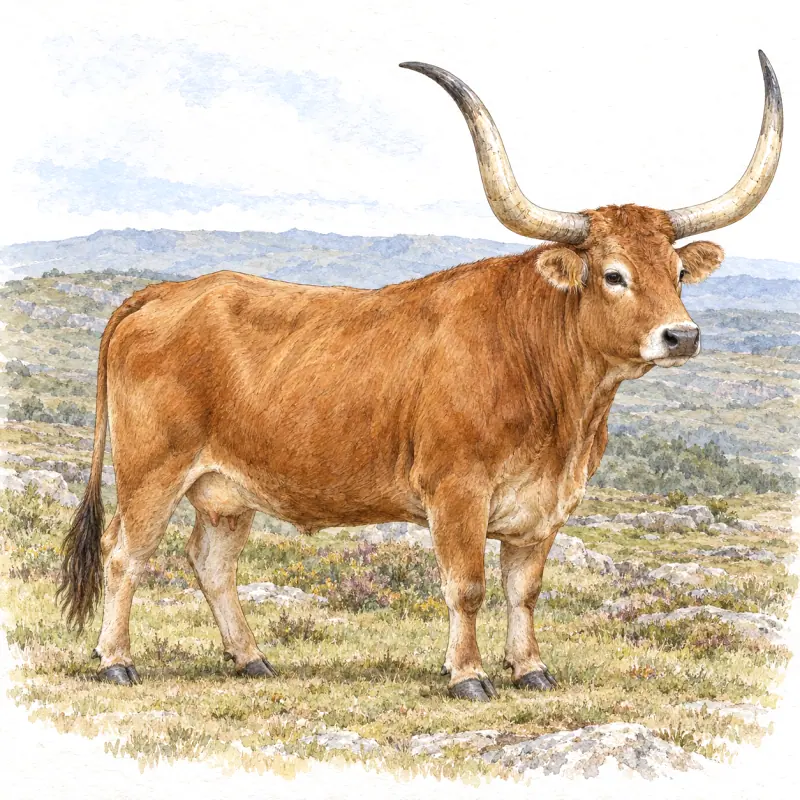
The horns of the Barroso
The DGAV breed standard describes a compact, concave-profiled animal "easily recognised by its high-lyre horns". The horns are long, thick and off-white with dark tips; in castrates they can span more than two metres. The coat is light chestnut, tending to straw or cherry, paler around the eyes, muzzle, inner legs and udder but never white. Adult males have darker forequarters.
The breed's origin is not settled. The DGAV leaflet cites authors who link it to a North African trunk of cattle that reached Iberia by migration, later pushed back to the Barroso plateaus, but it states that its place among Iberian breeds is still hard to define. The breed association records near extinction through indiscriminate crossing in the 1960s and 1970s, and the creation of the herd book in 1980.
Carne Barrosã DOP
The DOP covers meat from Barrosã cattle entered in the breed register or herd book. Animals come from municipalities of Minho and Trás-os-Montes such as Montalegre, Boticas and Ponte de Lima. Categories run from veal (vitela, 5 to 9 months) to young beef (novilho, 9 to 36 months) and cow beef (3 to 4 years). Citing Manuel Garcia, the product sheet records 16,708 cattle exported from Portugal to England between January and July 1882, most of them Barrosã. The meat is eaten mainly grilled and as roast beef.
How it connects
Breed
- related Mirandesa